Related

EU Omnibus Packages Part 5: Omnibus V – Simplifying EU Defense Regulation
EU Omnibus Packages Part 4: Omnibus IV — Product Regulation, Simplification, and Compliance

Athletes Disqualified at 2026 Winter Olympics Over PFAS

EU Omnibus Packages Part 3: Simplifying EU Agricultural Regulation
On 20 May 2024, the U.S. Occupational Safety and Health Administration (OSHA) amended the Hazard Communication Standard (HazCom) (29 CFR 1910.1200) to align with the Globally Harmonized System of Classification and Labeling, 7th Revised Edition (GHS Rev.7).
OSHA amended the HazCom standard to better align requirements with U.S. trading partners and to correct or clarify some points in the existing regulation. The safety data sheets (SDS) and label requirements in the U.S. were aligned with the 3rd Revised Edition of the GHS. This regulation aligns with the GHS Rev. 7, adds some elements from GHS Rev. 8, but still retains some U.S.-specific requirements not included in the GHS.
The rule is effective on 19 July 2024. OSHA extended the transitional period for the required SDS updates due to feedback that the required changes would take some time to ensure that SDS authoring systems were updated and new substance classification data was received and considered for mixtures. The update allows a transitional period of 18 months for substances (19 January 2026) and three years for mixtures (19 July 2027).
Hazard Classification
Inclusion of Hazards Due to Change in Form and Chemical Reactions
One of the most hotly debated issues in the update was the inclusion of hazards associated with changes in physical form or resulting from chemical reactions during use in the labeling information in section 2. OSHA argues that this information has always been required, is important to keep in the front of the SDS and label, and cites examples of companies that are already doing this as part of their product stewardship programs. It also points out examples of products, such as hair products, that release formaldehyde in use and cement or epoxy products, which should include this hazard information in the labeling.
Others pointed out that including all possible chemical reactions and associated hazards for chemicals that are normally used as reactive chemical starting materials would unnecessarily expand and dilute the information in section 2. Still others argued that they could not be expected to anticipate all chemical reactions which might occur during use.
OSHA clarified that only known and reasonably ascertainable information needs to be used to develop the additional information in section 2 and that it did not require all possible hazards of reactive chemicals to be included. It also clarified that the change does not require non-intrinsic hazard information such as thermal hazards from heating chemicals or slip hazards for spilled chemicals. In the rule, OSHA clarifies that the hazard classification must include any intrinsic hazards associated with a change in the chemical's physical form or chemical reaction products associated with known or reasonably anticipated uses or applications. OSHA indicated that known intermediates, by-products, and decomposition products produced during use must be addressed in the hazard classification.
OSHA acknowledges that manufacturers and importers may not know every downstream use but must address known or foreseeable hazards. OSHA requires this classification information in section 2 of the SDS but does not specify how the information is disclosed, giving SDS preparers some discretion.
Flammable Gases
In this update, OSHA adopted flammable gases subcategories 1A and 1B, changed flammable aerosols to aerosols, including categories 1 to 3, and adopted desensitized explosives categories 1-4. The current class for pyrophoric gas is now covered under the flammable gases class. OSHA adopted the chemicals under pressure class with categories 1 to 3 from the GHS Rev. 8. A definition for combustible dust was also added.
Nuisance Particulates and Substances Corrosive to the Respiratory Tract
OSHA added a clarification that nuisance particulates are only excluded from coverage where the chemical manufacturer can establish that they do not pose any physical, health hazard or other hazard such as combustible dust hazard.
In Appendix A (health hazards), OSHA has adopted all hazard classes from the GHS Rev. 7 and additional hazards not listed in the GHS, including corrosive to the respiratory tract, aspiration hazard, and hazards not otherwise classified. OSHA updated definitions for hazard classes and categories and adopted other administrative changes made in the GHS Rev. 7. Clarifications in the amended regulation include several changes, including that if acute toxicity testing indicates that a substance is corrosive to the respiratory tract, it must be labeled as such if the corrosivity leads to lethality in addition to classifying as acutely toxic. If the corrosion to the respiratory tract does not lead to lethality, it must be labeled corrosive to the respiratory tract if inhaled with a corrosive pictogram and classified as STOT SE Cat 1 or 2 (not 3). For mixtures that are skin and eye corrosive, expert judgement should be used to determine if corrosion of the respiratory tract is likely to lead to lethality or not and follow the classification rules above.
Labeling
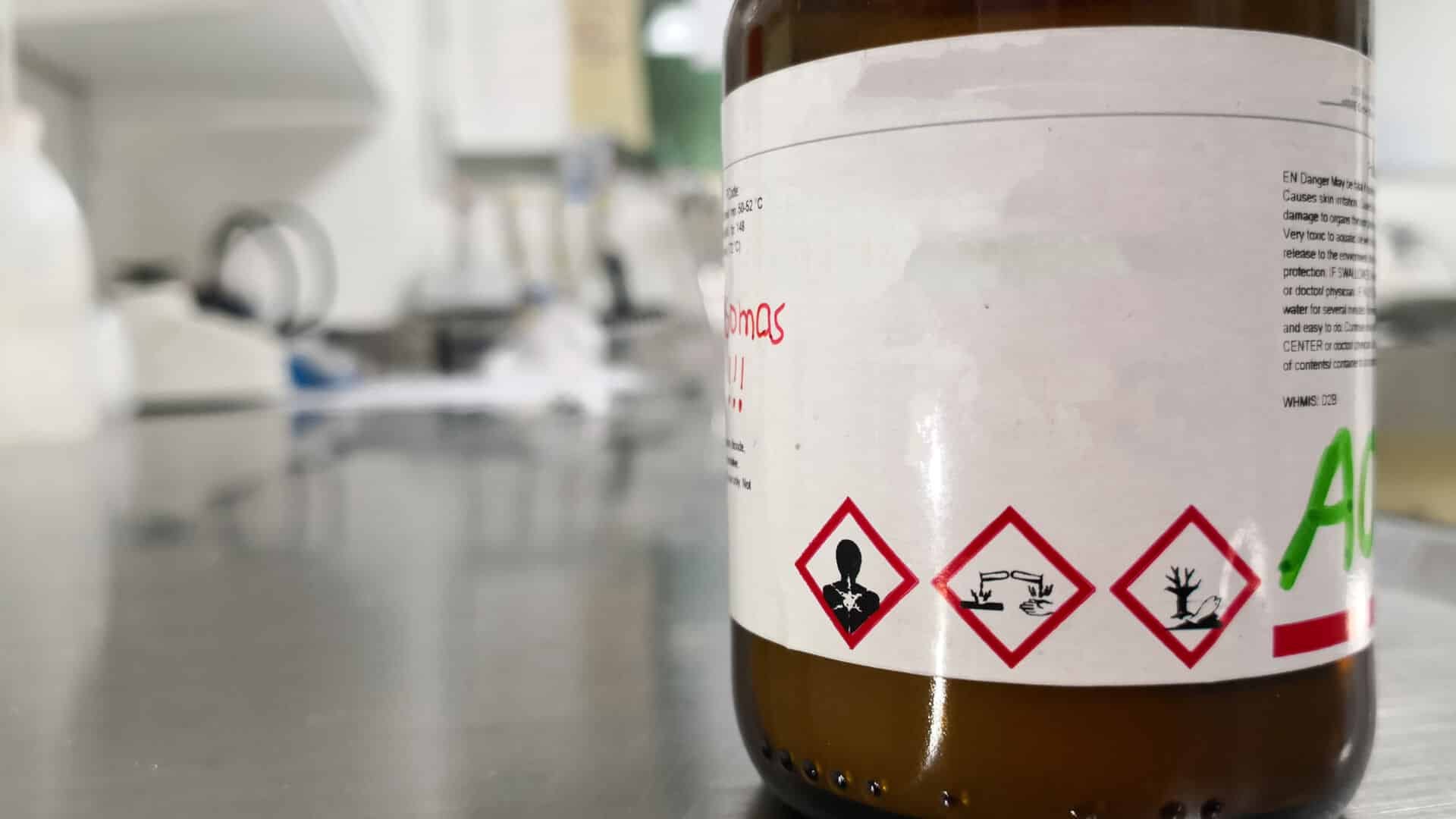
OSHA updated the hazard and precautionary phrases to align with GHS Rev. 7. The changes will impact labeling for many classes and categories. OSHA also specified hazard and precautionary phrases for combustible dusts, simple asphyxiants, and chemicals that are corrosive to the respiratory tract.
The agency made several changes to labeling, including not requiring products that have been packaged and labeled in the manner in which they will be distributed or sold to be re-labeled with new information. However, the chemical manufacturer or importer must provide the updated label for each individual container with the shipment.
OSHA also codified past guidance for small labels. Reduced labeling requirements are specified for containers less than 100 ml and less than 3 ml if it is not feasible to use pull-out, fold-back, or other labels to include all required label information. However, full labeling must be provided on the immediate outer package.
Safety Data Sheets
OSHA made several changes to SDS requirements. It specified that a hazardous ingredient’s chemical identity exact concentration or concentration range may be held as a trade secret if the claim can be supported and the hazards are disclosed. The concentration of a hazardous ingredient may also be kept confidential, but the SDS must use prescribed concentration ranges that are the same as specified in the Canadian Hazardous Products Regulations. It also specified that a unique identifier and its source must be indicated when a hazardous ingredient's CAS number is unavailable or a trade secret.
Other changes to SDS included aligning the physical chemical properties required in section 9 with the GHS. Although the names of the properties changed and some new properties, such as particle characteristics, were added, OSHA clarified that if properties such as evaporation rate and odor threshold are available, they should be included on the SDS.
The changes in the hazard communication standard are significant. The changes in the hazard classes, categories, hazard, and precautionary text are expected to require changes for most SDS and labels.
Manufacturers and importers must evaluate and determine the hazard class and category applicable to chemicals and transmit that information to employers and employees in SDS, labeling, and training.
Companies should begin reviewing the changes and developing a plan to revise their SDS and labels before the end of the transitional period. OSHA has not yet updated all the summary documents on the website but has announced its intent to post additional information and guidance.
—–
Editor's Note: 3E is expanding news coverage to provide customers with insights into topics that enable a safer, more sustainable world by protecting people, safeguarding products, and helping businesses grow. Expert Analysis articles, produced by 3E subject matter experts, researchers, and consultants as well as external thought leaders, examine the regulations, trends, and forces impacting the use, manufacture, transport, and export/import of chemicals.


Insights straight to your inbox
Sign Up NowSenior Regulatory Research Manager
Terry Wells
Terry is an experienced product safety specialist with a demonstrated history of working in the software industry. She draws upon her operational background and expertise to write about Product Compliance, Hazard Communication, and Product Safety for 3E.

Related Resources
News
EU Omnibus Packages Part 5: Omnibus V – Simplifying EU Defense Regulation
News
EU Omnibus Packages Part 4: Omnibus IV — Product Regulation, Simplification, and Compliance
News
Athletes Disqualified at 2026 Winter Olympics Over PFAS
News
EU Omnibus Packages Part 3: Simplifying EU Agricultural Regulation