As armed conflicts around the globe evolve and intensify, experts are sounding the alarm about the scope and intensity of climate change and the threat it poses to the stability of supply chains and global commerce.
A panel of former military leaders and climate scientists told lawmakers that the U.S. Department of Defense (DoD) has an obligation to play a leading role in both reducing greenhouse gas emissions (GHG) and the agency's expenditures to make the military a more nimble and adaptable player in an increasingly complex geopolitical environment.
Leading research universities and the scientific community can be a huge driver of innovative solutions to climate change through the Minerva Project and other public-private partnerships, said Erin Sikorsky, director of the Center for Climate and Security (CCS) during a Senate Budget Committee hearing on 15 May 2024.
“Helping allies and partners manage climate risks not only shows them the United States is attentive to their needs,” Sikorsky said. “It can also build their resilience so that they are available when the United States needs them. It's a win-win.”
Review
A recent Bloomberg analysis estimated that federal facilities worth at least $387 million are vulnerable to storms and other weather-related impacts that will be accelerated by climate change.
The financial and national security consequences of failing to adapt to climate change will compound over time, according to a White House analysis of federal climate financial risk exposure.
Some of the potential ramifications of climate change for the U.S. military and civilian populations include: reduced military capability, weakened alliances and diminished international stature, degraded infrastructure, and stunted technical innovation and economic growth.
“Repairing, rebuilding, and maintaining our defense infrastructure-the foundation of our national security-is becoming ever more costly in a world shaped by climate upheaval,” said Budget Committee Chairman Sen. Sheldon Whitehouse (D-R.I.).
Dennis McGinn, retired vice admiral and former assistant secretary of the U.S. Navy, said during his testimony that investing in predictive and intelligence systems, including weather and oceanographic data and analysis, will help DoD to prepare for climate change threats.
“Taking climate threats into account doesn't always cost more money,” McGinn said. “Sometimes it involves choices as simple as siting a building on higher ground, away from floodplains, or ensuring regional planning and wargames incorporate future climate scenarios.”
Analysis
GOP lawmakers pushed back on some elements of the Biden Administration's climate change approach.
“The Biden Administration's obsession with reducing the military's carbon footprint actually distracts from the armed forces' real mission of deterring and defeating our enemies,” said Ranking Member Sen. Chuck Grassley, (R-Iowa).
Tim Gallaudet, a retired Navy rear admiral and former acting administrator of the National Oceanic and Atmospheric Administration (NOAA), said the language used in DoD's climate strategy that labeled climate change the “existential issue of our time” was “deeply flawed.”
However, Gallaudet did advocate for improving DoD's climate-informed decision making by spending more on predictive technology and equipment such as satellites and drones and improving the numerical models.
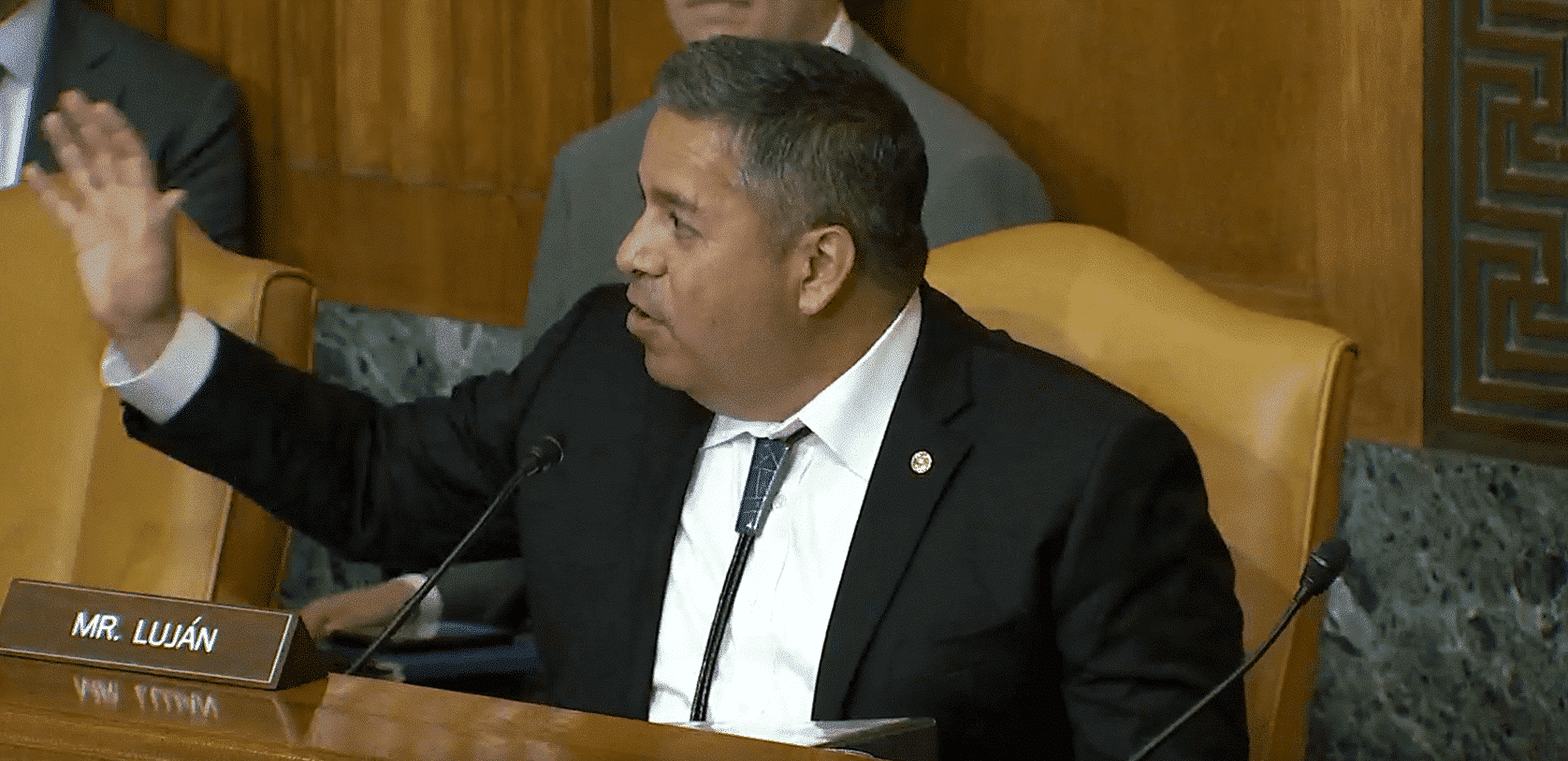
One member who has demonstrated a strong interest in tackling these challenges through legislation is Sen. Ben Ray Lujan (D-N.M.). Lujan also underscored the importance of government partnering with universities and other researchers in his home state, including at the Los Alamos National Laboratory and Sandia National Laboratories in Albuquerque.
Lujan's National Wildland Fire Risk Reduction Program Act (S.4274) introduced in 2022, would aim to reduce damages and losses of life caused by wildfires through the following steps:
- Improve the understanding and predictability of wildland fires and their impacts
- Encourage adoption of science-based and cost-effective measures to enhance community resilience to wildland fires
- Prevent and mitigate wildland fire and associated smoke impacts
A bipartisan bill Lujan introduced in January with Sen. Marsha Blackburn (R-Tenn.), the Advanced Weather Model Computing Development Act (S.3624), would direct the Secretary of Energy and the NOAA administrator to collaborate to produce predictive weather models to help mitigate the effects of climate change.
“It's clear to me that the national security community needs more quality, up-to-date information to make decisions showing how climate change will affect military operations, infrastructure, and global security,” Lujan said.
————-
Editor's Note: 3E is expanding news coverage to provide customers with insights into topics that enable a safer, more sustainable world by protecting people, safeguarding products, and helping businesses grow. Deep Dive articles, produced by reporters, feature interviews with subject matter experts and influencers as well as exclusive analysis provided by 3E researchers and consultants.


Insights straight to your inbox
Sign Up NowRelated Resources

News
EU Omnibus Packages Part 5: Omnibus V – Simplifying EU Defense Regulation

News
EU Omnibus Packages Part 4: Omnibus IV — Product Regulation, Simplification, and Compliance

News
Athletes Disqualified at 2026 Winter Olympics Over PFAS

News
EU Omnibus Packages Part 3: Simplifying EU Agricultural Regulation