Related

EU Omnibus Packages Part 5: Omnibus V – Simplifying EU Defense Regulation
EU Omnibus Packages Part 4: Omnibus IV — Product Regulation, Simplification, and Compliance

Athletes Disqualified at 2026 Winter Olympics Over PFAS

EU Omnibus Packages Part 3: Simplifying EU Agricultural Regulation
In August 2017, 205 residents of Crosby, Tex., were evacuated from their homes as an Arkema chemical plant along the highway burst into flames. The week-long fires at the plant were a result of heavy rain in the aftermath of Hurricane Harvey, the most devastating hurricane in the U.S. since Hurricane Katrina.
For over a week, flood waters rose in the facility, eventually shorting out the power supply. The loss of power resulted in the failure of the refrigeration system preserving temperature-sensitive organic peroxides. As they warmed up, they combusted.
According to the U.S. Chemical Safety and Hazard Investigation Board (CSB) investigation report, although the Crosby Arkema facility took some precautions in preparation for Hurricane Harvey, the rainfall exceeded expectations. Although the plant is in an area prone to flooding, no one expected the severity of flooding that took place; more than two times the predicted amount. “Employees with decades of plant experience expected there to be light flooding at the facility, but not enough to impact any safety systems,” reported the CSB.
The 2017 Arkema explosion is an example of how a chemical facility was unprepared for the unprecedented severity of an anticipated natural disaster, putting workers, and the surrounding community, at risk.
Increasingly Severe Weather
Every year, the effects of climate change become increasingly more apparent. So far in 2024, the planet experienced its hottest day on record on 22 July, an above-average destructive tornado season, and an unusually early hurricane season kicked off with Hurricane Beryl in early July.
More recently, Hurricane Debby poured heavy rain across the United States, with potentially devastating flooding forecasted across the Carolinas and Georgia. In early August, four tornadoes touched down in northeast Ohio during a single weather event, something very unusual for that part of the state. Approximately 500,000 customers were left without electricity, some for as long as a week. The outages impacted residents and businesses alike.
3E Senior Chemical Business Advisor Rob Campbell said preventative measures will continue to be evaluated as extreme weather events become more frequent and severe, “Climate change is causing the industry to look at if the scenarios they plan for are still falling within the boundaries of what people are anticipating the future climate might look like,” he said.
In addition to hazardous weather threatening facilities located in areas geographically at risk, extreme weather events also cause disruption all along the supply chain. Winter Storm Uri, freezing Texas in 2021, caused a state-wide power grid outage. The storm caused a massive halt on chemical production of fertilizers, disinfectants, plastic bottles, pesticides, and packaging, impacting the supply chain for more than a year after.
Severe weather can have tremendous impacts on chemical businesses, and with extreme weather events becoming more frequent and more severe, companies must take greater precautions to protect their workers, assets, and surrounding communities and environment from the disasters natural hazards can cause.
Flooding/Hurricanes
Floods are the most common - and costly - natural hazard. Especially given the high concentration of chemical factories located in areas prone to flooding, facilities in flood zones need to take extra precautions in preparation for heavy rain and rising water. Even in areas not directly affected by hurricanes on the coast, the subsequent heavy rain that accompanies hurricanes is often more dangerous and threatens a greater geographical area than the initial hurricane itself. The chemical release risks associated with flooding are:
- Combustion reactions: Fires and explosions following flooding can occur at chemical plants for various reasons. Power outages can cause climate and pressure control failure, leading to sensitive chemicals reacting to air, water, and heat in potentially explosive ways.
- Floodwater pollution: Rain and rising water can carry into the community with the potential of contaminating drinking water sources and leaving toxic residue on farmland and in flooded homes and buildings.
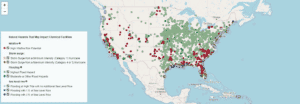
From the U.S. Government Accountability Office.
High Winds/Tornadoes
Tornados and high winds can cause severe structural damage to facilities, and in recent years, high-wind events have been on the rise. Wind-resistant construction is critical to facilities in areas susceptible to high winds, such as along Tornado Alley.
- External facility damage: High winds can rip off external protections of facilities, like roofing and external insulation systems, and windows can be broken from wind pressure around the building or by flying debris.
- Internal facility damage: When external protection layers are damaged or torn off buildings, high winds can blow into facilities, causing immense internal damage.
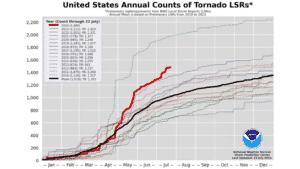
From NOAA.
Blizzards/Freezes
Blizzards and freezes are particularly dangerous in areas that are not expected to experience long bouts of winter weather, leaving these facilities unprepared when unexpected freezes occur. Insufficient insulation and heating leave facilities vulnerable to unexpectedly severe winter weather.
- Pipe damage: When water freezes, it expands. This is particularly problematic when water freezes in pipes, often leading to pipe and valve damage. This can cause water leaks and flooding, and flammable gases and other toxic chemicals may escape through water-damaged pipes, causing fires and toxic fumes.
- Power outages: In addition to compromising the controlled environments sensitive chemicals are kept in, power outages can halt production and cause massive disruptions in the supply chain.
Earthquakes
Earthquakes can be incredibly destructive geological activities that occur naturally or are induced by human activity in mining, oil, and gas production, or injecting wastewater underground. While some extreme weather events are predictable, earthquakes are not, and the lack of warning can make them particularly catastrophic. While earthquakes are geological, there is evidence that climate-related events - such as droughts, hurricanes, and glacial movement - can all impact tectonic plates to the point of impacting seismic waves beneath the earth's crust. The dangers of earthquakes include:
- Equipment damage: While earthquakes are not likely to cause severe damage to buildings themselves if they are constructed with earthquake risk in mind, as many in areas of risk are, earthquake shake can knock over structures within buildings, potentially causing severe damage to major appliances within a facility.
- Fires: Major earthquakes have the potential to shake foundations of buildings severely enough to damage infrastructure and release flammable materials such as natural gas, which can easily ignite when in contact with preexisting flames or exposed electrical arcing. Earthquake shakes can also damage sprinkler systems within buildings, making putting out fires more difficult.
Wildfires
Wildfires are becoming increasingly more severe. Drought and rising temperatures cause dry vegetation, which acts as fuel for wildfires, ensuring fires ignite easier and burn hotter and longer. Facilities in undeveloped areas near grasslands and forests are at increased risk of wildfire damage.
- Fire Damage: With wildfires becoming increasingly more threatening, facilities located in areas surrounded by vegetation are most at risk for experiencing wildfire-related damage.
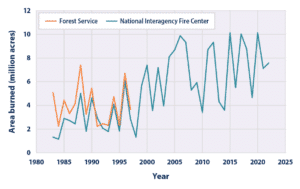
From EPA.
Extreme Heat
Extreme heat events are becoming more common and more severe. 2023 was the hottest year on record, and on 22 July 2024, the planet experienced its hottest day on record. Extreme heat poses health threats to workers exposed to heat.
- Heat-related illness: Heat stroke and dehydration are potentially life-threatening for individuals who work in conditions with limited shade and water, and who are not acclimated to heat.
Federal Regulatory Responses
In July, the Biden Administration released its plan to legislate protections for workers and communities as extreme weather continues to worsen around the globe.
- Occupational Safety and Health Administration (OSHA): As each passing year gets hotter and hotter, OSHA is responding by proposing a regulation that, if passed, would be the U.S.'s first federal law protecting workers from the threats of extreme heat. If passed, OSHA's rule would require employers to supply adequate shade and water to employees, allow rest breaks, and mandate an adjustment period for new workers to acclimate to the heat, with the goal of mitigating heat-related injury and death.
- Department of Homeland Security (DHS): As part of President Biden's Justice40 Initiative, the DHS is awarding hundreds of projects around the country that propose to mitigate the risks of climate change, including enhanced structural resilience. The goal is to lessen the effects of flood and heat by reinforcing infrastructure.
- Environmental Protection Agency (EPA): The EPA has taken several approaches to addressing the dangers of climate change and the workforce, one of which finalized a Safer Communities by Chemical Accident Prevention Rule to protect communities surrounding chemical facilities from chemical accidents. The rule requires facilities to implement safer technologies in the event of accidents and enhance facility preparedness efforts.
Knowing the Risk
Understanding the hazards of extreme weather, knowing which geographic locations are most likely to experience hazardous weather, and taking the proper preventative measures based on the risk is the most crucial part of mitigation, according to experts.
Patrick Mahan, principal engineer, chemical and pharmaceutical at commercial property insurer FM, said the most important aspect of mitigating the risk is knowing the risk, something he feels the chemical industry has mostly done well at.
“In all honesty, the chemical industries have done very, very well in severe weather events in the last two decades,” Mahan said. “We’ve seen an increased level of focus across the chemical industry in managing severe weather events. They are better prepared and have better physical protection.”
Preparedness does not just come from facility security, Mahan said. It also comes in the form of anticipating the effects extreme weather can have on the supply chain, either from production halts or transportation issues,
“Resilience isn’t just in the directly exposed locations. One of the things that we’ve seen really improved in the last several years is increased inventories in advance of hurricane season or freeze season just to allow facilities to be more resilient if a supplier comes offline for any reason,” he added.
Destruction from extreme weather events at chemical facilities can be detrimental to businesses, workers, and surrounding communities. As climate change continues to intensify weather events, the chemical industry must continue to implement risk-management practices, including facility resilience and supply chain emergency preparedness, in accordance with geographic risk.
Resources to Help Your Business Prepare for Extreme Weather Events:
FM provides multiple resources for understanding risks of extreme weather on the industry, including the Nathaz toolkit and maps, detailing where extreme weather is likely to impact different geographies, resources for understanding hazards, and steps to take in preparation for natural disasters.
The U.S. Small Business Administration provides a business guide on recovering from disasters, including recovery planning and supply chain disruption management practices.
The Chemical Safety Board offers recommendations based on past accidents to mitigate future risk of similar incidents in the future.
———
Editor's Note: 3E is expanding news coverage to provide customers with insights into topics that enable a safer, more sustainable world by protecting people, safeguarding products, and helping businesses grow. Deep Dive articles, produced by reporters, feature interviews with subject matter experts and influencers as well as exclusive analysis provided by 3E researchers and consultants.


Insights straight to your inbox
Sign Up NowReporter
Sheridan Wood
Sheridan Wood is 3E's Industry Reporter. She has reported on local, state, and national news for public radio stations KACU, The Texas Standard, and National Public Radio. She has won regional and national reporting awards from the Society of Professional Journalists.

Related Resources
News
EU Omnibus Packages Part 5: Omnibus V – Simplifying EU Defense Regulation
News
EU Omnibus Packages Part 4: Omnibus IV — Product Regulation, Simplification, and Compliance
News
Athletes Disqualified at 2026 Winter Olympics Over PFAS
News
EU Omnibus Packages Part 3: Simplifying EU Agricultural Regulation