Related

EU Omnibus Packages Part 5: Omnibus V – Simplifying EU Defense Regulation
EU Omnibus Packages Part 4: Omnibus IV — Product Regulation, Simplification, and Compliance

Athletes Disqualified at 2026 Winter Olympics Over PFAS

EU Omnibus Packages Part 3: Simplifying EU Agricultural Regulation
The Canadian federal government is providing more than $11.7 million in funding to the Canadian Biosphere Regions Association and the 19 UNESCO biosphere regions in Canada to support conservation work such as biodiversity research, documentation, land management practices, and stakeholder engagement.
Steven Guilbeault, Minister of Environment and Climate Change, made the announcement on 22 August 2024. The funding is supplemental to the $11.3 million the government has provided since 2021, which is part of the government's goal of conserving 30% of Canadian land and waters by 2030.
“Biosphere regions strike a balance between environment conservation with economic development, while considering local social and cultural needs,” said Minister Guilbeault. “They are an excellent example of how communities can help tackle global issues like biodiversity loss and climate change.”
According to the UNESCO Man and the Biosphere Programme, biospheres are areas with unique biodiversity, iconic landscapes, and engaged communities. The program uses methods from natural and social sciences to protect ecosystems while promoting innovation and sustainable economic development. The World Network of Biosphere Reserves consists of more than 700 sites in over 120 countries.
“Biodiversity conservation is a core element of a biosphere region's mission,” said Kate Potter, Executive Director of the Canadian Biosphere Regions Association. “These areas are dedicated to balancing the needs of human communities with the protection of natural ecosystems. In so doing, biosphere regions help build ecological resilience, support sustainable livelihoods, and contribute to global environmental goals.”
Canada has 19 biosphere regions, mostly in southern Canada, consisting of 200,000 kms of watercourses, 27,000 km2 of protected areas or interim protected areas, and more than 2.8 million inhabitants. They receive funding from every level of government, from federal to municipal, as well as donations from private individuals and organizations.
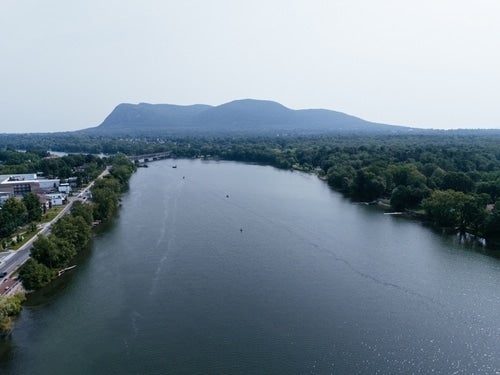
Organizations receiving funding include the Waterton Biosphere Reserve Association in Alberta ($463,140), the Clayoquot Biosphere Trust Society in British Columbia ($845,140), the Bras D'Or Lake Biosphere Region Association in Nova Scotia ($463,140), and Centre de conservation de la nature Mont Saint-Hilaire in Quebec ($690,140). The funding will help some of the biosphere organizations protect habitat through additional land acquisition. Mont Saint-Hilaire, for example, will use the funding to provide legal protection to an additional 90 hectares and to restore nine more hectares over the next two years.
According to Éric Malka, Executive Director of Connexion Nature and the Mont Saint-Hilaire Biosphere Region, the funding not only allows the organizations to extend their work, it also recognizes the community effort that has contributed to their accomplishments to date. “Together, with municipalities, donors, volunteers, landowners and funders, we have succeeded in permanently protecting nearly 500 hectares of natural habitats,” said Malka. “We are very proud of what we have achieved so far, and we look forward to stepping up our efforts to protect even more natural habitats within the Mont Saint-Hilaire Biosphere Region.”
——
Editor's Note: 3E is expanding news coverage to provide customers with insights into topics that enable a safer, more sustainable world by protecting people, safeguarding products, and helping businesses grow. Deep Dive articles, produced by reporters, feature interviews with subject matter experts and influencers as well as exclusive analysis provided by 3E researchers and consultants.


Insights straight to your inbox
Sign Up NowReporter
Graham Freeman
Graham Freeman is based in Toronto, where he covers ESG and sustainability news. Graham has been a content and technical writer in the technology industry for more than a decade. He has also worked as a professor and lecturer at Queen’s University, the University of Toronto, and George Brown College.

Related Resources
News
EU Omnibus Packages Part 5: Omnibus V – Simplifying EU Defense Regulation
News
EU Omnibus Packages Part 4: Omnibus IV — Product Regulation, Simplification, and Compliance
News
Athletes Disqualified at 2026 Winter Olympics Over PFAS
News
EU Omnibus Packages Part 3: Simplifying EU Agricultural Regulation