Related

EU Omnibus Packages Part 5: Omnibus V – Simplifying EU Defense Regulation
EU Omnibus Packages Part 4: Omnibus IV — Product Regulation, Simplification, and Compliance

Athletes Disqualified at 2026 Winter Olympics Over PFAS

EU Omnibus Packages Part 3: Simplifying EU Agricultural Regulation
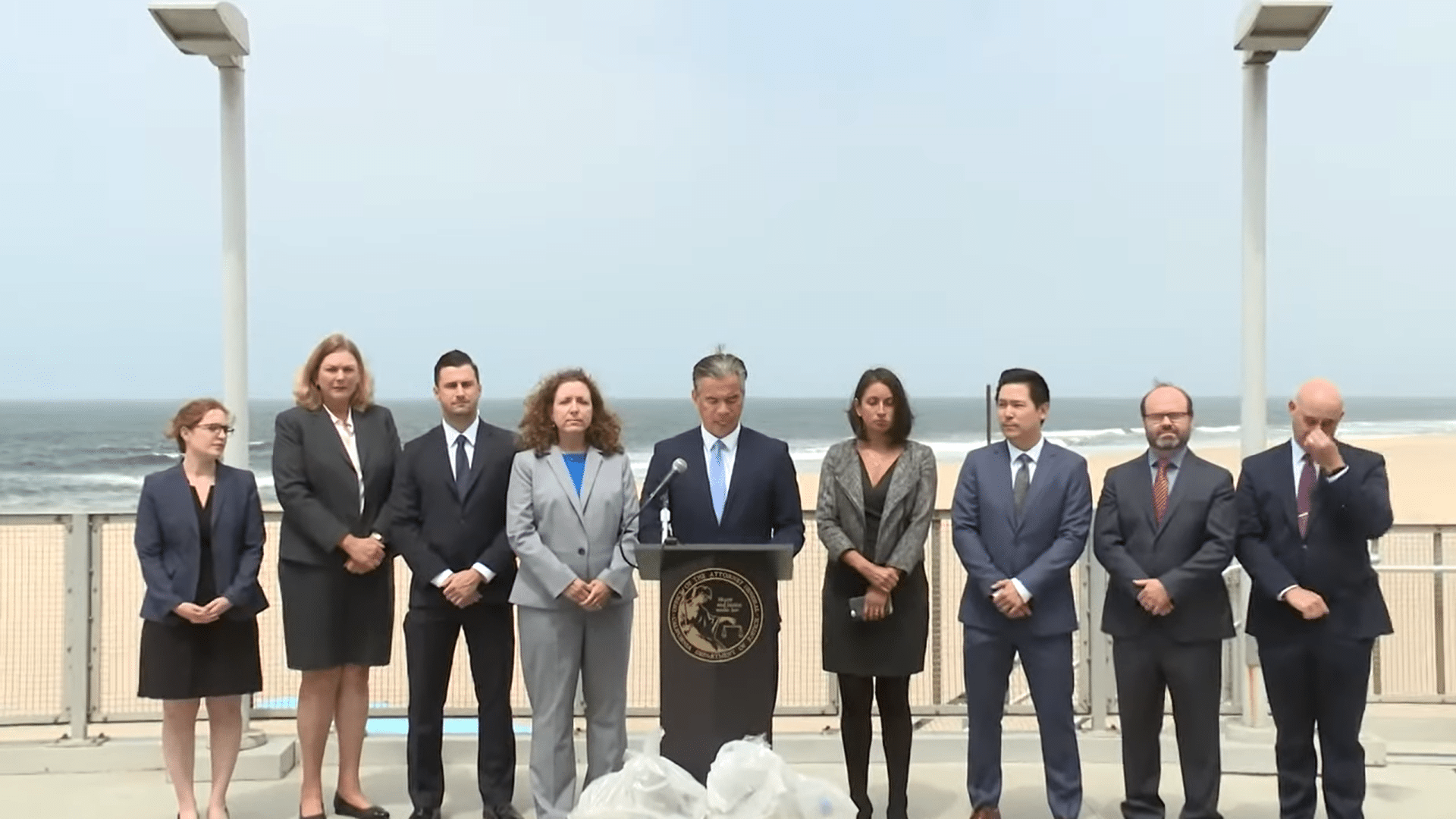
California Attorney General Rob Bonta filed a lawsuit in San Francisco County against ExxonMobil for allegedly misleading the public into believing that recycling could resolve the plastic pollution crisis, all while allegedly knowing that the narrative was false. The lawsuit comes at the end of a two-year investigation by the attorney general's office into the fossil fuel and petrochemical industries in California and is part of a greater push by the state government to deal with the issue of single-use plastics.
ExxonMobil promotes and produces the largest number of polymers used in the creation of plastics, which can then be molded by other companies into the single-use plastics that California is attempting to regulate. According to the office of the attorney general, ExxonMobil has spent decades using strategic marketing, from articles in TIME magazine to adopting and promoting the triangle of chasing arrows that most people now associate with recycling, to make Americans believe that all plastics are recyclable. This contrasts with the fact that only about 5% of consumer plastics in the United States are recycled, and most plastics made from ExxonMobil polymers are “virgin plastics,” having never been recycled.
Bonta's office is suing for nuisance abatement, civil penalties, and disgorgement, which if successful, would force the company to turn over any profits it gained illegally. The state is also seeking injunctive relief to “protect California's natural resources from further pollution, impairment, and destruction, as well as to prevent ExxonMobil from making any further false or misleading statements about plastics recycling and its plastics operations.”
ExxonMobil Pushes Back
ExxonMobil has rejected Bonta's claims, saying in a statement sent to 3E, “For decades, California officials have known their recycling system isn't effective. They failed to act, and now they seek to blame others. Instead of suing us, they could have worked with us to fix the problem and keep plastic out of landfills.”
The company has also pointed to its investments in new recycling facilities, including a plant in Texas, as proof of its commitment to solving the plastic pollution problem.
Recent actions by the state government seem to corroborate part of this statement. Last month, California Governor Gavin Newsom touted an expansion in recycling capabilities in the state, with the introduction of 250 new recycling sites across 30 counties backed by $70 million in innovation grants from CalRecycle. This represents an acknowledgment of the need for greater recycling capacity in the state to take care of the increase in plastic waste.
Environmental groups have long argued that companies like ExxonMobil use their recycling initiatives and other tools as “greenwashing,” aimed at deflecting attention from the environmental harm caused by plastic production. In 2021, New York City sued ExxonMobil along with several other companies for many of the same reasons as this current lawsuit, although that lawsuit ended up being unsuccessful.
ExxonMobil contends that their recycling processes work, and that the main problem is that the state does not have the proper procedures to get plastic waste to their facilities. “To date, we've processed more than 60 million pounds of plastic waste into usable raw materials, keeping it out of landfills,” the company stated.
The main point of contention in this case is around the efficacy of “advanced recycling,” otherwise known as “chemical recycling.”
What Is Advanced Recycling?
Advanced recycling is a term used to describe several ways that plastic waste can be transformed from various streams back into useful building block chemicals, such as the polymers used in creating new plastic. They transform the plastic material through a series of steps that involve a combination of dissolving, thermal treatment, separation, and gasification or reforming. Substances that are not hydrocarbons, such as fillers or pigments, are removed. The hydrocarbons are then collected as liquids or gases to be rebuilt into a useful material, such as polymers, to replace fossil-based materials.
Attorney General Bonta contended that ExxonMobil's use of advanced recycling hides “important truths about its technical limitations,” including that 92% of plastic waste processed by ExxonMobil becomes fuel instead of recycled plastics, and that the machinery necessary to recycle consumer plastics cannot handle large amounts of waste. The best-case scenario will only account for less than one percent of ExxonMobil's total virgin plastic production capacity, and the program is “nothing more than a public relations stunt meant to encourage the public to keep purchasing single-use plastics that are fueling the plastics pollution crisis,” argued Bona.
ExxonMobil, however, contends that advanced recycling does work, arguing that to fix the problem with plastic waste, “The first step would be to acknowledge what their counterparts across the U.S. know: advanced recycling works. We're bringing real solutions, recycling plastic waste that couldn't be recycled by traditional methods,” the company told 3E.
'Legitimate Technology'
Rob Campbell, a senior chemical business advisor for 3E, offered a more measured perspective on the potential of advanced recycling technologies.
“I think it is a legitimate technology that needs to be encouraged by government and industry,” Campbell said. “The science and technology is solid, but the economics is the challenging part. It faces much of the same issue that mechanical recycling faces; it works and can make useful materials from the recycled plastics, but just like with paper, getting enough material to the recycling facility to justify the scale needed where the investments can become profitable is a big challenge.”
Campbell added that the large size and dispersed population of the U.S. make transporting materials to recycling facilities expensive, whereas smaller, more densely populated countries are better positioned for successful recycling efforts.
The debate between ExxonMobil and California around who is responsible for the current increase in plastic waste and how to clean it up is unlikely to be resolved by a single lawsuit, but if successful, it could change the way that companies produce their plastics and how recycling is viewed by the public.
——–
Editor's Note: 3E is expanding news coverage to provide customers with insights into topics that enable a safer, more sustainable world by protecting people, safeguarding products, and helping businesses grow. Breaking News articles keep you up-to-date with news as it's happening.
See related content: DEEP DIVE: Environmental Leaders, Lawmakers Leverage Partnerships to Boost Recycling Capacity


Insights straight to your inbox
Sign Up NowReporter
Christopher Bornmann
Christopher Bornmann is the State Regulatory and Legal Action Reporter for 3E based in Washington, D.C. He covers the latest legal developments and updates in environmental, health, and safety (EHS) that impact the U.S. at the state level. He has experience working for the U.S. House of Representatives and national advocacy groups.

Related Resources
News
EU Omnibus Packages Part 5: Omnibus V – Simplifying EU Defense Regulation
News
EU Omnibus Packages Part 4: Omnibus IV — Product Regulation, Simplification, and Compliance
News
Athletes Disqualified at 2026 Winter Olympics Over PFAS
News
EU Omnibus Packages Part 3: Simplifying EU Agricultural Regulation