Related

EU Omnibus Packages Part 5: Omnibus V – Simplifying EU Defense Regulation
EU Omnibus Packages Part 4: Omnibus IV — Product Regulation, Simplification, and Compliance

Athletes Disqualified at 2026 Winter Olympics Over PFAS

EU Omnibus Packages Part 3: Simplifying EU Agricultural Regulation
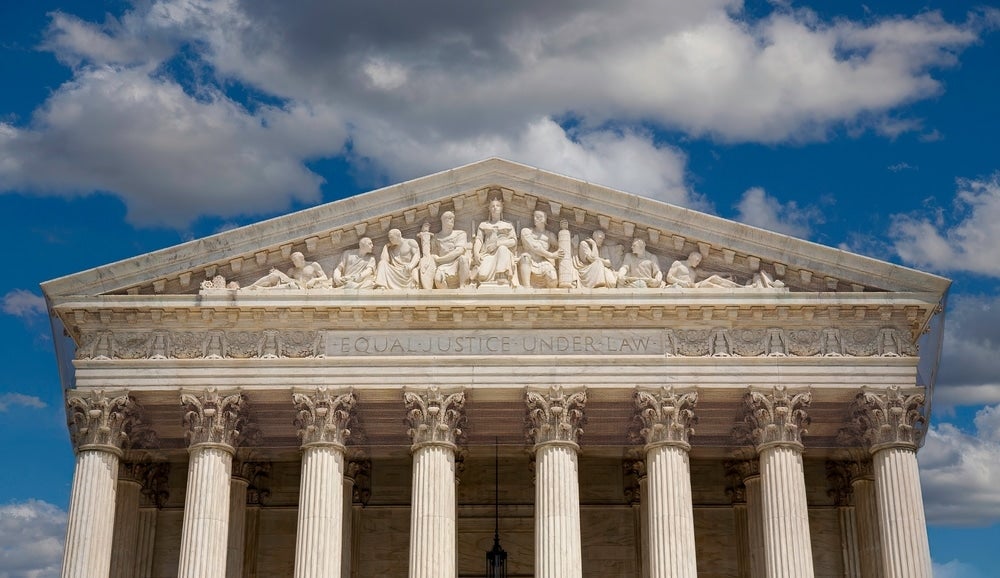
Earlier this month, 3E reported that the Supreme Court of the United States (SCOTUS) rejected two bids to stay U.S. Environmental Protection Agency (EPA) regulations on methane emissions and airborne mercury.
On 16 October 2024, SCOTUS rejected another emergency request to stay the EPA's final Clean Air Act standards for existing coal-fired and new natural gas-fired power plants while litigation proceeds in lower courts. The rule, considered a cornerstone of the Biden administration's climate policy, mandates emissions reductions from coal and natural gas plants to curb greenhouse gasses.
This ruling shows a continued trend this session of SCOTUS permitting the Biden administration's environmental rules to take effect, despite opposition from state attorneys general and industry groups.
The Supreme Court’s Decision
SCOTUS did not issue a formal opinion with its decision, ruling 7-1 in favor of the EPA. However, the Court did issue a statement along with its refusal order. Breaking from the majority, Justice Clarence Thomas noted in SCOTUS's statement attached to the denial order that he would have granted the stay but has offered no further comment. Justices Brent Kavanaugh and Neil Gorsuch were more measured in their response, stating that “the applicants have shown a strong likelihood of success on the merits as to at least some of their challenges to the Environmental Protection Agency's rule.”
Justice Samuel Alito recused himself from the case. Although the court did not give a specific reason as to why, Alito's most recent financial disclosure shows either he or his spouse hold stock in OGE Energy Group, a subsidiary of one of the companies seeking to stay the rule, which could qualify as a potential conflict of interest.
SCOTUS's order reflects the justices' continued preference to allow the District of Columbia (D.C.) Circuit Court to handle these cases initially. However, SCOTUS has left open the door to future consideration, stating that the applicants could “seek appropriate relief” from SCOTUS depending on the lower court's decision.
The Rule In Question
The regulation being litigated in the D.C Circuit Court, formally designated as Reg. 2060 AV09, requires coal-fired power plants to reduce carbon dioxide by 90% if they continue to operate beyond 2039. The rule also requires newly built natural gas-fired plants to incorporate carbon capture and sequestration (CCS) technologies to reduce greenhouse gas emissions.
The EPA argues that the rule is essential to achieving the Biden administration's climate goals and estimates it could provide $370 billion in net climate and public health benefits over the next 23 years. This is based on research surrounding CCS technology, which has yet to be implemented on a commercial scale in the United States at levels required by the new regulation.
The Opposition
The rule has drawn opposition from several state attorneys general, coal producers, and utility companies, who argue that the regulation imposes unattainable mandates and undermines states' regulatory authority. West Virginia Attorney General Patrick Morrisey, a key figure leading the opposition, stated that he will continue the legal fight, aiming to prove that the rule “strips the states of important discretion while forcing plants to use technologies that don't work in the real world,” referring to CCS, which the EPA argues has strong evidential backing. “Here, the EPA again is trying to transform the nation's entire grid, forcing power plants to shutter,” Morrisey said in a statement.
Industry groups echoed these concerns. Rich Nolan, president and CEO of the National Mining Association, said in a statement, “While we're disappointed that some of the justices failed to recognize the immediate harm to industry and consumers posed by this reckless rule, we look forward to continuing to make our case in the D.C. Circuit. By constructing a rule that offers power plant operators the choice of either employing technologies that do not yet exist on a commercial, affordable scale or shutting down, the EPA has wrested control of our nation's energy policy with neither the legal authority nor expertise to do so, all at the exact time that electricity demand is forecast to double. If this rule is allowed to stand the results for the American people and economy will be catastrophic.”
The Edison Electric Institute (EEI) similarly criticized the rule. In a statement to 3E, EEI Executive Director Alex Bond stated, “We are disappointed in the Supreme Court's decision to deny our stay application and will continue to push our case at the D.C. Circuit. While EEI's member electric companies are investing in carbon capture and storage and are excited by its potential, the current reality is that this technology has yet to be adequately demonstrated as required by the Clean Air Act.”
The EPA and Environmentalists Celebrate the Decision
The Biden administration and environmental groups hailed the SCOTUS decision as a step forward in fighting climate change. EPA spokesperson Nick Conger expressed the agency's satisfaction with the outcome, stating to 3E, “EPA is pleased the court decided not to stay the final Clean Air Act standards for existing coal-fired and new natural gas-fired power plants. We look forward to implementing this rule, which is based on proven and cost-effective control technologies, to secure up to $370 billion in climate and public health net benefits over the next two decades.”
Environmental advocates also welcomed the ruling. Meredith Hankins, a senior attorney with the Natural Resources Defense Council (NRDC), offered a comment on the surprising nature of the recent rulings. “Given its rulings in recent years undercutting environmental protections, the refusal of the majority on the Supreme Court to block this vital rule is a victory for common sense. This warrants a sigh of relief from the millions of Americans experiencing the impact of the climate crisis,” she said in a statement on the NRDC website.
The ruling is particularly significant given SCOTUS's recent history of limiting federal regulatory authority. Earlier this year, the court ruled against federal regulators by overturning the precedent set by Chevron USA v. National Resources Defense Council, Inc. and overturning the Biden administration's “Good Neighbor” provision to the Clean Air Act in Ohio v. EPA.
Next Steps: Litigation and Political Uncertainty
While SCOTUS has neglected to stay the rule for now, the legal battle is far from over. Litigation will continue in the D.C. Circuit Court, with oral arguments likely to begin in December 2024. If the D.C. Circuit upholds the rule, the applicants are expected to appeal to the Supreme Court once again, where interest exists in hearing the case.
The case also comes at a unique political time in the United States. With the 2024 election fast approaching, the next president could easily change the outcome of the litigation. If Vice President Kamala Harris wins, it is likely she will continue to pursue climate action, while former President Donald Trump has pledged to roll back Biden-era regulations and bolster fossil fuel production.
For now, the rule stands and represents a crucial win for the Biden administration's environmental agenda. The EPA aims to ensure these rules can stand up to judicial scrutiny by setting clear, technology-based standards, but their long-term fate remains uncertain amid ongoing legal and political challenges.
Editor's Note: 3E is expanding news coverage to provide customers with insights into topics that enable a safer, more sustainable world by protecting people, safeguarding products, and helping businesses grow. Breaking News articles keep you up-to-date with news as it's happening.
About the Author: Christopher Bornmann is the State Regulatory and Legal Action Reporter for 3E based in Washington, D.C. He covers the latest legal developments and updates in environmental, health, and safety (EHS) that impact the U.S. at the state level. He has experience working for the U.S. House of Representatives and national advocacy groups.


Insights straight to your inbox
Sign Up NowReporter
Christopher Bornmann
Christopher Bornmann is the State Regulatory and Legal Action Reporter for 3E based in Washington, D.C. He covers the latest legal developments and updates in environmental, health, and safety (EHS) that impact the U.S. at the state level. He has experience working for the U.S. House of Representatives and national advocacy groups.

Related Resources
News
EU Omnibus Packages Part 5: Omnibus V – Simplifying EU Defense Regulation
News
EU Omnibus Packages Part 4: Omnibus IV — Product Regulation, Simplification, and Compliance
News
Athletes Disqualified at 2026 Winter Olympics Over PFAS
News
EU Omnibus Packages Part 3: Simplifying EU Agricultural Regulation