Related

EU Omnibus Packages Part 5: Omnibus V – Simplifying EU Defense Regulation
EU Omnibus Packages Part 4: Omnibus IV — Product Regulation, Simplification, and Compliance

Athletes Disqualified at 2026 Winter Olympics Over PFAS

EU Omnibus Packages Part 3: Simplifying EU Agricultural Regulation
Strategic planning has become a difficult undertaking for businesses in the last few years. From geopolitical upheaval to regulatory uncertainty, understanding where to focus has become a precarious juggling act for business leadership.
Jon McGowan is a Florida-based attorney at the intersection of business and sustainability. He advises businesses, boards, attorneys, professional organizations, and governments on the impacts of international legal developments in ESG, sustainability, and climate change regulations. He spoke with 3E in early January to provide his thoughts on the year ahead in ESG, what to watch for, and where some significant risks might be hiding.
All Eyes on the Omnibus in the EU
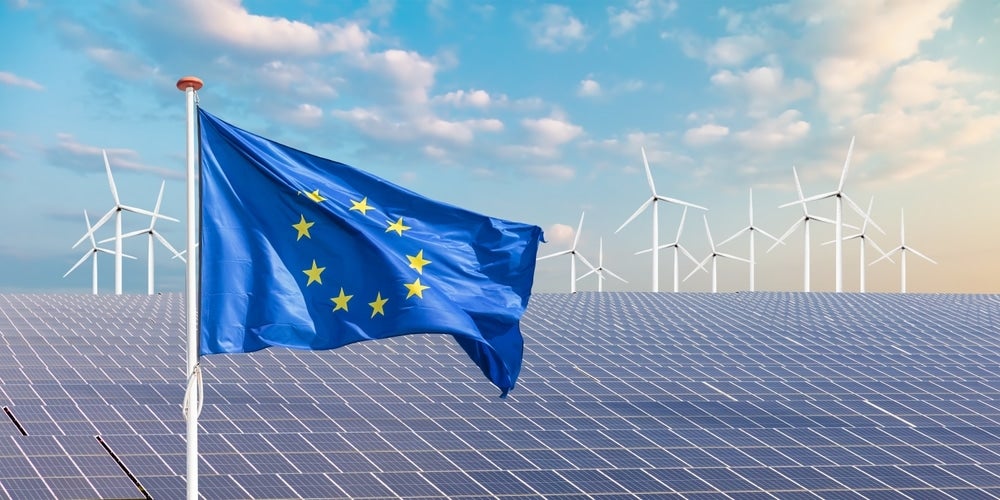
26 February 2025 is the date on which the European Union (EU) is scheduled to provide some clarity on what the future of sustainability reporting and the EU Green Deal will look like. As McGowan pointed out, Germany has been a central actor in the omnibus drama.
“Germany seems to be leading the charge to try and roll back the requirements with the CSRD (Corporate Sustainability Reporting Directive) and the CSDDD (Corporate Sustainability Due Diligence Directive),” said McGowan. “I think there's definitely a strong push from business sectors and more conservative governments to reduce those reporting requirements and reduce the scope of CSDDD, so I think climate activists are really concerned that's what the end goal is.”
McGowan sees the current debate about the omnibus as the latest development in an atmosphere of ongoing political intrigue regarding regulations and sustainability.
“If you look at the EUDR (European Union Regulation on Deforestation-Free Products), they delayed it, but they didn't get all the gains, and they didn't get the reduction in scope they wanted,” said McGowan. “But once you delay, you can bring it back to the table later.”
McGowan pointed out that a similar type of intrigue has been taking place in California regarding its reporting requirements.
“Newsom wanted to delay that whole process by a couple of years, but they [the California legislature] wouldn't,” said McGowan. “But they delayed the drafting, and then the regulatory agency delayed the drafting. So he couldn't get it done through the legislature, but because they opened the door and delayed one thing, it had this cascading effect that caused more delays.” In a similar vein, the opponents of the EUDR got a delay in the implementation, which potentially opens the door to reducing the scope.
McGowan also noted that the non-public practices of EU negotiations are part of what makes the process so frustrating for businesses that need answers.
“The interesting thing about the EU is that everything is closed door,” he said. “There's not a lot of room for public input until it's already started.” This, according to McGowan, is what happened with the CSDDD, which went through multiple iterations even after extensive negotiations that made it appear certain the directive would pass. In the end, what came out was a directive that, while retaining the spirit of the original proposal, didn't impact as many businesses as was initially proposed.
For many businesses, the effort and cost of meeting the reporting obligations of sustainability laws are a critical point of contention.
“I think it's primarily going to be focused on small- and medium-sized enterprises,” said McGowan. “The concern is that it's going to be too much of a burden for small businesses. If you're looking at a small revenue company and they're facing a million dollars to gear up, they're not going to be able to do that, and they're not going to be able to get the information.”
Scope 3 emissions (from assets that are not owned or controlled by the businesses but are part of their value chains) will likely also be a point of discussion, said McGowan, since the cost and effort of collecting that data could be well beyond the abilities of many small businesses. In the U.S., scope 3 emissions was one of the most contentious topics of the proposed climate rule from the Securities and Exchange Commission (SEC), which has been on hold pending judicial review and is now unlikely to proceed after the departure of SEC chair Gary Gensler. McGowan believes rules related to scope 3 emissions will be a significant part of discussions related to the EU omnibus.
The Challenge of One Rule for Many Companies
McGowan points out that while there can be many advantages to reporting for companies that have the ability and the desire to do it, it doesn't benefit everyone.
“The question gets into mandatory versus voluntary reporting,” he said. “If a business feels like it's going to benefit them, they can choose to engage in it, and the companies that want to engage in it are already doing the work.” McGowan cites Patagonia as an example of a company whose culture and customers show strong dedication to sustainability and transparency.
McGowan also sees the conversation regarding sustainability as one that makes many companies reluctant to advocate for their own interests.
“A lot of companies are concerned they can't advocate against it because it's such a political conversation and they don't want to annoy their customer base or face a boycott,” said McGowan. “There's a lot of negative press for not participating, which is why you get trade organizations like the U.S. Chamber of Commerce advocating for them, because everybody expects it from them.”
Patience Is a Virtue, but Not an Easy One
For businesses looking for guidance on what to do in the face of regulatory uncertainty, McGowan suggests patience and a careful eye on the future before committing to any extensive effort or expensive reporting tools.
“Until there are actual regulations in place, I think the best advice is to wait and see,” said McGowan. “I'm concerned that some companies are going to invest money in reporting equipment and then find out in six months they don't have to do the reporting.”
McGowan thinks the general mood in the EU and in the U.S. is shifting towards delaying reporting, which means companies should wait to see what their commitments will actually be.
“If you're not already reporting, you're probably not going to see much of a change in 2025,” he said. “The EU looks like they're going to pause the non-EU reporting requirement for a couple of years, the sector-specific requirements have been delayed, California has delayed its reporting requirements, and the SEC rule might now never come into effect. Start looking at what the costs are going to be and what processes you might have to implement, but don't start that outlay of cash on reporting solutions just yet.”
Greenwashing: The Hidden Threat to Business
With sustainability reporting potentially on the back burner, McGowan says that not enough companies are paying attention to the hidden threat of greenwashing. Many countries, including the EU and Canada, have initiated strict greenwashing rules for companies, and McGowan sees real potential for heavy penalties for companies exaggerating their sustainability claims.
“A lot of these companies are engaging in sustainability reporting that is just marketing,” said McGowan. “Everyone's making up something and it's just showcasing what they think people want to hear, but if you start making environmental claims that aren't real and aren't scientifically backed up, they're coming after you. I think that's the biggest thing to worry about in 2025. If you're putting [information] out there, make sure it's accurate and not misleading because there will be penalties.”
McGowan highlights the recent Canadian amendments to the Competition Act as a particularly risky place for foreign companies to get caught in the greenwashing trap. The amendment went into effect on 20 June 2024, but draft enforcement guidelines are open for public consultation until 28 February 2025.
“My biggest concern is U.S. companies that have a presence in Canada,” said McGowan. “You just have to be marketing in Canada [to be impacted], so if you have a product being sold in Canada and a website tied to that product, you could fall under that very stiff penalty. Any company that operates in Canada, or in the EU, needs to be thinking carefully about greenwashing, and I just don't think they are. It's just business as usual.”
———
Editor's note: 3E is expanding news coverage to provide customers with insights into topics that enable a safer, more sustainable world by protecting people, safeguarding products, and helping businesses grow. Expert Analysis articles, produced by 3E subject matter experts, researchers, and consultants as well as external thought leaders, examine the regulations, trends, and forces impacting the use, manufacture, transport, and export/import of chemicals.


Insights straight to your inbox
Sign Up NowReporter
Graham Freeman
Graham Freeman is based in Toronto, where he covers ESG and sustainability news. Graham has been a content and technical writer in the technology industry for more than a decade. He has also worked as a professor and lecturer at Queen’s University, the University of Toronto, and George Brown College.

Related Resources
News
EU Omnibus Packages Part 5: Omnibus V – Simplifying EU Defense Regulation
News
EU Omnibus Packages Part 4: Omnibus IV — Product Regulation, Simplification, and Compliance
News
Athletes Disqualified at 2026 Winter Olympics Over PFAS
News
EU Omnibus Packages Part 3: Simplifying EU Agricultural Regulation