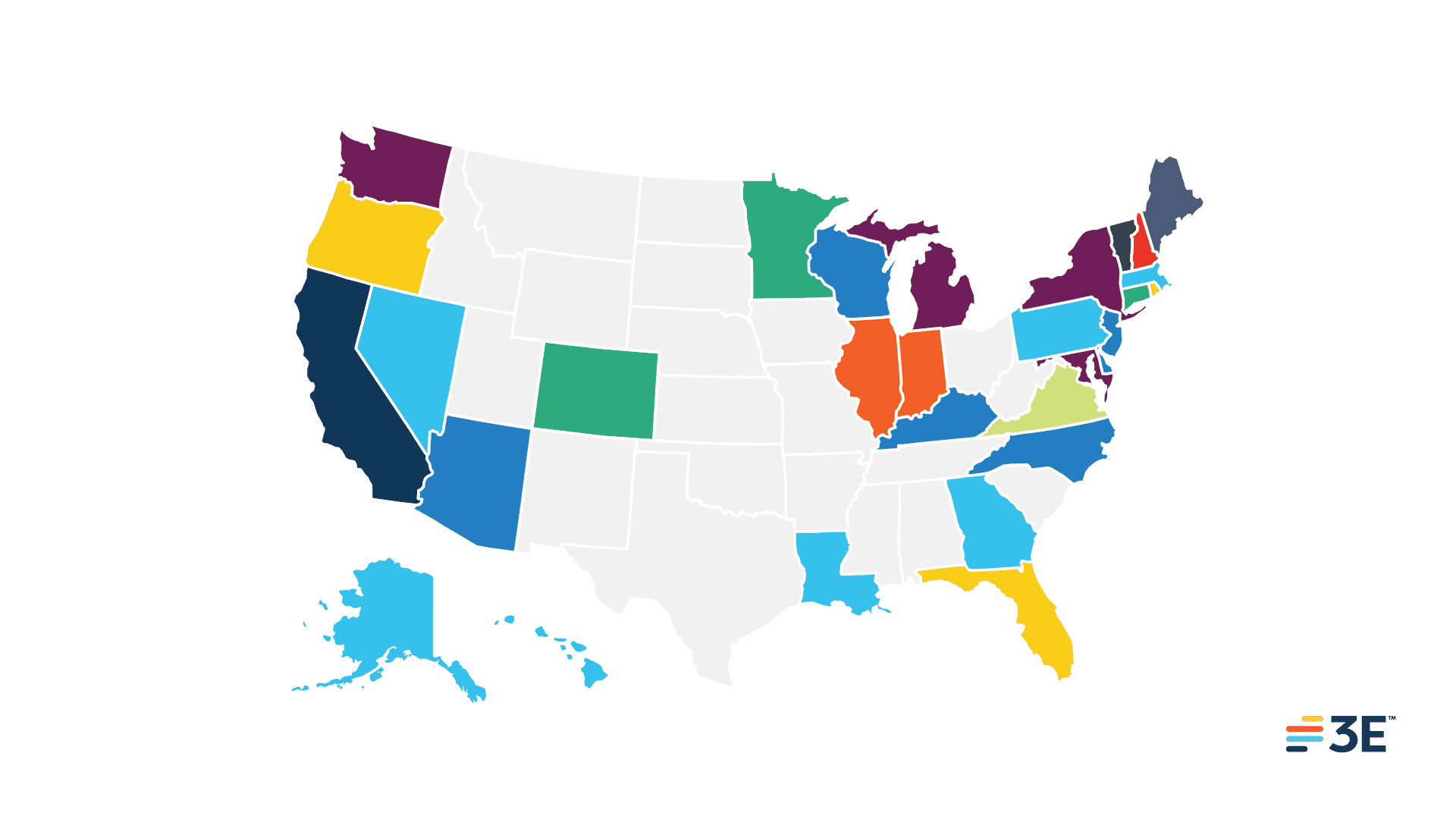
As is reminiscent of many “too good to be true” products and materials, per- and polyfluoroalkyl substances (PFAS) were introduced in the late 1930s to bring certain properties (oil repellent/heat and water resistance) into products entering the market. However, many years later, the chemical composition that gives PFAS these desirable properties is the reason that they are deemed to be so dangerous.
With increasing concerns over contamination and health risks, PFAS management has become a top priority for U.S. federal and state governments. For companies, understanding and adapting to this evolving regulatory landscape is crucial to ensure compliance, safeguard reputations, and meet customer expectations.
Understanding PFAS and Their Impact – US Regulatory Landscape
Given that PFAS are infiltrating the blood of approximately 98% of Americans, this class of chemicals is being recognized as a very serious problem, linked to serious health concerns such as immune dysfunction, cancer risks, and developmental issues.
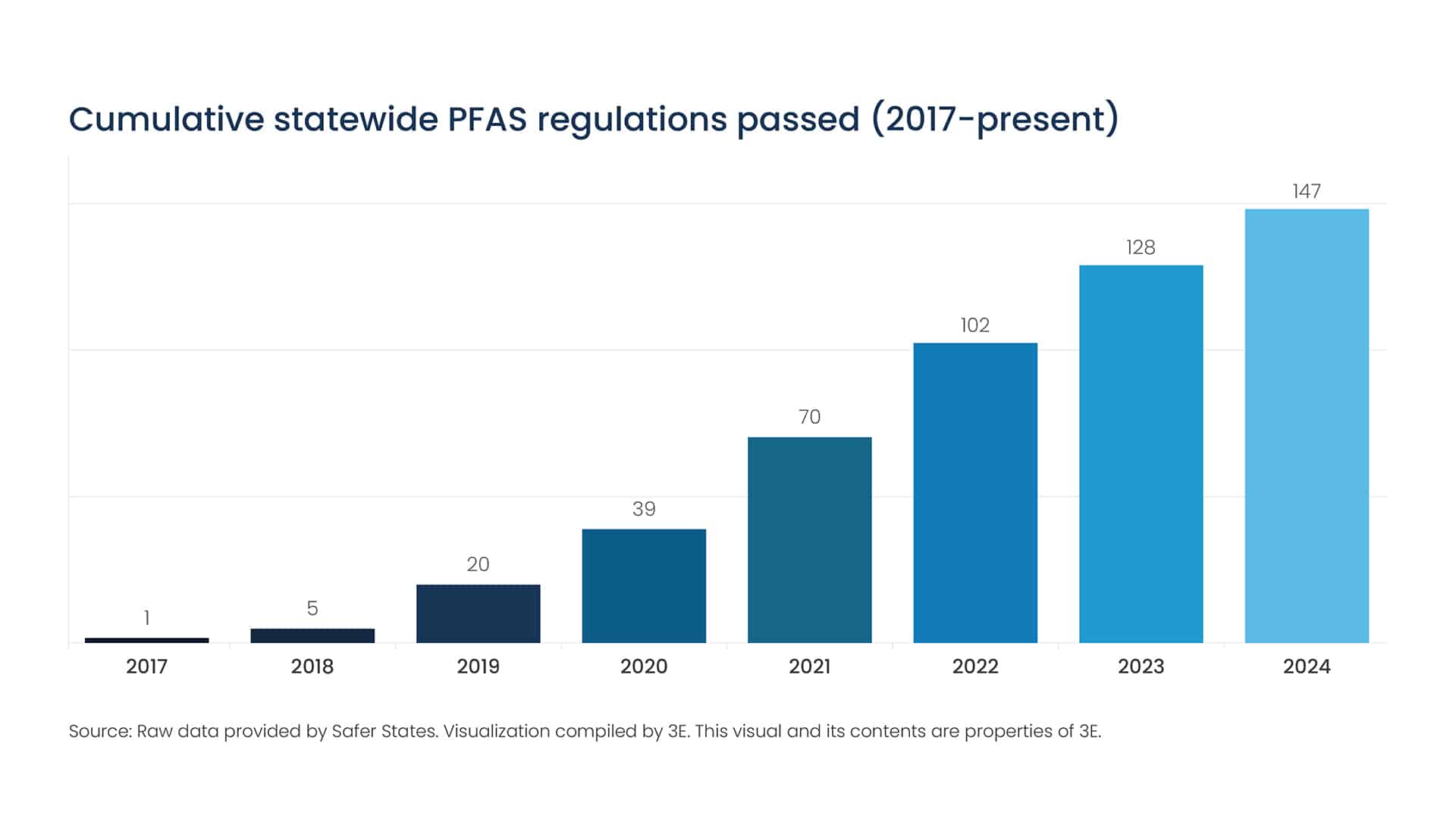
The U.S. Environmental Protection Agency (EPA), along with individual states, has ramped up regulatory measures in recent years. Safer States’ Bill Tracker highlights a sharp increase in PFAS-related regulations between 2017 and 2024, signaling an accelerated response to these threats. The trend shows no sign of slowing, with more states proposing and implementing restrictions.
As outlined by a Global Specialist, Product Safety and Toxicology at a global chemical manufacturer,
“Chemical regulations are evolving very fast, so the most challenging thing is keeping up-to-date with all these new developments, but also understanding what they mean for us.”
In the visual below, created from data from Safer States ‘Bill Tracker ‘, and referenced in our news and insights States and U.S. EPA Consider Expanding PFAS Regulations and Tackle Widespread Contamination, one can see a rapid increase in regulations between the years 2017 and 2024.
US State Regulations on PFAS
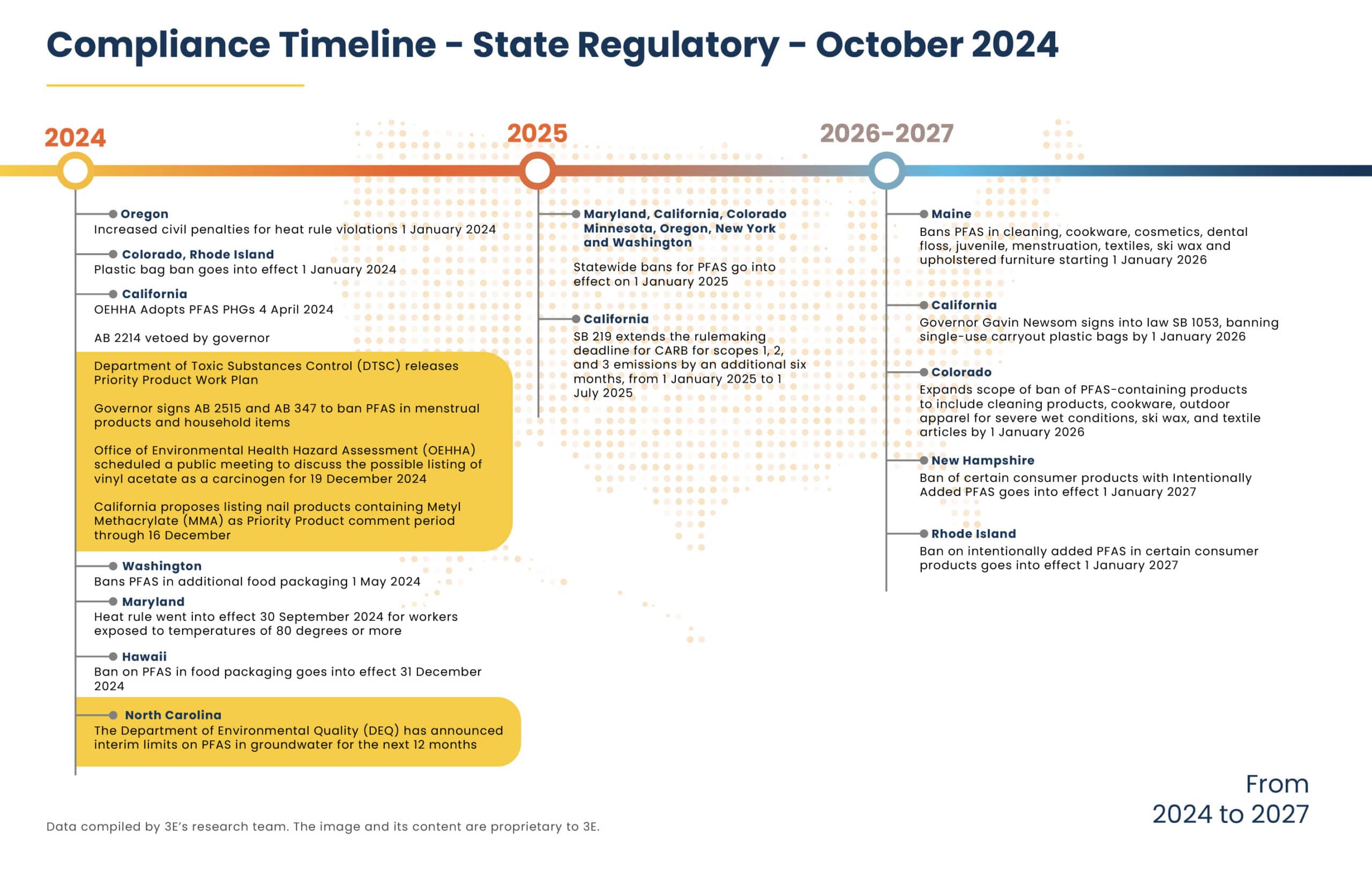
Visualized below, you can see that many US state PFAS requirements are or will take effect in the upcoming years (from now until 2027).
In January 2025 alone, 7 states implemented new or additional PFAS-related regulations, including Maryland, California, Colorado, Minnesota, Oregon, New York, and Washington.
Because states may use different definitions of key terms (e.g., “intentionally added PFAS”), it becomes vital for any manufacturer, retailer, importer, or supplier to keep track of the specific language used in different state jurisdictions
Adapting to Evolving PFAS Regulations – What Companies Should Do
While navigating this dynamic regulatory space may seem overwhelming, companies can take specific steps to build resilience and compliance. Here's what businesses need to know and how they can prepare:
- Stay Ahead with Expertise
- Partnering with knowledgeable advisors or legal counsel ensures you remain updated on the latest PFAS regulations. Regular audits of internal processes also help identify areas of vulnerability.
- Centralize Data and Tracking
- Compliance management software can simplify the process of tracking regulatory changes across states. These tools help map out specific requirements, like identifying PFAS usage or aligning with state definitions.
- Innovate with PFAS-Free Alternatives
- Relying on safer alternatives requires collaboration with suppliers to source and implement non-PFAS ingredients without compromising quality. This is a win-win solution for compliance and sustainability goals.
- Proactively Manage Risks
- Companies that act before regulations take effect position themselves as leaders in their industries and avoid costly fines or disruptions in market access for certain products.
3E’s Solutions for PFAS Compliance
For each challenge, there is a compliance management software solution.
Below are some common challenges that your business might encounter when adapting to the new regulatory landscape pertaining to PFAS in the US along with the various ways that 3E solutions can support you to overcome those challenges.
| Challenge | Opportunity |
| Keeping track of changing regulations | 3E can help you stay up-to-date with regulatory news and insights, filtered by industry, jurisdiction, or exact CAS number |
| Evaluating the impact of emerging regulations | Tying together regulatory news and your product portfolio, 3E's impact analysis provides actionable insights as regulations change |
| Understanding your regulatory/compliance status and engage in PFAS risk management | 3E can help you organize your chemical compliance information and understand what requirements apply to your product lines. |
| Mitigating against recalls, find suitable alternatives, and prepare to innovate when faced with state bans of PFAS | 3E can help you position your business for growth in new markets – without relying on PFAS. |
| Protecting employees from the negative effects of PFAS | 3E can help you author Safety Data Sheets (SDS) to document PFAS presence and advise employees on proper handling |
| Identifying data gaps, collecting comprehensive product supply chain data, and reducing PFAS risk exposure | 3E can help you maintain transparency throughout your supply chain. |
As one client put it,
“3E is providing a high level, holistic solution to the different compliance requirements and compliance issues that are evolving today.”
The Future of PFAS Compliance
The regulatory spotlight on PFAS shows no signs of dimming. Instead, tighter controls and potential outright bans are on the horizon, requiring businesses to stay informed, act quickly, and invest in sustainable operations.
Businesses that approach these challenges with the right tools, partnerships, and proactive strategies will not only safeguard their operations but also position themselves as trusted leaders in an increasingly complex market.
By staying ahead of regulations and utilizing advanced compliance solutions, companies can turn a daunting challenge into an opportunity for success.
For more information on PFAS best practices, please see our resources:
Or Schedule a consultation with our experts at 3E today


Insights straight to your inbox
Sign Up NowRelated Resources

News
EU Omnibus Packages Part 5: Omnibus V – Simplifying EU Defense Regulation
News
EU Omnibus Packages Part 4: Omnibus IV — Product Regulation, Simplification, and Compliance

News
Athletes Disqualified at 2026 Winter Olympics Over PFAS

News
EU Omnibus Packages Part 3: Simplifying EU Agricultural Regulation