Related

EU Omnibus Packages Part 5: Omnibus V – Simplifying EU Defense Regulation
EU Omnibus Packages Part 4: Omnibus IV — Product Regulation, Simplification, and Compliance

Athletes Disqualified at 2026 Winter Olympics Over PFAS

EU Omnibus Packages Part 3: Simplifying EU Agricultural Regulation
Plastic pollution is a problem still looking for a solution. Despite five sessions since 2022 of the Intergovernmental Negotiating Committee (INC) as part of the United Nations Environment Programme (UNEP), significant progress towards an agreement that reconciles the requirements of consumers, the environment, and the plastics industry remains elusive.
Amy Youngman is a Netherlands-based lawyer and legal policy analyst for the Environmental Investigation Agency's (EIA) Ocean and Plastic Campaigns. Youngman works on the global plastics policy team to secure a legally binding international instrument to end plastic pollution.
“Our organization has been involved in securing the mandate to create the Global Plastics Treaty and has attended all of the INC meetings,” said Youngman. “I joined right after the first INC, and it's been an exciting two years negotiating this treaty.”
Tackling Microplastic Pollution in the World's Oceans
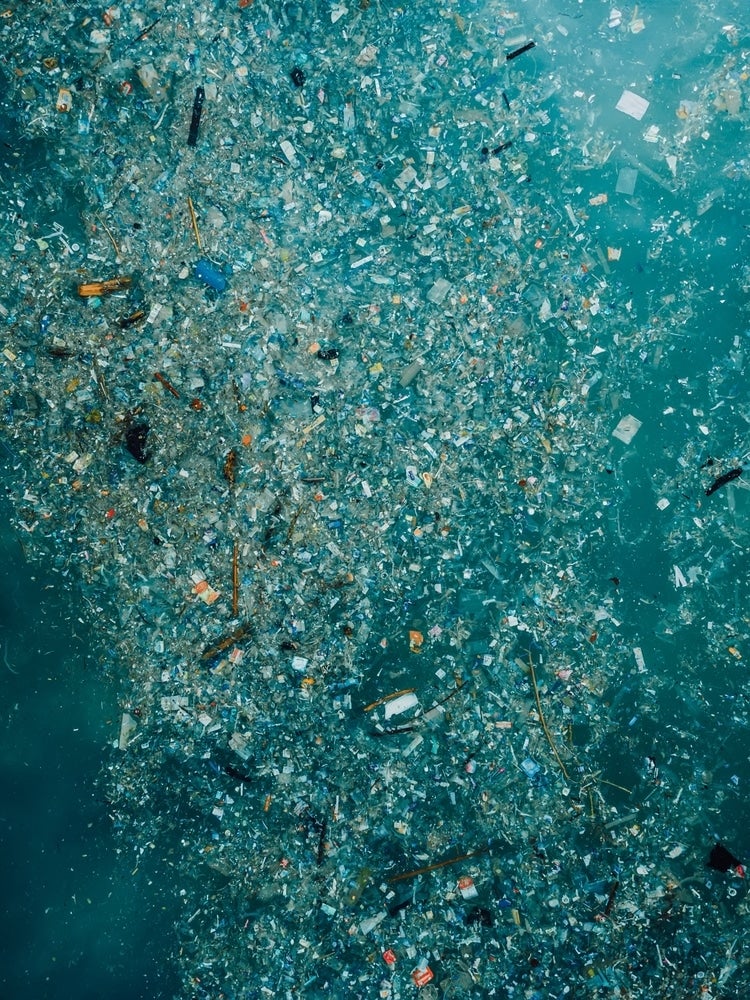
For many people, discussions about plastic pollution bring to mind images of vast quantities of plastic waste such as packaging or drink bottles floating in oceans, lakes, and streams. However, microplastics are a particularly pernicious form of environmental plastic pollution.
Youngman explained that there are different types of microplastics, each of which has different origins, impacts, and reduction approaches. One type of microplastic is pellets, the tiny granules that are shipped around the world to be turned into plastic products. Microplastics can also be found in some exfoliating cosmetic products, while other microplastics are shed from washing clothing made from artificial fibers, or tire degradation from vehicles.
“With pellets, most spills occur due to mishandling,” said Youngman. “In the past, a company would produce the pellets and then they would go directly to manufacturing in the same facility. Now those pellets get shipped all around the world, so as there is in an exponential increase in plastic production there's a lot more transportation and people handling them, which leads to increased spills directly into the environment.”
Youngman pointed out that each type of microplastic pollution requires different interventions from a governance standpoint, which makes it important to manage plastic pollution preventatively instead of simply mitigating its impacts.
“Once microplastics are released into the environment, they're very difficult if not impossible to recover, compared to larger materials,” said Youngman. “If there's a pellet spill at sea, it can completely destroy the marine environment by suffocating marine life. Pellets will also wash up on to the beaches, and currently the most effective way to clean them up is to have people picking them up by hand.”
Youngman pointed to the 2021 X-Press Pearl disaster as an example of this sort of incident, in which a container ship sank off the coast of Sri Lanka and released thousands of kilograms of plastic pellets and other toxic substances into the ocean, causing significant environmental damage.
Youngman said that some microplastics, such as decorative glitter, are non-essential products that are easily banned, which is an approach some countries have already taken. Other products, however, such as textile fibers and tire dust, are more difficult to govern.
“The degradation of secondary microplastics is trickier,” said Youngman. “You're not going to get rid of synthetic fibers or tires, so you need to focus on improved product design and how each type of product is used.”
According to Youngman, this approach requires understanding the practical application of a product and the possible ways in which it might be discarded.
“A good example of this is fishing gear,” said Youngman. “That's something that's intentionally put into a harsh environment where it can degrade and fracture. In some instances, we want to design it to be tougher and more durable.” However, in other cases, that durability could contribute to the product's hazardous characteristics when it becomes pollution. Fishing nets, for example, are often lost or abandoned, in which case the product's durability will contribute to its long lifespan as plastic pollution in the environment.
The ubiquity of microplastic pollution in the environment means governance with an eye towards prevention is much more important than new ways of cleaning up pollution that has already happened.
“Microplastics are everywhere, at the bottom of the Mariana Trench and at the top of Mount Everest,” said Youngman. “They're in placentas, breast milk, brains, and penile tissue. Microplastics are affecting every part of the world, and once they're in the environment or in us, you can't go back to prevent its release. The science is still catching up, but we find microplastics everywhere we look, which is why taking a precautionary and preventative approach is so important.”
Learning to Live with Plastic
Part of managing plastic pollution is understanding where plastic plays a critical role in the modern world, how to design sustainability into it, and how to evolve a way of life that does without some of the unnecessary conveniences that have made plastic pollution such a scourge of the natural world.
“Eliminating all plastic is not feasible right now,” said Youngman. “It's about starting by eliminating the most harmful plastics and regulating significant sources of plastic pollution. Single-use plastics and food packaging are important to look at, as well as things that are put directly into the environment like agricultural plastics and fishing gear. Taking a sectoral approach could allow that sector to come together to identify which plastics are being used and the best way to eliminate, reduce, design, and manage it.”
While many of the public discussions and negotiations about plastic pollution at the INC meetings have been acrimonious and adversarial, Youngman sees the threat from plastic pollution as something that everyone from environmental advocates to the plastic industry wants to prevent.
“Nobody really wants plastic pollution,” said Youngman. “Even if you're a large plastic producer, you don't want plastic in your food, pet, or in your newborn child. Although reduction is a big task, I think it can be done, and I think the plastics treaty negotiations provide enough flexibility to get to work now and then build it out over the next several years.”
The Hard Work to Getting a Plastic Treaty
The failure of the INC meetings to achieve a plastic treaty in 2024 has been a point of frustration for many activists. However, Youngman pointed out that this is perhaps not unusual given the tight timeline within which they had to work.
“The UNEA [United Nations Environment Assembly] Mandate Resolution 5/14 that created the process and suggested we finish within two years is incredibly ambitious for a multilateral agreement given how long these have taken in the past,” said Youngman. “I think this is because it was framed on the Minamata Convention on Mercury, which was a more specific scope, so to look at the entire life cycle of plastics in a two-year time frame was always going to be a difficult task.”
Youngman also noted that despite the lack of a finalized agreement, there have been some significant developments that haven't made the headlines.
“What might have been under-reported is that there's been a convergence of about 100 countries that were calling for ambitious text on production and chemicals of concern,” said Youngman. “Historically, there's been a lot of discussion and exchanging views rather than negotiation. For the first time in the process, there were some negotiations happening in the closed-door meetings and in the hallways.”
For many of these countries, addressing plastic production was a critical principal for creating an effective treaty on plastic production, and it was the countries experiencing some of the most significant impacts of this pollution that were leading the charge.
“The EU joined ambition with the Group of Africa and Pacific Island countries that have been advocating for production reduction, making it even more tangible,” said Youngman. “Having those countries make it clear that production was a red line for them and that they were going to continue to fight for it was really positive for those of us that believe effective regulations across the life cycle of plastic must start with reducing the amount of virgin material produced. I think at the next session [INC 5.2], we can expect more negotiating. The chair has a lot to do in the interim process to make sure everyone comes ready and willing to negotiate. It felt like a spirit of compromise started in Busan, and I hope that will carry forward.”
The EU is finalizing a regulation preventing the loss of plastic pellets. These new rules will address the handling of plastic pellets along the supply chain, which could reduce plastic-pellet pollution in the environment by up to 74%. According to Youngman, combining this regulation with best-practice approaches for the industry could be a useful step towards achieving further success at the upcoming plastic treaty negotiations.
“Implementing robust prevention measures and best practices for spill cleanups is an easy win,” said Youngman. “It could create a bit of momentum, as we can go back to the Global Plastics Treaty with a proven regulatory approach that can be used and replicated by other countries to prevent pellet spills.”
Dirty Deals in Plastic Industry
The EIA recently released its “Dirty Deals” investigative reports detailing illegal activity in the global plastic waste trade. It uncovers the ways in which bad actors in the plastics industry exploit regulatory weaknesses and legal loopholes to profit from illegal plastic disposal that maximizes profit at the expense of the environment and human health.
“We found that companies are hiding household waste, dirty nappies, and construction material in shipments and labeling it legitimate, clean plastic waste,” said Youngman. “Enforcement is quite difficult, so they ship it to third countries where that waste is at a high risk of being dumped or burned.”
Youngman says criminals take advantage of complex plastic disposal practices to make money.
“Excessive waste generation comes from the overproduction and consumption of plastic in wealthy countries that do not invest in domestic waste management infrastructure and send it overseas because it's cheaper. Illegal trade exists solely as an offshoot of legal trade and creates a whack-a-mole effect where new regulations to block imports mean plastic waste gets redirected to a new country,” said Youngman. “Our focus should be to look at the people generating and shipping the waste, minimize exports, and make sure there are legitimate regulations in place to ensure that the waste is what it purports to be before anything gets shipped abroad.”
Like any type of organized criminal activity, any attempts to enforce the rules are usually met with sophisticated responses.
“As you create more legislation, the crime gets more sophisticated and becomes more organized,” said Youngman. “In the UK, some companies are better able to hide it because they have more resources to evade enforcement tactics.”
As Youngman points out, there can be a significant distinction between the high-level international treaties and the way everyday bad actors influence the way we dispose of plastic waste in the real world.
“While international treaties look promising on paper, they require strong enforcement mechanisms and continued cooperation,” said Youngman. “The reality is that there are these folks on the ground that, in order to make a buck, will do some bad things, run scams, and harm a lot of people in the process.”


Insights straight to your inbox
Sign Up NowReporter
Graham Freeman
Graham Freeman is based in Toronto, where he covers ESG and sustainability news. Graham has been a content and technical writer in the technology industry for more than a decade. He has also worked as a professor and lecturer at Queen’s University, the University of Toronto, and George Brown College.

Related Resources
News
EU Omnibus Packages Part 5: Omnibus V – Simplifying EU Defense Regulation
News
EU Omnibus Packages Part 4: Omnibus IV — Product Regulation, Simplification, and Compliance
News
Athletes Disqualified at 2026 Winter Olympics Over PFAS
News
EU Omnibus Packages Part 3: Simplifying EU Agricultural Regulation