Related

EU Omnibus Packages Part 5: Omnibus V – Simplifying EU Defense Regulation
EU Omnibus Packages Part 4: Omnibus IV — Product Regulation, Simplification, and Compliance

Athletes Disqualified at 2026 Winter Olympics Over PFAS

EU Omnibus Packages Part 3: Simplifying EU Agricultural Regulation
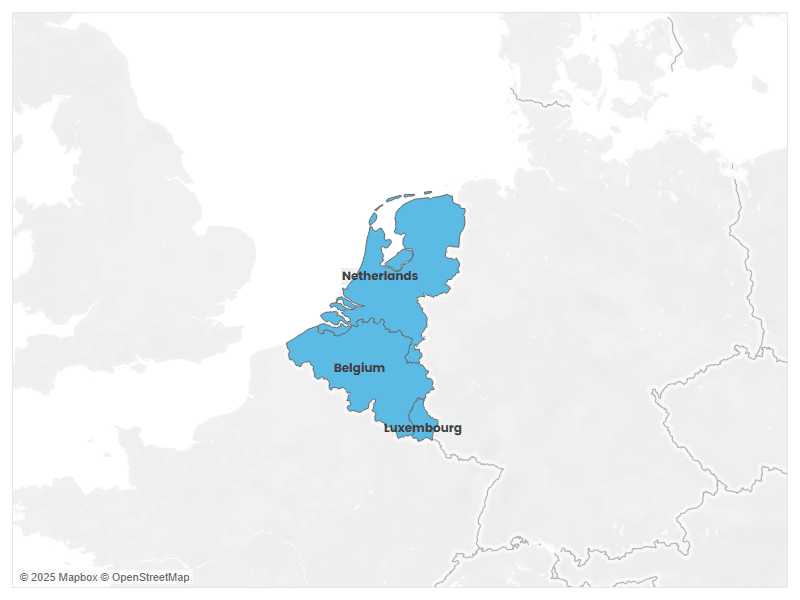
EPR Roundups examine extended producer responsibilities (EPR) across the markets served by 3E. They use expert insights from our research team and proprietary 3E data to explore the EPR regulatory landscape and help readers determine their obligations in the jurisdictions in which they do business.
Belgium
Belgium's primary legislation for managing waste and EPR responsibilities is the 2008 Packaging Waste Agreement, which applies to all regions in Belgium. Belgian packaging producers must inform authorities of the packaging quantities placed annually on the Belgian market, take back all packaging through organized recovery and recycling operations, and introduce prevention plans every three years outlining efforts to minimize packaging waste.
Packaging Types
The waste agreement defines waste by function rather than material. Packaging can therefore be made of any material as long as it protects goods and facilitates their handling, presentation, and transportation to customers. Packaging materials are single or compound materials of natural or artificial origin, and plastic is considered a polymer.
Packaging types are either primary for sales, secondary for groups, tertiary for transport, or service to be used at the point of the provision of goods. Non-reusable packaging is considered one-way packaging and is subject to producer take-back obligations.
Belgium's 2020 Package Waste Decree introduces specific definitions for plastic bags.
Producers
The term “producers” applies to anyone who places packaged products on the market in Belgium, including domestic and foreign producers and importers of household, industrial, and service packaging.
The Interregional Packaging Committee (IRPC) oversees the implementation of EU Directive 94/62/EC into Belgian law. It identifies four types of producers:
- Type A producers package products in Belgium and place them on the Belgian market.
- Type B producers import packaged products for the Belgian market.
- Type C producers have industrial waste from products that do not qualify as Type A or B.
- Type D producers place service packaging on the Belgian market. Service packaging includes items such as wrapping paper, bread bags, pizza boxes, and checkout bags.
Requirements
The IRPC defines the specific minimum recycling goals for household and industrial packaging. These goals were established in 2023 and will increase in 2030.
At the pre-market stage, producers must create a prevention plan every three years, though they can delegate this responsibility to another legal entity at least 12 months before the plan is due.
The 2008 Packaging Waste Agreement provides recovery and recycling rates for producers' take-back obligations. Producers that place at least 300 kilograms of packaging on the market annually must bear the cost of the collection, recovery, and disposal of packaging waste and must meet recovery and recycling targets.
Producer Responsibility Organizations
Most producers must join one of the two producer responsibility organizations (PRO) in Belgium: Fost Plus for household packaging or Valipac for industrial packaging. If a producer manages both types of waste, it must join both organizations. PROs fulfill take-back and information obligations for their members. Companies that place less than 300 kg of packaging on the market each year are not obligated to join a PRO.
Producers responsible only for Type C packaging or that organize waste collection from their customers can declare themselves an Interregional Packaging Commission (CIE) to fulfill their obligations.
Sellers of packaged goods are obligated to accept packaging waste generated by products they have placed on the market even if they are members of PROs, and they must make containers available for this purpose.
Reporting
Producers must report annually to the IRPC by March 31. Reports must include the total quantity and composition of packaging placed on the market, quantity of waste recovery and disposal, total quantity of goods with reusable packaging, and total quantity of packaging contaminated by hazardous substances. PROs will complete reports on behalf of their members.
Producers that annually place more than 300 tons of packaging and/or 100 tons of one-way packaging on the Belgian market must prepare a prevention plan every three years summarizing measures to reduce packaging waste and encourage reuse. This plan must be submitted to the IRPC by June 30 for evaluation.
Fees
PROs set their own membership rates. Valipac's rates are based on quantity of materials collected and the recyclability of those materials, with fees ranging from €17/ton for recyclable materials excluding plastic, €53/ton for plastics, and €80/ton for non-recyclable materials.
Green Dot rates reflect the cost of collection, sorting, and recycling, with a minimum contribution of €100.
There is also an environmental levy on beverage containers at a rate of €1.41 per hectoliter for recyclable containers and €9.86 per hectoliter for single-use containers. This levy does not apply to containers for milk and milk products.
Luxembourg
Luxembourg's 2017 Law on Packaging and Packaging Waste (amended 2022) provides guidance for its EPR requirements. It applies to all packaging placed on the market in Luxembourg regardless of its use (business or household) or its materials. There is also the Law on Certain Plastic Products that creates additional obligations for producers of single-use packaging such as food and beverage containers, plastic bags, and flexible packaging.
Luxembourg's l'Administration de l'environnement (Environmental Agency) works with packaging producers to ensure they meet their EPR obligations.
Packaging Types
Packaging is defined by function and must facilitate the protection, transport, and presentation of goods. Packaging that is integral to the product and will be used and disposed of together with the product is not considered packaging.
The 2017 Law on Packaging and Packaging Waste defines plastic as a polymer to which other substances have been added.
There are three packaging types: primary for sales, secondary for group packaging in units, and tertiary for transport. Service packaging, as noted below, has additional EPR requirements.
Producers
Producers are persons or legal entities responsible for putting packaged goods on the market in Luxembourg. They can be legally established in Luxembourg, an entity operating in Luxembourg that receives imported packaged goods, or an entity outside of Luxembourg that sells goods directly to consumers in Luxembourg.
Producers are responsible for the recovery of service packaging, not the business that uses it at the point of sale. Service packaging is “any primary or secondary packaging used at the point of provision of goods or services to the customer.”
Requirements
Annex 1 of the 2017 Law on Packaging and Packaging Waste provides composition and design standards for packaging placed on the market in Luxembourg. These standards include requirements to design minimal packaging to protect the product and facilitate reuse, recovery, and recycling while reducing impact on the environment, including limiting the use of harmful or hazardous chemicals that could produce emissions during disposal. The legislation also limits the amounts of lead, cadmium, mercury, and hexavalent chromium present in packaging to a maximum of 100 parts per million by weight.
Annex 1 indicates that packaging should include recycled materials, be designed to optimize energy recovery, or be compostable. It defines what packaging qualifies as reusable and states that labels must indicate the type of material used, which will facilitate recovery and recycling.
Producers must inform end users of opportunities to reduce, return, reuse, or recycle packaging waste and of the negative impacts on the environment of plastic-bag waste. Sellers must also ensure end users are aware of take-back, reuse, recovery, and recycling options for packaging of products they sell.
Producer Responsibility Organizations
Packaging producers must participate in PROs for household or industrial waste that is not reusable, but they can choose to participate in the PRO for reusable packaging or to manage it themselves. Producers must inform the Environmental Agency if they choose to manage their take-back obligations themselves. PROs can invoice non-affiliated packaging producers for any costs associated with managing or recovering their packaging waste.
Valorlux is the only PRO approved by le ministère de l'Environnement, du Climat et de la Biodiversité luxembourgeois (Luxembourg Ministry of the Environment, Climate, and Biodiversity) to manage household packaging. PROs submit annual reports to the Environmental Agency by April 30 each year indicating quantities and categories of packaging placed on the market and packaging waste collected, reused, recycled, and recovered.
The government of Luxembourg has minimum recycling targets that must be achieved for materials such as plastic, wood, glass, and paper.
Reporting
Packaging producers have four legal obligations:
- Take-back obligation: producers must recycle and manage the packaging waste they put on the market.
- Informal obligation: producers must provide detailed accounts of their recycling achievements to the Environmental Agency.
- Prevention obligation: producers must reduce the packaging they place on the market.
- Reporting obligation: producers must prepare a public annual report of their EPR activities.
Packaging producers must provide their PRO with declarations of packaging they place on the market by February 28 each year.
Fees and Taxes
Contributions to the PRO are determined by the type and quantity of packaging producers place on the market, with a minimum contribution of €50.00. Calculations are based on Green Dot rates and the declaration system for reporting.
Valorlux has detailed reporting methods for producers who have a good understanding of the composition of their packaging and simplified reporting methods for producers who do not. For simplified reporting, tariff rates are calculated based on product units placed on the market.
Reusable packaging is not subject to PRO fees, and Luxembourg does not have green or environmental taxes associated with packaging or plastics.
Netherlands
The Netherlands has an extensive framework for EPR, with EPR provisions for almost all types of packaging placed on the market, including imported products.
Packaging Types
Packaging can consist of several types of materials, including glass, paper, cardboard, plastic, aluminum, wood, and other material. For composite or laminate materials, producers must pay the packaging waste management contribution for the different categories of material that make up the composite, and each must be declared separately.
Plastic packaging has special requirements, including the requirements that plastic bottles consist of at least 25% recycled materials and that bottles must have attached caps. There is also a ban on single-use food and beverage containers made of polystyrene.
Beverage containers are subject to special restrictions, including the requirement that producers and importers charge a deposit on beverage containers made of plastic or metal with a capacity of under three liters.
There are three packaging types: primary packaging for sales to consumers, secondary packaging for multiple-unit sales, and tertiary packaging to facilitate transportation of products.
Ancillary packaging with components that are part of the packaging and have some packaging function are subject to the EPR requirements. Further, reusable packaging that is refilled or reused several times is subject to the packaging waste management contribution when it is first placed on the market but not after, though it must be declared each time it is put on the market.
The legislation also applies to takeaway packaging such as carrier bags and food containers provided to consumers at point of sale.
Envelopes sized C5 or smaller, as well as envelopes for personal correspondence, are exempt from the packaging waste management contribution.
Some unique types of packaging are also exempt, including syringes, non-refillable lighters, and non-refillable pens.
Producers
The 2014 Packaging Management Decree defines producers as entities established in the Netherlands who place packaged products on the market under their name, those producing takeaway packaging, and anyone outside the Netherlands who sells packaged products directly to consumers in the Netherlands.
Producers must fund the collection and recycling of all packaging materials and must notify the Ministry of Infrastructure and Water Management about how they comply with this requirement within six weeks of placing packaged products on the market.
A minimum 74% by weight of total packaging must consist of reused or recycled materials, and the required amount of packaging that is recycled increases each year.
Producers who place less than 50,000 kilograms of packaging material on the market or who remove more than 50,000 kilograms after importing goods are exempt from some EPR requirements.
Requirements
Producers must design packaging to minimize waste and materials used while facilitating recycling. Producers must retain records of these design requirements and be prepared to present them to the Ministry of Infrastructure and Water Management at any time.
Packaging may not contain a total concentration of lead, cadmium, mercury, or hexavalent chromium or its compounds in excess of 100 parts per million by weight, in accordance with Annex II of the EU Packaging Directive. Packaging made from oxo-degradable plastic is not allowed on the Dutch market.
The 2014 Packaging Management Decree contains specific requirements for the proportion of material that must be recycled or reused for different product types, including plastic, aluminum, glass, paper, cardboard, wood, and ferrous metal. It also contains special provisions for beverage containers with a capacity under three liters.
Package labeling indicating the packaging material must comply with EU Decision 97/129EC and EU Directive 94/62/EC and must be clearly visible even after the packaging has been opened. Packaging must also indicate if it contains plastic that is harmful to the environment.
Producer Responsibility Organizations
Verpact has been the official PRO in the Netherlands since 2019. It is contracted by the Association of Dutch Municipalities (VNG) to coordinate collection and recycling of packaging waste, fees associated with EPR, and annual reporting for producers.
Reporting
Producers who place more than 50,000 kilograms of packaging material on the Dutch market are subject to reporting requirements and fees payable to Verpact. Reporting requirements are set out in the 2020 Decision on Extended Producer Responsibility Scheme, including those for data on the implementation of the collection system, quantity of packaging produced, and information on reused and recycled packaging.
Producers must also report annually on educational activities to inform consumers of proper methods for disposing of packaging waste. These reports are due by July 31 each year.
Fees and Taxes
Packaging producers must contribute to the Afvalfonds Verpakkingen (Packaging Waste Fund), which reimburses the costs incurred for collecting and recycling domestic packaging waste based on the quantity and type of packaged materials they place on the market annually. This fee takes into account the costs involved in collecting and recycling each waste type.
The fee structure contains provisions to incentivize the reduction of plastic packaging, including a discounted material rate for highly recyclable plastic packaging. Packaging used internally within a business and not placed on the consumer market may also be eligible for a “business packer” rate.
Supermarkets and entities that sell food and drinks must charge customers for single-use containers if they contain plastic. They also cannot provide free plastic bags and must provide reusable alternatives.
About the Contributor: Dolan Harrington is a Data Journalist at 3E. His analytics career has spanned organizations including Delta Air Lines, Pendo (a unicorn product analytics startup), and S&P Global. He has a master's degree in business analytics from William & Mary.
About the Contributor: Emilia Vassileva, Senior Regulatory Analyst at 3E, is a highly experienced lawyer with over 20 years of expertise in Comparative Environmental Law. She specializes in environmental health and safety (EH&S); food, food contact materials (FCM); pharmaceuticals, and cosmetic legislative developments and policies across the European Union and EMEA region. Emilia is deeply involved in international law, covering multiple conventions on chemical regulation and significant trade groups. Her previous roles include serving as a Bulgarian judicator and working as an independent consultant on U.S. and EU trade and bankruptcy law. Emilia holds a law degree from Sofia University St. Kliment Ohridski and a Master of Laws (LLM) from the Washington College of Law, American University, Washington DC.


Insights straight to your inbox
Sign Up NowReporter
Graham Freeman
Graham Freeman is based in Toronto, where he covers ESG and sustainability news. Graham has been a content and technical writer in the technology industry for more than a decade. He has also worked as a professor and lecturer at Queen’s University, the University of Toronto, and George Brown College.

Related Resources
News
EU Omnibus Packages Part 5: Omnibus V – Simplifying EU Defense Regulation
News
EU Omnibus Packages Part 4: Omnibus IV — Product Regulation, Simplification, and Compliance
News
Athletes Disqualified at 2026 Winter Olympics Over PFAS
News
EU Omnibus Packages Part 3: Simplifying EU Agricultural Regulation