Understanding PFAS Compliance Challenges
Perfluorinated and polyfluorinated alkyl substances (PFAS) have earned the name “forever chemicals” due to their persistent presence in the human body and the environment. More than 4,700 chemicals identified to date are widely used in everyday products but have been found to cause serious health problems ranging from cancer to fertility issues, liver damage, and hormone disruption. PFAS contamination impacts our bodies, drinking water, soil, and air. As a result, environmental and health communities globally are stepping in to address the use of PFAS, creating regulations to reduce or eliminate usage.
Global PFAS Regulations and Their Impact
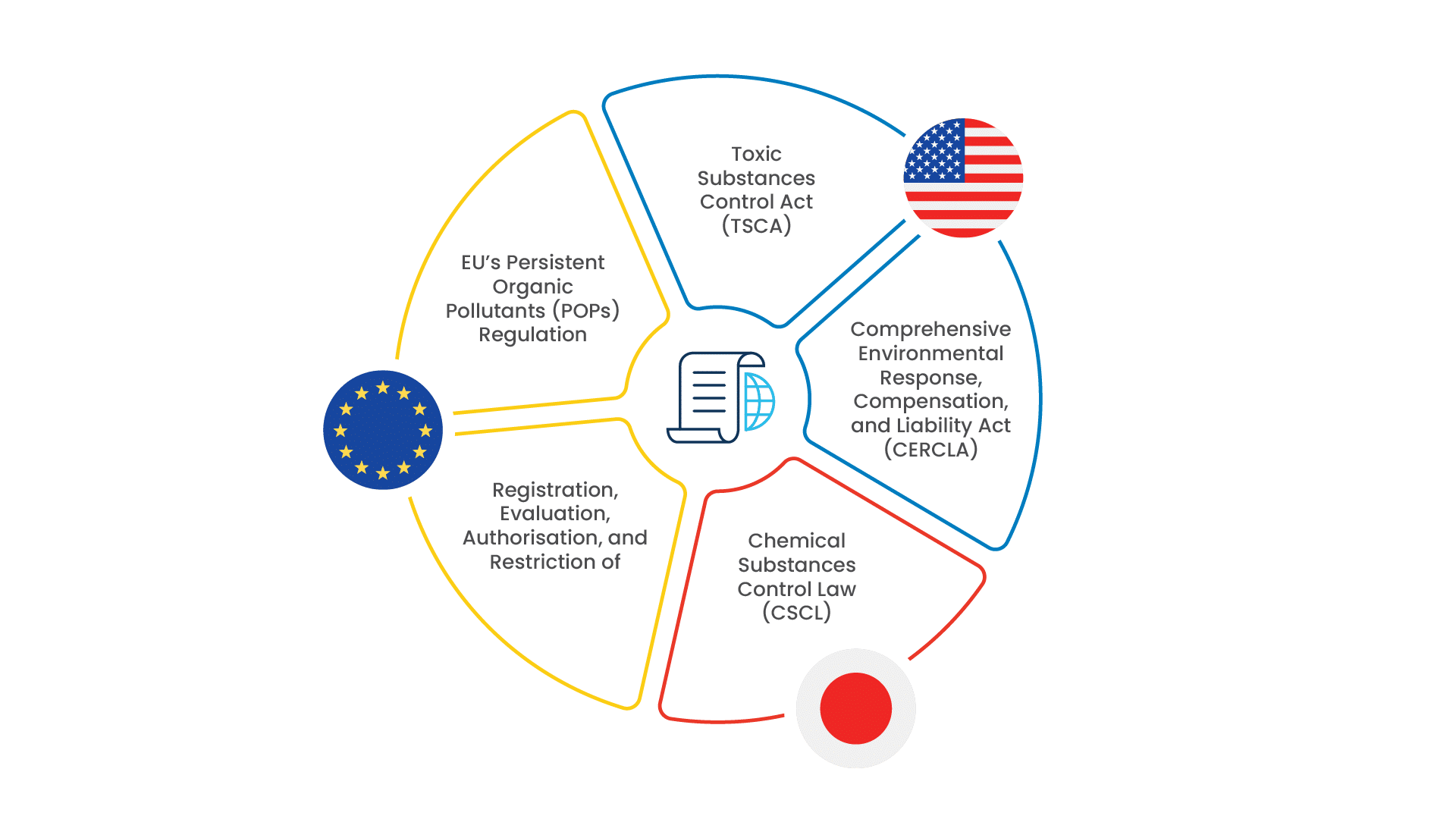
A complex web of regulations addressing the use of PFAS in products is emerging globally. There are dozens of orders by national and regional governments as well as non-governmental associations prescribing restricted use of PFAS. The most well-know of these include:
Compliance with evolving regulations presents a challenge
In a global business landscape, complying with these quickly evolving regulations presents a formidable challenge. The volume and complexity of data involved make it difficult for teams to accurately process regulatory specifications and deliver the required reporting using manpower alone.
Compliance challenges
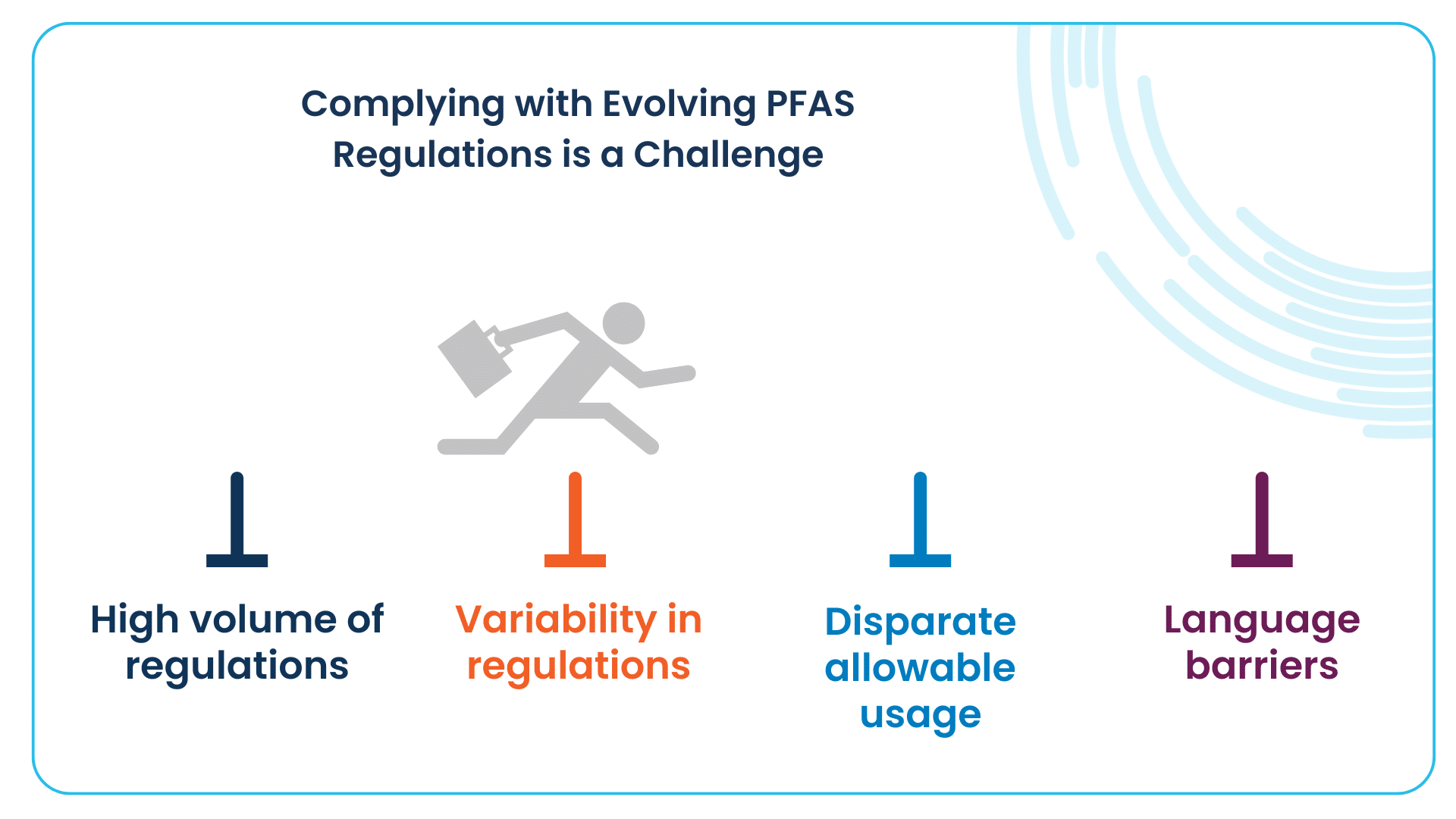
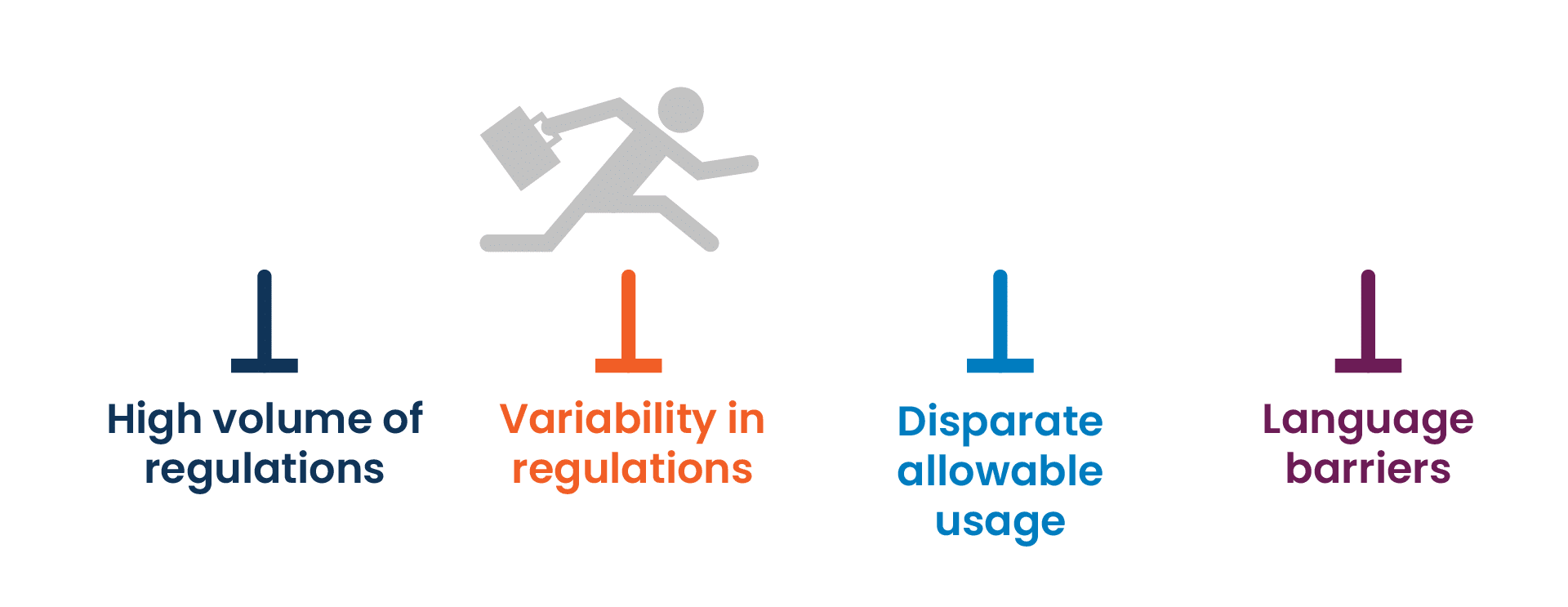
- Volume of regulations - In addition to the most well-known regulations that address the use of PFAS, there are countless regional, state, and national regulations with which companies must comply in order to sell their products in key markets. Lengthy, highly technical, and detailed regulatory provisions require time and effort to read and organize.
- Variability in regulations - The specific provisions of each regulation differ, as well as the list of specific substances of concern and reporting requirements, taxing product stewardship and compliance teams.
- Disparate allowable usage limits - Some countries may have completely banned use of a substance, while others may restrict usage to specifically defined applications, while others may permit a certain content level. Companies must have clear visibility into which substances are used in which products and processes in which locations to comply with a plethora of regulations.
- Language barriers - Local compliance means delivering highly detailed, technical reports in the local language of the regulation. Translating this highly technical content can be a very time consuming and expensive.

article
Webinar Recap: Simplifying PFAS Risk Management and Compliance for Businesses
July 1, 2025
Financial risks of non-compliance with PFAS regulations
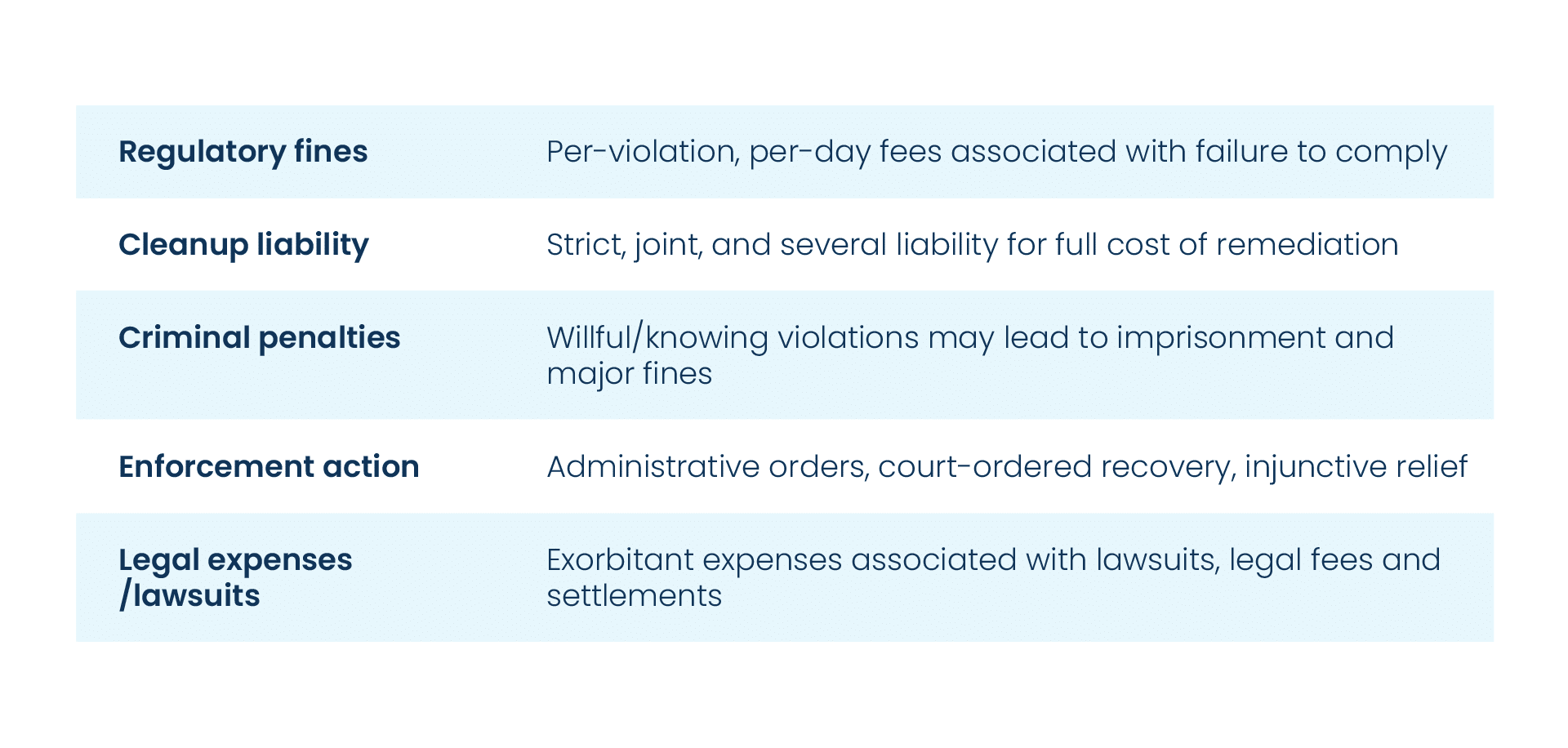
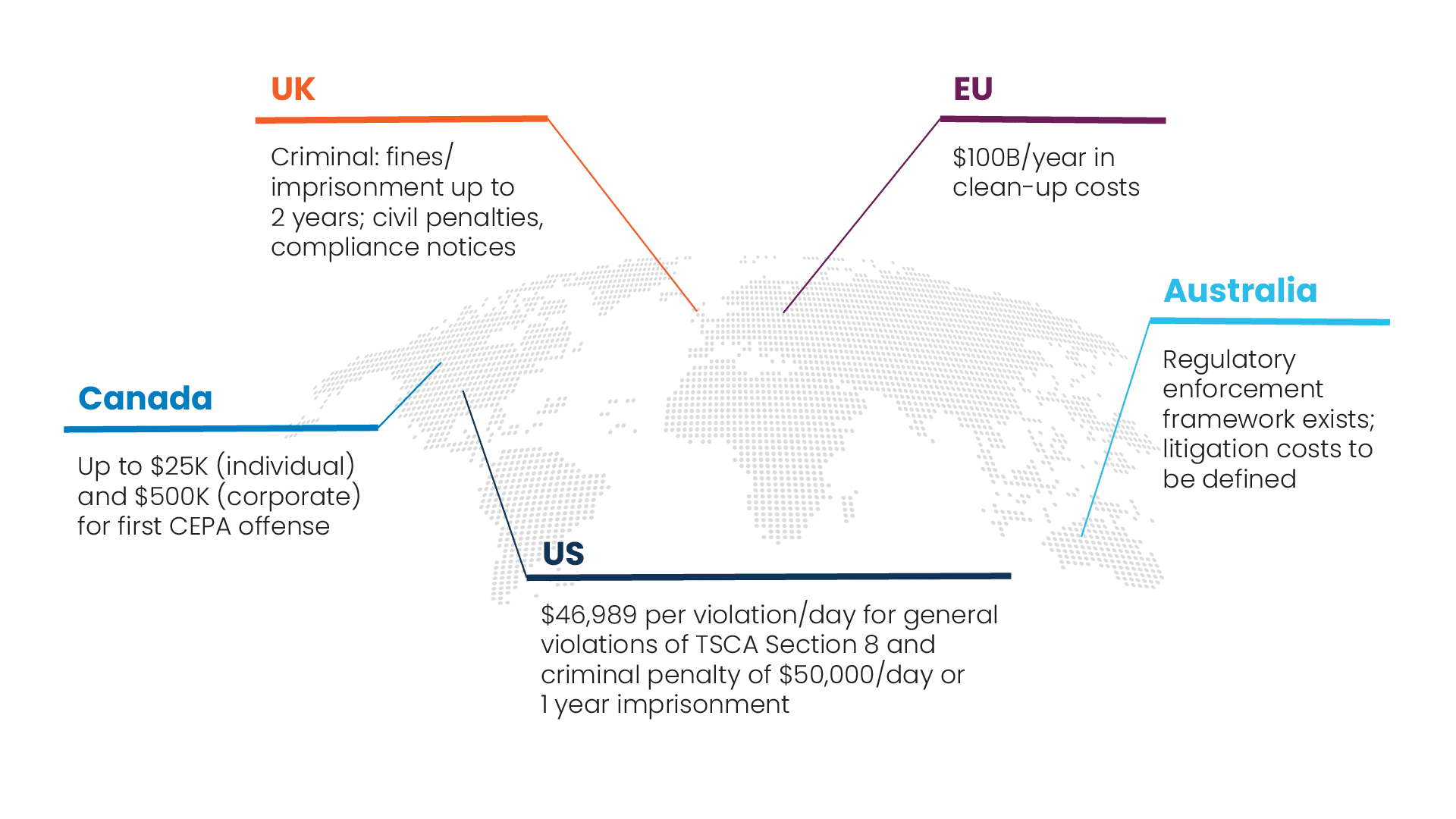
When making the case for investing in compliance software, consider the costs of non-compliance. Direct monetary expenses can result from fees and fines associated with failure to comply. In addition, clean-up costs, criminal penalties, legal fees and other expenses are associated with companies' use of PFAS. This goes without mentioning other risks and intangible costs including loss of brand trust, customer attrition, loss of revenues due to product launch delays, and damages associated with future tort claims and environmental lawsuits.
Expenses associated with PFAS noncompliance
Consider some of the liabilities and expenses imposed by countries worldwide on companies that fail to comply with PFAS regulations.
Many organizations have experienced the consequences of non-compliance. Several well-known organizations have suffered from notable violations, resulting in significant fines.
Key Compliance Tools for PFAS Management
PFAS-related liabilities represent one of the most significant emerging costs for regulated industries, municipalities, and governments. In the U.S., enforcement is intensifying under TSCA and CERCLA, while global jurisdictions are increasingly adopting stricter compliance and cleanup frameworks. For companies that fail to comply, the financial stakes are high.
Savvy companies are positioning themselves to comply with PFAS regulations globally by investing in tools and technologies that help them optimize their teams' productivity and streamline compliance.
Don’t risk non-compliance! Speak with a 3E expert today to streamline your PFAS compliance process and protect your business.


Insights straight to your inbox
Sign Up NowRelated Resources

News
EU Omnibus Packages Part 5: Omnibus V – Simplifying EU Defense Regulation
News
EU Omnibus Packages Part 4: Omnibus IV — Product Regulation, Simplification, and Compliance

News
Athletes Disqualified at 2026 Winter Olympics Over PFAS

News
EU Omnibus Packages Part 3: Simplifying EU Agricultural Regulation