Maintaining a network of global suppliers provides companies with flexibility, enhanced resilience and cost-effective materials. However, the complexity of modern supply chains makes it difficult to gather data on materials and substances used in components. Regulations like the Toxic Substances Control Act (TSCA) in the U.S. and Registration, Evaluation, Authorisation and Restriction of Chemicals (REACH) in the EU, demand increasingly detailed information about a product's chemical composition and content levels.
Why Supply Chain Transparency Matters for Compliance
For most companies, collecting and consolidating data from suppliers presents a formidable challenge. In fact, a report from inspectario indicates that less than 10% of surveyed companies have achieved full automation with digital solutions. Organizations are scrambling to upgrade manual and legacy systems to solutions that are capable of generating needed data.
A recent survey conducted by 3E highlights the difficulties companies face when collecting chemical compliance and other data from suppliers. It explores their plans for achieving greater transparency, and their priorities when it comes to solution capabilities.
Use this information to:
- Assess your own supply chain data collection process
- Consider the drivers behind supply chain transparency
- Identify effective tools and methods for supplier engagement
3E's work with dozens of the world's leading chemical, pharmaceutical, manufacturing consumer package goods, industrial, and retail companies gives us keen insight into supply chain transparency trends.
We invite you to explore the new age of supply chain data collection and identify solutions to advance the speed, efficiency, and value of your supplier engagement.
Top Drivers of Supply Chain Transparency and Data Collection
Stepwise advancements in supply chain transparency are being propelled by the need to report on sustainability performance, governance, and adherence to chemical and workplace safety regulations. Survey respondents indicated several drivers of their investment in supply chain data collection.
Percentage of respondents who selected this option as a motivator for supply chain data collection at their organization:
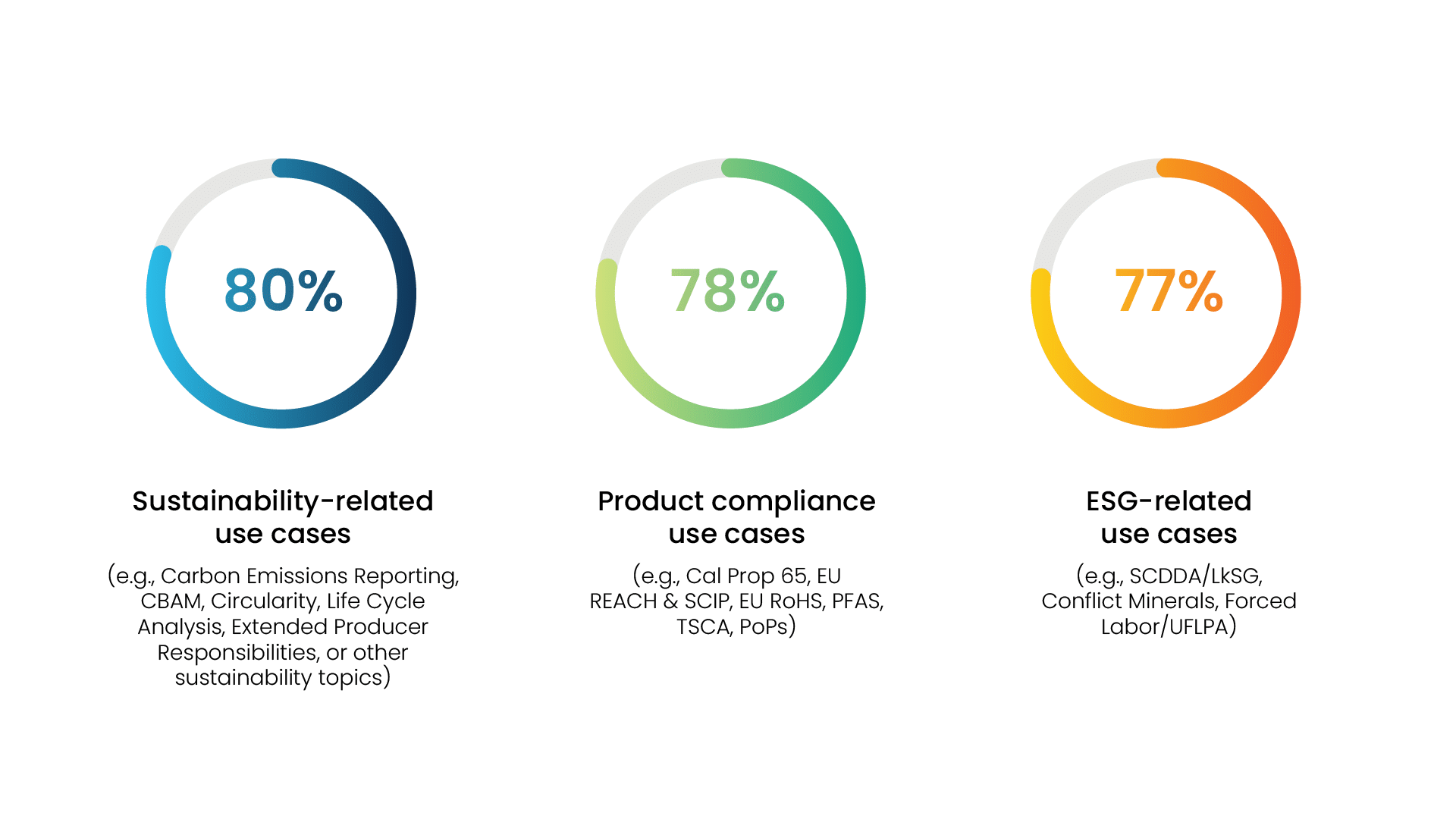
The close ranking of these drivers indicates that companies need meaningful data to report on a number of performance attributes, from sustainability to compliance and governance. The need is definitive, but as demand for data surges, the majority of companies find their ability to provide the required data in a seamless, timely manner, lagging the ambitious reporting demands of the modern, digital world.
Regulations Impacting Supply Chain Compliance
When asked to identify the top regulations impacting their organizations, companies identified the following topics as the most important to their organization.
Compliance demands supply chain data collection
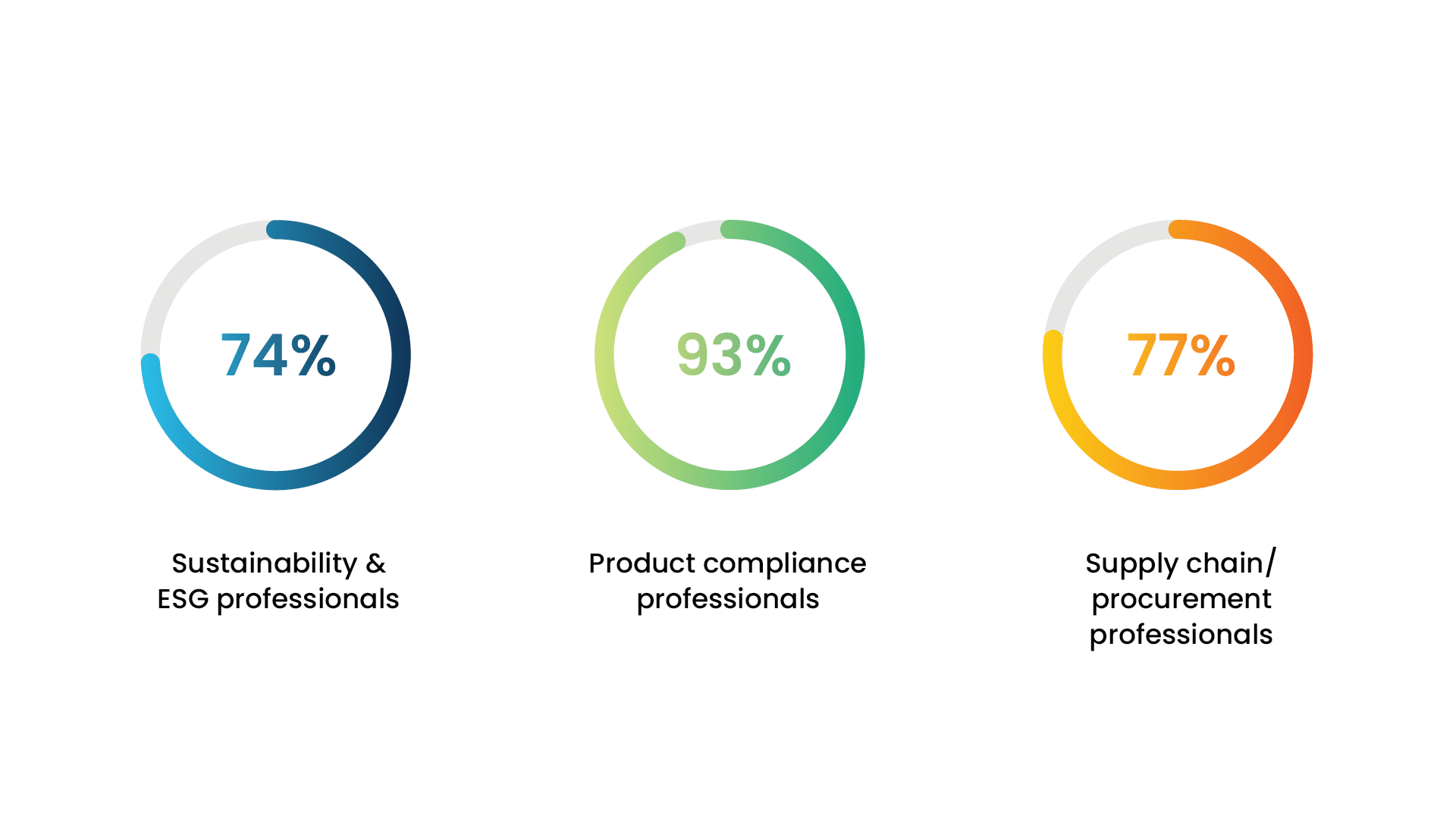
When asked about the primary motivator for supply chain data collection, respondents across roles identified regulatory compliance as a key driver.
Percent of respondents who cite regulatory compliance as the primary reason for data collection:
Challenges Grow Alongside Supply Chain Complexity
Organizations are expected to comply with a growing number of regulations, particularly on the chemical compliance side. Regulatory bodies including the U.S. Environmental Protection Agency, the European Chemicals Agency (ECHA), and the European Commission all require detailed accounts of chemicals used in products and amounts used.
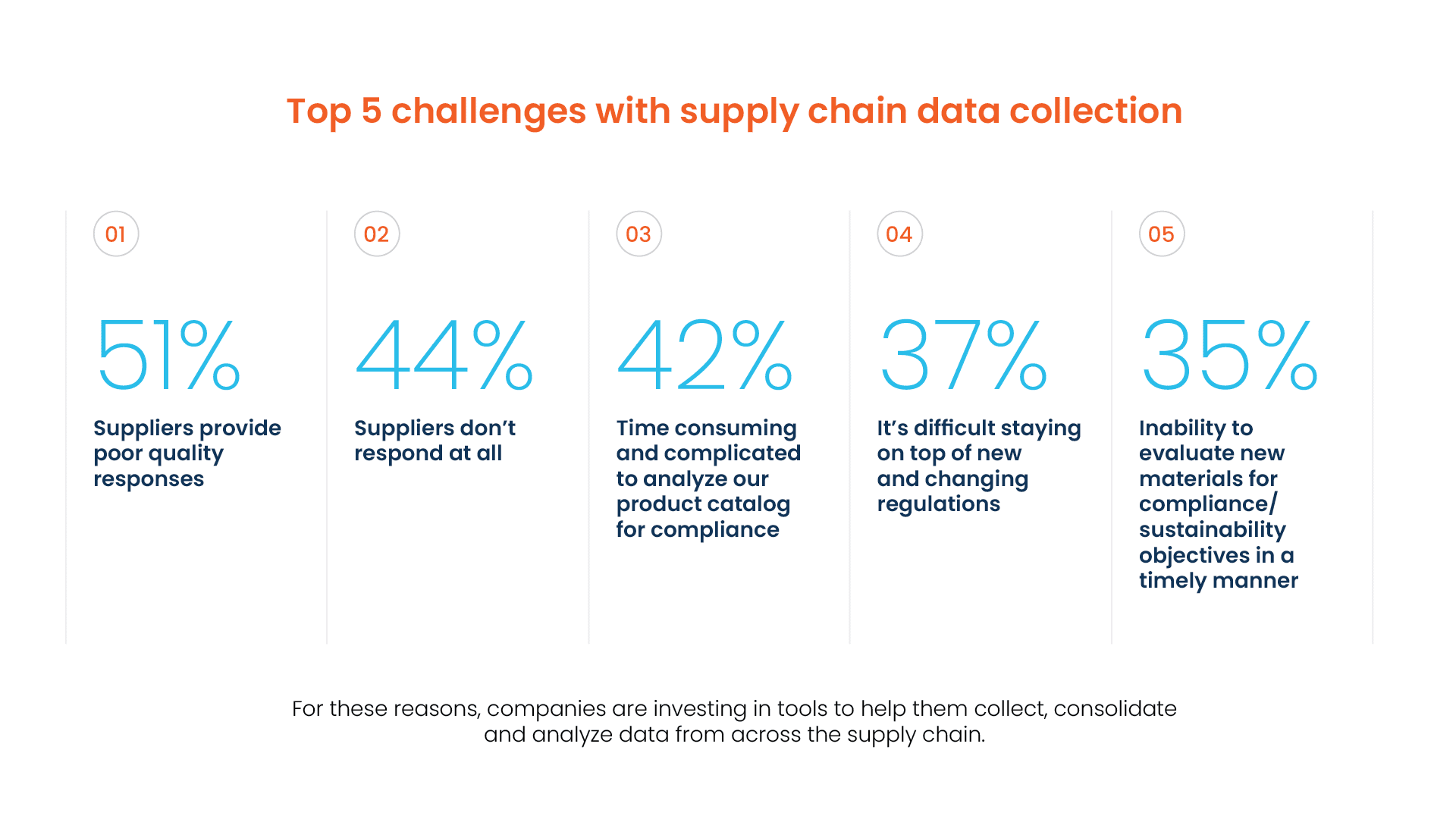
Companies often scramble to collect missing data from suppliers by issuing surveys manually via email, survey collection tools, or spreadsheets. This approach often yields lackluster results. According to a recent survey of supply chain, sustainability and compliance professionals, conducted by 3E, companies experience several challenges.
For these reasons, companies are investing in tools to help them collect, consolidate and analyze data from across the supply chain.
Top five reported pain points in supply chain data collection:
Data Demand Spurs Investment in Supply Chain Data Solutions
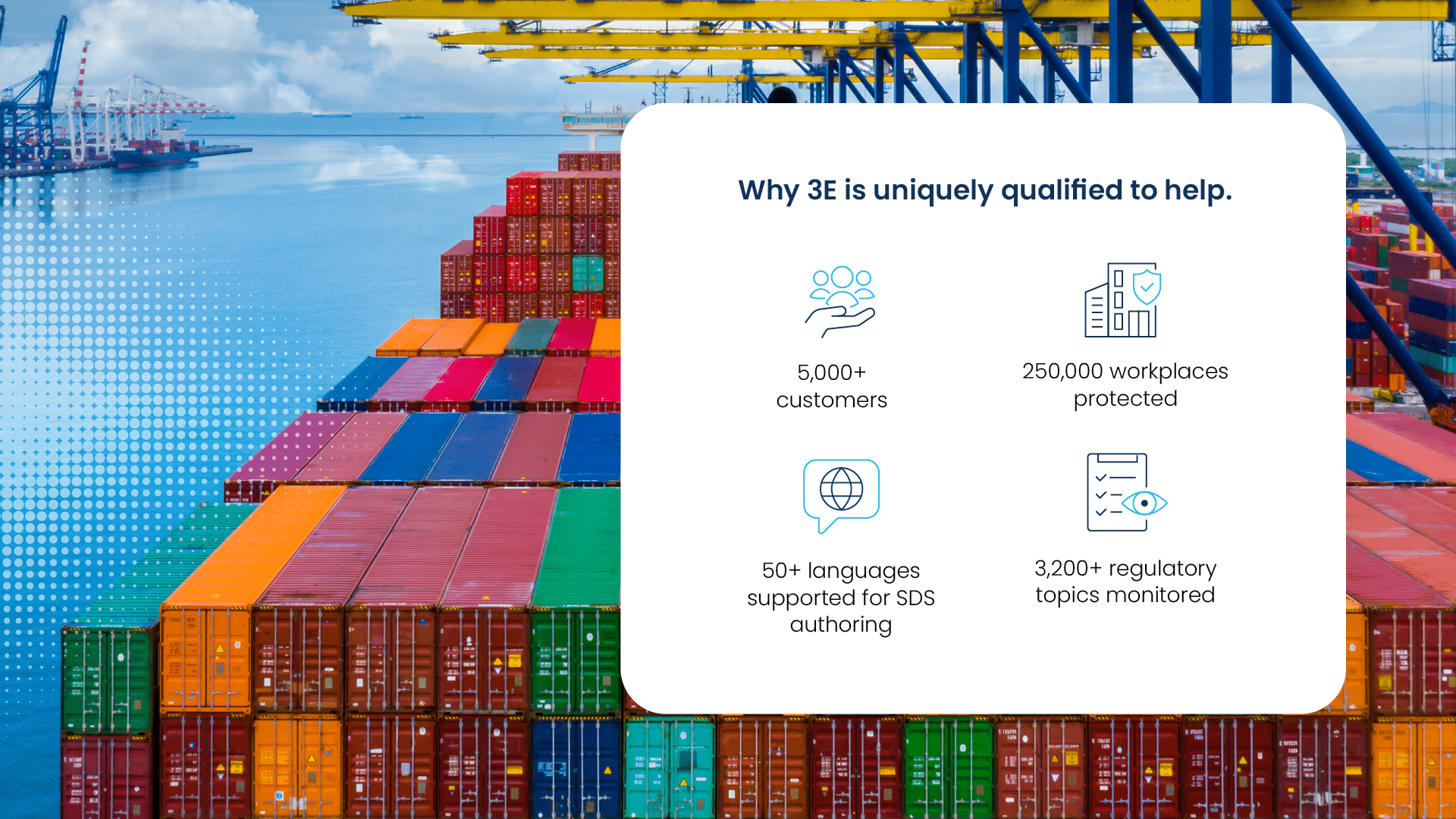
As regulatory reporting requirements escalate, the need for more sophisticated digital solutions also increases. Our supply chain visibility and sustainability platform, 3E Exchange, is designed to simplify and streamline supply chain data collection. Our solution includes data collected from more than 250,000 global suppliers in 15+ languages, providing us with unmatched access to chemical data used in manufacturing. Increase supplier engagement by issuing surveys through the trusted 3E Exchange platform that enables suppliers to respond without revealing sensitive proprietary data. Embedded with regulatory intelligence, our platform adapts to changing regulations to help ensure compliance.
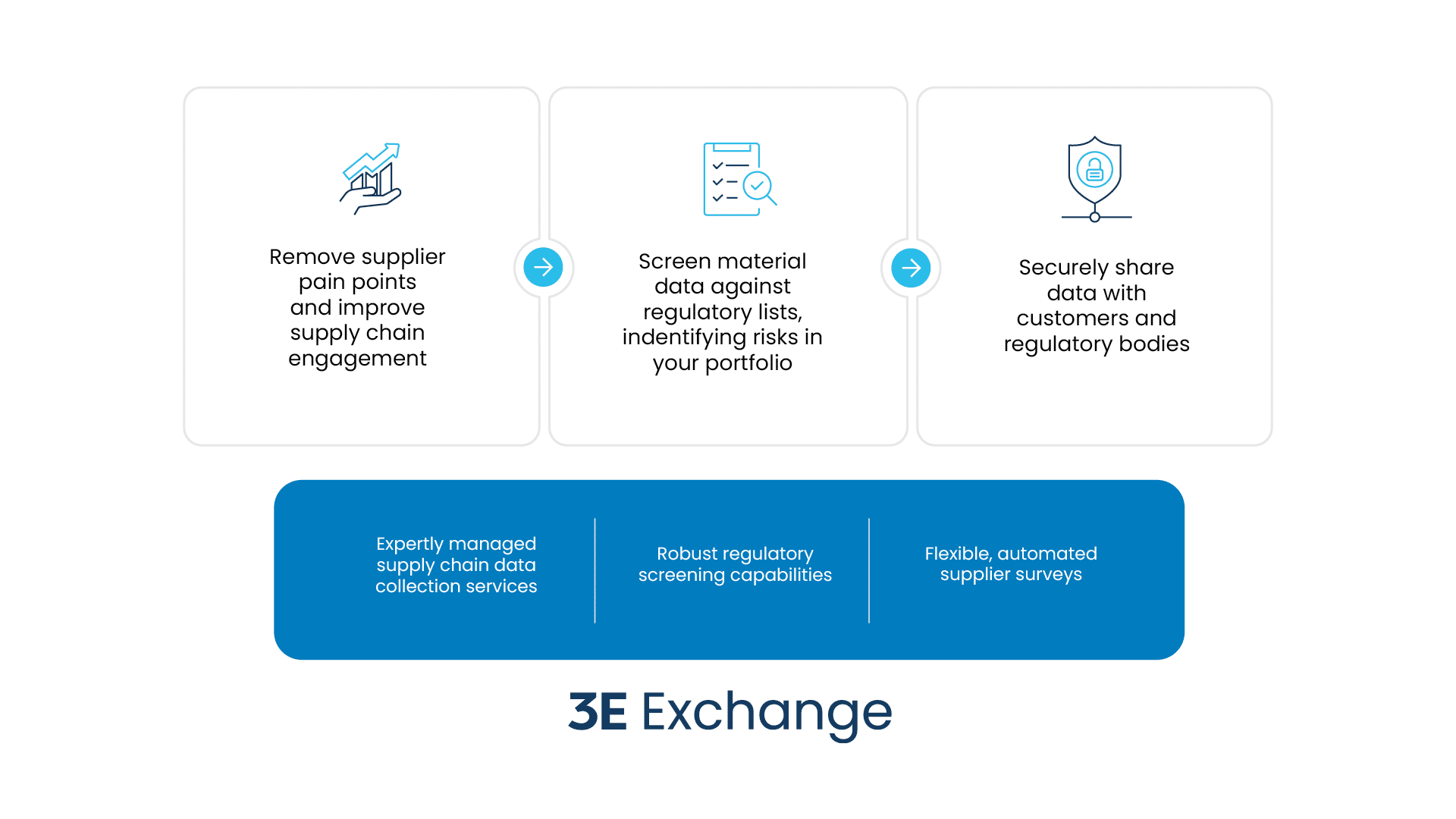
Achieve Greater Compliance and Supply Chain Visibility
3E provides intelligent compliance solutions to ensure safety and sustainability while creating new opportunities for growth. Our unmatched Environmental, Health, Safety and Sustainability (EHS&S) and product-compliance expertise empowers clients to improve chemical and workplace safety, product safety and stewardship, and supply chain visibility.
Actionable intelligence informs globally responsible business practices and improves Environmental, Social and Governance (ESG) performance.
Streamline supply chain data collection with 3E Exchange

article
3E Managed Supply Chain Data Collection: Webinar Insights and Best Practices
November 12, 2025


Insights straight to your inbox
Sign Up NowRelated Resources

News
EU Omnibus Packages Part 5: Omnibus V – Simplifying EU Defense Regulation
News
EU Omnibus Packages Part 4: Omnibus IV — Product Regulation, Simplification, and Compliance

News
Athletes Disqualified at 2026 Winter Olympics Over PFAS

News
EU Omnibus Packages Part 3: Simplifying EU Agricultural Regulation