Related

EU Omnibus Packages Part 5: Omnibus V – Simplifying EU Defense Regulation
EU Omnibus Packages Part 4: Omnibus IV — Product Regulation, Simplification, and Compliance

Athletes Disqualified at 2026 Winter Olympics Over PFAS

EU Omnibus Packages Part 3: Simplifying EU Agricultural Regulation
Chemicals dominate modern life. They're in the air we breathe, the food we eat, the products we use daily, and the rivers and soils that sustain us. Many are harmless or even helpful, but some present risks. For regulators, it's a daunting task to figure out which of the millions of compounds that swirl around us are potentially harmful. In this series of articles, 3E will help you navigate emergent pollutants to examine which substances are likely to attract regulatory attention in the future.
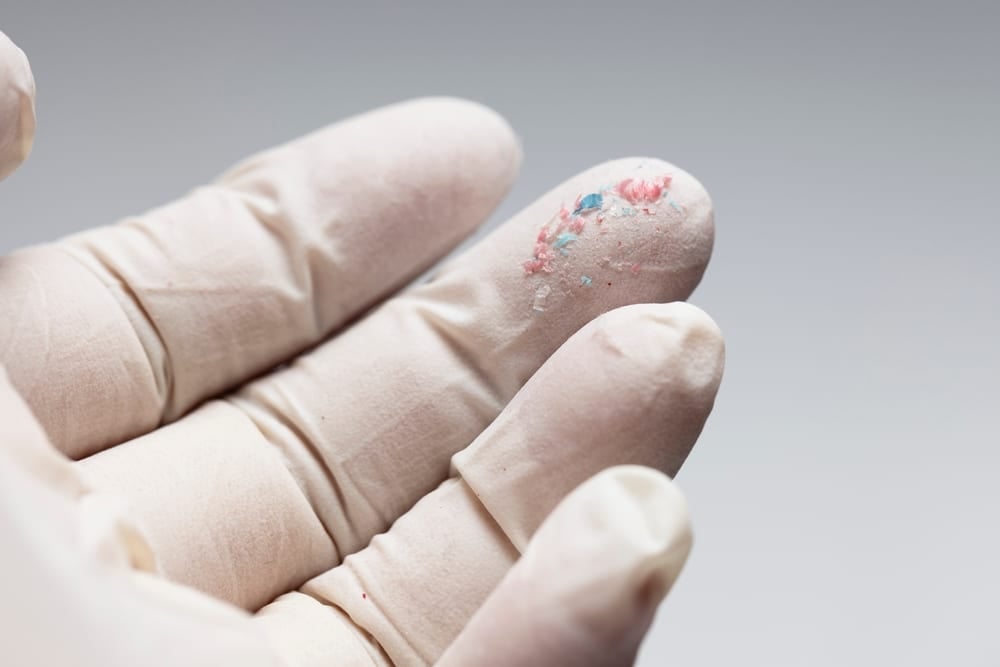
In late September, the European Council (EC) signed off on a new regulation designed to prevent what it calls “plastic pellets” from escaping into the environment by compelling companies to make and follow risk management plans to reduce the loss of plastic from packaging and products.
This is the EC's latest move on microplastics, which marks a burgeoning effort to control physical contaminants of emerging concern (CECs). It follows decades of work from the scientific community who have been describing the scale of microplastic pollution and studying its effects on human and environmental health.
This is the fourth and final article in 3E's series on CECs, and it focuses on physical CECs, of which microplastics are perhaps the best-known example. Physical CECs - unlike chemical or biological CECs - include larger molecules such as airborne dust, tire and brake wear, microfibers from textiles, and smoke particles.
The EU is also taking steps to limit other physical CECs. For example, the trading bloc's latest emission standards for new cars now include non-exhaust emissions, such as brake dust and tire wear particles (TWP) pollution. This change may sound technocratic, but once companies can measure tire shedding in a harmonized way, they can design, certify, and compete on lower‑shedding products.
Other jurisdictions have a history of following the regulatory actions of the EU, so similar controls may be replicated elsewhere. Paying attention to the evidence body of physical CECs' risks can be a helpful means of predicting which substances are likely to be subject to regulatory controls in the future.
Dual Hazard
Richard Thompson, a marine biologist at the University of Plymouth, was the first person to coin the term “microplastics” in 2004, and he told 3E that physical CECs present a two- or even three-pronged threat.
“There's both the potential for chemical and particulate toxicity,” he says. “And most likely, an interaction between the two as well.” Research has previously shown, for example, that microplastics can adsorb heavy metals such as lead and cadmium and the save is true for tire wear particles.
Physical CECs can lodge themselves into tissues and organs - usually entering the body as a food contaminant. The chemicals used to make the original product and any other pollutants that have managed to hitch a ride on the physical CEC's surface could then potentially leach out into the bloodstream. This “slow-release pill,” as Thompson puts it, makes physical CECs especially worthy of regulators' attention.
Physical CECs Case Study: Microplastics
The scale of microplastic pollution makes it difficult to ignore. In 2023, a group of international scientists published a paper in PLOS ONE that reviewed data taken from almost 12,000 sample sites between 1979 and 2019. Their aim was to chart the average count and mass of small plastic particles floating on the surface of the world's oceans. They estimated that by 2019, there were between 82 and 358 trillion plastic particles weighing between 1.1 and 4.9 million tonnes.
But back in 2004, before Thompson first described the problem, the world was blissfully unaware of microplastics. Thompson was volunteering for a beach cleanup project, removing larger plastics and other litter, when he first contemplated the idea that tiny plastics could also be polluting the environment. He knew that more and more waste was making its way into marine ecosystems, but he noticed that the volume of trash on the beach didn't seem to change.
“The amount of plastic we collected wasn't increasing as you might have expected with the growth in plastic production and the lack of effective waste management,” he remembers. He began to wonder why, and one of his theories was that “the big stuff is becoming small stuff.”
That lead him and his colleagues to go looking for small plastic particles, and they published the results in a paper entitled “Lost at Sea: Where Is All the Plastic?”
“We found microscopic pieces all around the UK, and we showed that a wide range of creatures could eat them,” he says. “We called it microplastic in that paper, and it was the first use of the term.”
The policy world took note. The National Oceanic and Atmospheric Administration (NOAA) in the United States hosted workshops in the late 2000s that helped to operationalize the ≤5‑millimeter definition of microplastics, says Thompson. This designation was made for a medically and scientifically relevant reason: plastic particles of that size are readily consumed by various organisms and can be dispersed throughout the food web. Microplastics were then included in the European Union's Marine Strategy Framework Directive in 2010.
Getting the definitions and vocabulary right might seem bureaucratic, but it's important because it frames how physical CECs such as microplastics are likely to be regulated and restricted in future years. There are also very real health implications.
A 2024 study published in the New England Journal of Medicine detected micro‑ and nanoplastics within carotid‑artery plaques, which the authors linked to a higher risk of major cardiovascular events or death within 34 months. The study sharpened a conversation that many clinicians were already watching - microplastics have already been found in the heart, brain, lungs, and reproductive organs, as 3E has previously reported.
Exactly how microplastic regulations will pan out is difficult to predict; we're still in the early stages where standards are being defined. But Thompson is skeptical that compelling manufacturers to engage in cleanup activities will be the solution, however innovative new methods may be. “This isn't about some magic gadget that is going to mop it all up from the middle of the Pacific,” he says.
Instead, he says the more effective approach would be tackle things “upstream” in the manufacturing process, taking the opportunity to design low-shedding products and regulating for them to be chosen over traditional high-shedding materials.
Amy Pruden, an environmental engineer at Virginia Tech, says that a tailormade approach for each type of CEC is needed to move on from discussing “concerning trends” to implementing enforceable rules. “It has to be something adaptable to the unique aspects of a given hazard,” she says. But that can only be achieved when the authorities and the scientific community have decided on what to measure, how to measure it, and where to measure it so that risk and progress can be transparently evaluated.
For microplastics, the decision on what, how, and where to measure the particles has already been made. Other physical CECs will surely follow.
For more information, read parts 1, 2, and 3 of this series:


Insights straight to your inbox
Sign Up NowEMEA News Editor
Benjamin Plackett
Benjamin Plackett is a science journalist based in London with 15 years of experience covering emerging trends within chemistry research as well as the chemical and pharmaceutical industries. As the EMEA news editor, he oversees the expansion of 3E’s proprietary news in the region in collaboration with other editors and reporters.

Related Resources
News
EU Omnibus Packages Part 5: Omnibus V – Simplifying EU Defense Regulation
News
EU Omnibus Packages Part 4: Omnibus IV — Product Regulation, Simplification, and Compliance
News
Athletes Disqualified at 2026 Winter Olympics Over PFAS
News
EU Omnibus Packages Part 3: Simplifying EU Agricultural Regulation