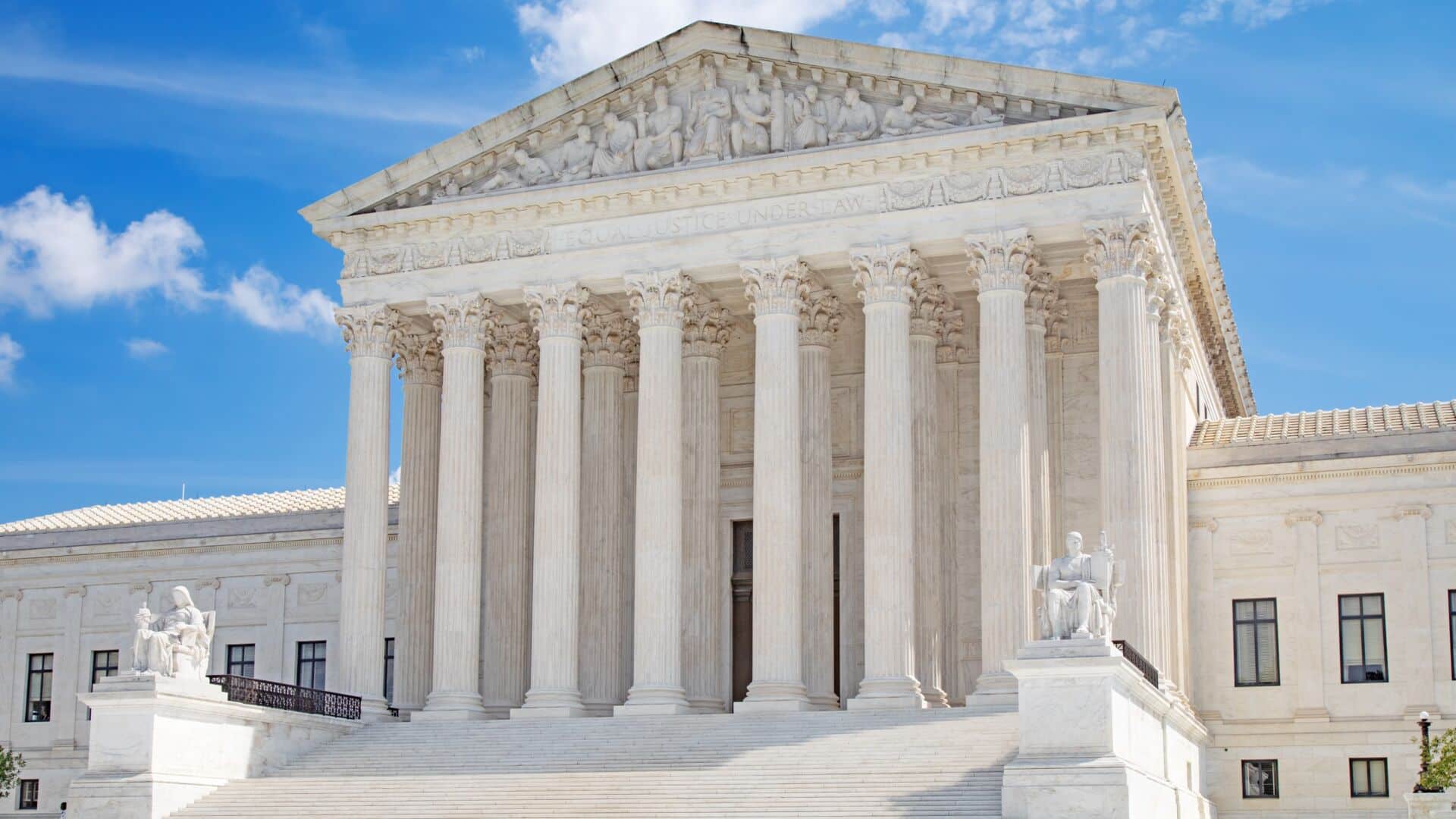
The Supreme Court overruled a decades old precedent set in Chevron U.S.A. Inc. v. Natural Resources Defense Council, Inc. (i.e., the Chevron doctrine) on 28 June 2024 - a decision that likely will have major implications for federal regulatory agencies. The Chevron doctrine generally requires courts to defer to “permissible” agency interpretations of the statutes if these interpretations are issued by the administering agencies of these statutes.
The cases in focus are challenges filed by various businesses operating in the Atlantic herring fishery against a rule promulgated by the National Marine Fisheries Service (NMFS), establishing an industry-funded program that required 50% of trips undertaken by certain vessels to have observers on board for data collection.
Under this program, before beginning a trip, vessel representatives had to notify the NMFS of the trip and announce the species that the vessel intended to harvest. If the NMFS determined that an observer was required but did not assign a government funded one, the vessel had to hire a government-certified third-party observer at a cost of up to $710 per day, regardless of whether they ended up harvesting fewer herring than other vessels (or none at all).
The petitioners argued that the NMFS lacked the authority to mandate payments for observers in question. Both cases were resolved in favor of the government, invoking the Chevron doctrine, at the District Courts and the Courts of Appeals. The petitioners, therefore, turned to the Supreme Court for a final decision.
3E has previously reported on these cases pending before the Supreme Court.
Majority Opinion
Chief Justice Roberts delivered the opinion of the Court, which was joined by Justices Thomas, Alito, Gorsuch, Kavanaugh, and Barrett. Justice Kagan filed a dissenting opinion, joined by Justices Sotomayor and Jackson (with regard to case No. 22–1219 only). Justice Jackson recused herself from the consideration and decision of the other case (No. 22–451).
Chief Justice Roberts wrote in the opinion that the final “interpretation of the laws” would be “the proper and peculiar province of the courts,” which forms the most fundamental basis for the decision to overrule the Chevron doctrine.
While conceding that the courts' independent exercise of judgment “often included according due respect to the Executive Branch interpretations of federal statues,” the Chief Justice argued that the views of administrative agencies could only “inform the judgment of the Judiciary, but did not supersede it,” as reflected in the Chevron doctrine.
According to the Justice, questions of law are for the courts to resolve, and even an agency's factbound statutory determinations do not consistently receive deference in court. “Often the Court simply interpreted and applied the statute before it,” the Chief Justice wrote.
Another fundamental argument informing the opinion is the mandate of the Administrative Procedure Act (APA), 5 U.S.C. §551 et seq enacted by Congress in 1946. The APA requires the reviewing court to “decide all relevant questions of law, interpret constitutional and statutory provisions, and determine the meaning or applicability of the terms of an agency action.”
The opinion interprets this provision as requiring the courts to decide legal questions “by applying their own judgment,” which it argues is incompatible with the agency deference as required under Chevron. In other words, the doctrine defies the requirement of the APA by requiring a court to “mechanically afford binding deference to agency interpretations.”
Chief Justice Roberts also takes issue with the broad coverage of the Chevron doctrine, arguing that the government continues to defend the proposition that “Chevron applies even in cases having little to do with an agency's technical subject matter expertise.”
As the Chevron doctrine is overruled, courts now must exercise their independent judgment in deciding whether an agency has acted within its statutory authority, rather than deferring to “permissible” agency interpretations of ambiguous statutes. The judgments of the D.C. and First Circuits are vacated and remanded for further proceedings due to their reliance on the Chevron doctrine.
Dissenting Opinion
In her dissenting opinion, Justice Kagan described the Chevron doctrine as “the backdrop against which Congress, courts, and agencies-as well as regulated parties and the public-all have operated for decades.” It is “keeping air and water clean, food and drugs safe, and financial markets honest,” added the Justice.
Citing the subject matter expertise and congressional intent, Justice Kagan argues that “deference to the agency is the almost obvious choice, based on an implicit congressional delegation of interpretive authority.”
The dissenting opinion also criticizes the Supreme Court for substituting “its own judgment on workplace health for that of the Occupational Safety and Health Administration; its own judgment on climate change for that of the Environmental Protection Agency; and its own judgment on student loans for that of the Department of Education.”
Justice Kagan also conceded that deference to agencies is not always appropriate, which is why the Supreme Court over the years has “fine-tuned the Chevron regime to deny deference in classes of cases in which Congress has no reason to prefer an agency to a court.”
In summary, the Justice questions the potential impact of the court's decision on overturning the Chevron doctrine, predicting that it may put “courts at the apex of the administrative process as to every conceivable subject-because there are always gaps and ambiguities in regulatory statutes, and often of great import.”
“What actions can be taken to address climate change or other environmental challenges? What will the nation's health-care system look like in the coming decades? Or the financial or transportation systems? What rules are going to constrain the development of A.I.?” asked Justice Kagan in her dissenting opinion.
“In every sphere of current or future federal regulation, expect courts from now on to play a commanding role. It is not a role Congress has given to them, in the APA or any other statute. It is a role this Court has now claimed for itself, as well as for other judges.”
“A rule of judicial humility gives way to a rule of judicial hubris,” wrote Justice Kagan.
————–
Editor's Note: 3E is expanding news coverage to provide customers with insights into topics that enable a safer, more sustainable world by protecting people, safeguarding products, and helping businesses grow. Breaking News articles keep you up-to-date with news as it’s happening.


Insights straight to your inbox
Sign Up NowRelated Resources

News
EU Omnibus Packages Part 5: Omnibus V – Simplifying EU Defense Regulation
News
EU Omnibus Packages Part 4: Omnibus IV — Product Regulation, Simplification, and Compliance

News
Athletes Disqualified at 2026 Winter Olympics Over PFAS

News
EU Omnibus Packages Part 3: Simplifying EU Agricultural Regulation