Related

EU Omnibus Packages Part 5: Omnibus V – Simplifying EU Defense Regulation
EU Omnibus Packages Part 4: Omnibus IV — Product Regulation, Simplification, and Compliance

Athletes Disqualified at 2026 Winter Olympics Over PFAS

EU Omnibus Packages Part 3: Simplifying EU Agricultural Regulation
With heightened awareness of the widespread use of and exposure to dangerous chemicals, governments, NGOs, and regulators are working to protect people and the environment with hazardous substance regulations. Global chemical regulations are evolving that require companies to identify, report on, and even replace specific chemical substances that may be present in the products they manufacture or distribute.
Compliance is no longer optional-it's necessary to protect human health, promote sustainable manufacturing, and avoid legal consequences. With frameworks like TSCA, REACH, and RoHS, businesses need reliable strategies to meet these challenges.
Regulatory Examples of Chemical Compliance for Hazardous Substances: RoHS, REACH, and TSCA
The following are just a few of the regulations related to hazardous substances compliance that require action by manufacturers, suppliers, and/or retailers in order for them to comply.

All three of these regulations require manufacturers to report on the use of regulated substances. Geographically, TSCA applies to the U.S., which EU REACH and EU RoHS apply to the EU. The list of restricted chemicals for each of these regulations is different.
With tens of thousands of products, chemicals deeply embedded in components supplied by multiple vendors, and differing regulatory guidelines by country, region or even state, manufacturers face a daunting challenge accessing the information they need to comply.
A Systematic Process to Achieve Chemical Compliance with Global Regulations
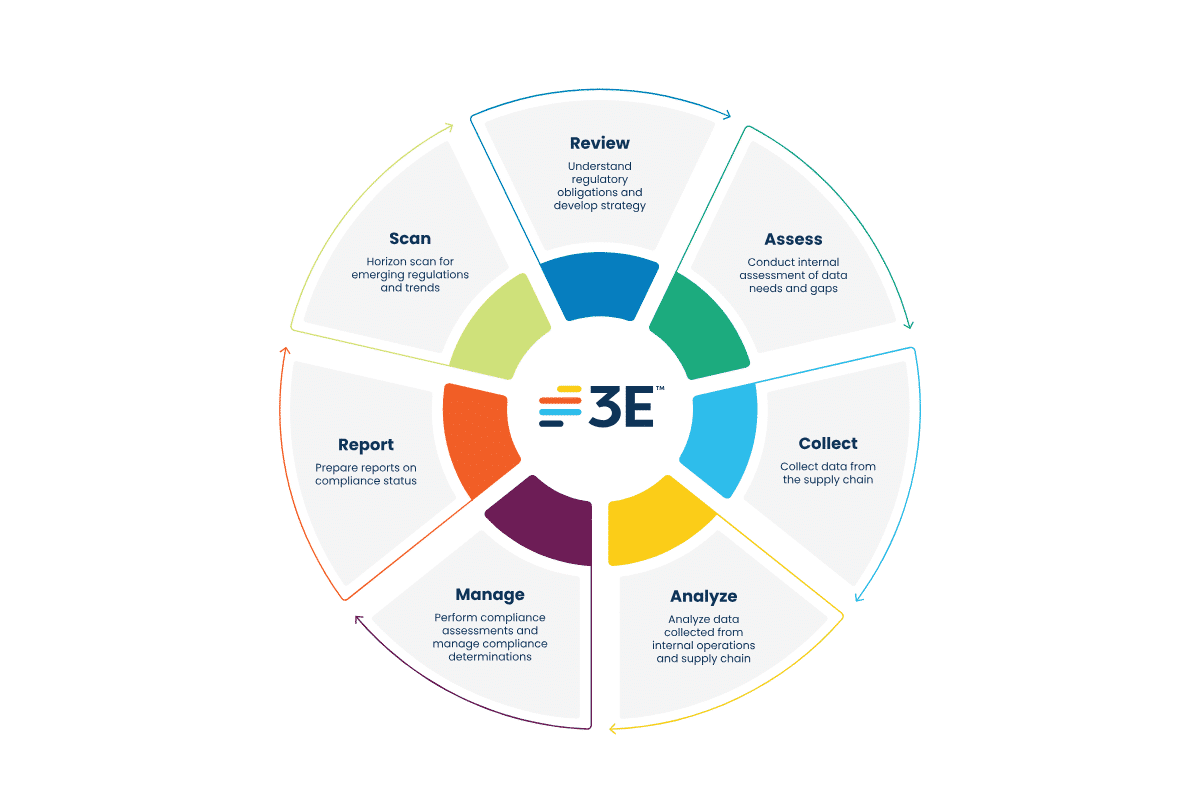
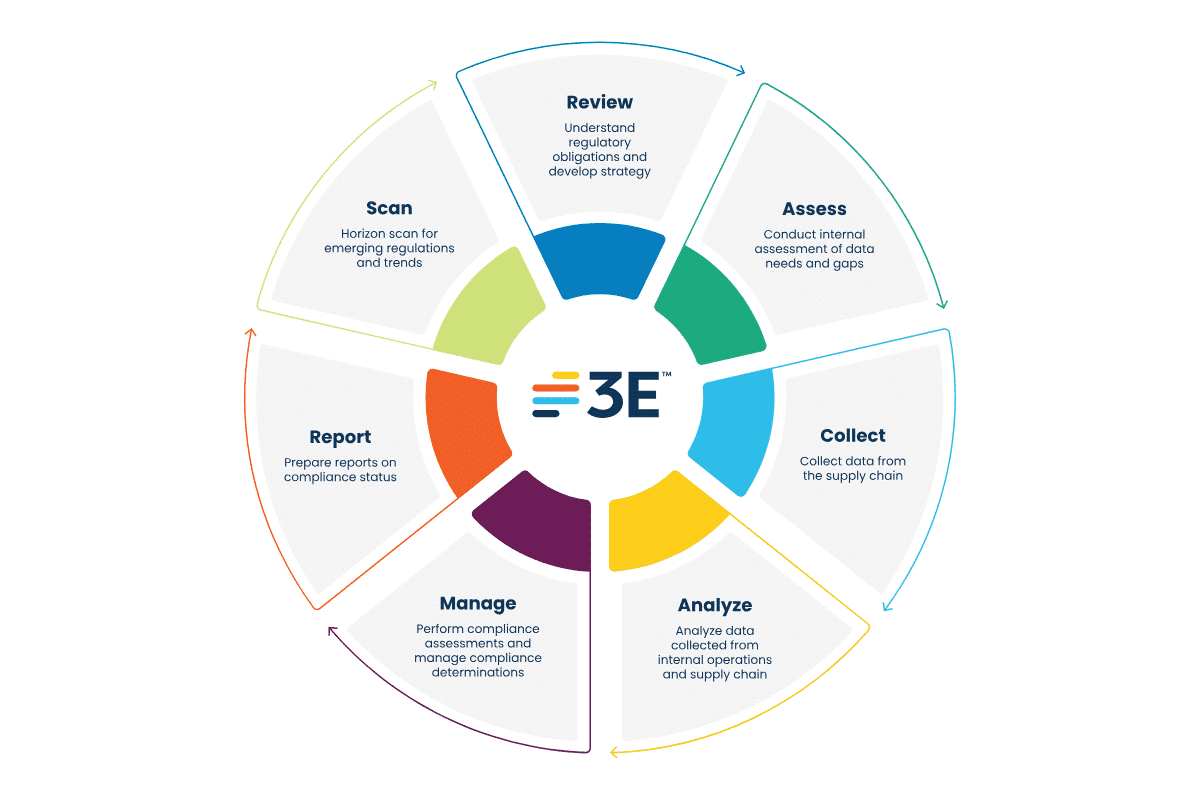
To simplify this complex task, we've created a systematic, iterative process that helps manufacturers address gaps, gather critical data, and remain competitive.
As you plan your journey to compliance, follow these steps designed to help manufacturers systematically identify compliance gaps, collect the required information, and prepare the reports needed to comply with global chemical regulations.
In many cases, companies may already be several steps into the process. Or, for new products, they may only be beginning. Using this process, it is possible to unlock chemical compliance with a methodical approach.
Leveraging Compliance Management Software to Stay Ahead of Regulatory Changes
Regulatory landscapes can change rapidly. Advanced compliance management software is essential for reducing operational burdens. 3E solutions support every step of the compliance process, protecting your customers, employees, and your bottom line.
In light of the volume of chemical substances and the speed with which regulations are evolving, it's important to access tools that can inform and automate the process. For example, screening tools can help you scan your product portfolio to better understand components that may contain hazardous substances. Survey tools can streamline outreach to suppliers to collect data on their use of chemicals. Technologies that can systematically update reports based on new information collected will reduce time and resources required to complete these tasks.
3E offers a portfolio of tools to navigate the process with greater speed and efficiency. For example, 3E Exchange allows you to streamline the process of collecting critical information from your suppliers, while 3E Insight serves up the latest news, information and commentary on emerging legislation from around the world.

Why Transparent Compliance Practices Build Customer Trust
Focusing on chemical safety regulations not only ensures adherence to laws but also reflects your commitment to safety and sustainability. Build trust with customers and stakeholders by maintaining compliance transparently.
Streamline your compliance processes today-contact 3E for expert tools and insights tailored to your needs. Request a consultation with a 3E expert.


Insights straight to your inbox
Sign Up NowRelated Resources
News
EU Omnibus Packages Part 5: Omnibus V – Simplifying EU Defense Regulation
News
EU Omnibus Packages Part 4: Omnibus IV — Product Regulation, Simplification, and Compliance
News
Athletes Disqualified at 2026 Winter Olympics Over PFAS
News
EU Omnibus Packages Part 3: Simplifying EU Agricultural Regulation