
Related

EU Omnibus Packages Part 5: Omnibus V – Simplifying EU Defense Regulation
EU Omnibus Packages Part 4: Omnibus IV — Product Regulation, Simplification, and Compliance

Athletes Disqualified at 2026 Winter Olympics Over PFAS

EU Omnibus Packages Part 3: Simplifying EU Agricultural Regulation
Jane Tomlinson and her husband moved into their new house on St. Pete Beach, one of the barrier islands off the east coast of Florida, on 26 August 2024. On 26 September, exactly one month later, Category 4 Hurricane Helene hit, flooding their home with three feet of water.
“Most of our neighbors who have been here for years told us not to worry, that this area doesn't really flood and isn't affected by hurricanes usually,” Tomlinson told 3E.
Just two weeks after Hurricane Helene made landfall, Hurricane Milton, a Category 3 storm, slammed into the east coast of Florida. Tomlinson said that while she and her husband evacuated St. Pete Beach in preparation for Helene and not many people in her area did, almost everyone evacuated for Milton.
“Helene really shook people up in a way that hurricanes hadn't really in this area before,” she said.
This fall's hurricanes offer even more proof of an ever-changing, ever-intensifying climate, which is continuing to trigger more and more severe extreme weather events that alter the lives of individuals like Tomlinson and significantly impact industrial processes.
Safety professionals put an emphasis on knowing the risk of what potential extreme weather events might bring to businesses, believing that if you know the risk, you can be prepared for it. But, as we saw with hurricanes Helene and Milton, risk is becoming increasingly more difficult to predict, and the severity hard to prepare for. What then?
Weather Impact on Earnings
Extreme weather does not just impact individuals like Tomlinson. Several companies recently reporting their Q3 earnings detailed how extreme weather interrupted their business processes over the quarter, ultimately impacting profit.
In June, Category 5 Hurricane Beryl made landfall in Texas, causing one of Dow Chemical Company‘s ethylene cracker facilities in the state to go offline. As a result, the company estimated $125–$150 million in lost production and costs, causing the company to adjust Q3 estimated net sales down several million dollars from the original prediction. Ultimately, Dow surpassed the adjusted expectation in sales in Q3, but still exhibited a weaker performance than its pre-hurricane projection.
In July, a tornado struck ExxonMobil's Joliet refinery in Illinois, causing significant damage in what CEO Darren Woods called the “hardest shutdown” the company has faced. The storm disrupted power, steam, instrument air, and potable water, forcing a two-week shutdown.
“This was an unprecedented event that severely impacted fuel supplies for the entire region,” Woods said in the company's Q3 earnings call.
Baxter pharmaceutical company was also significantly impacted by Hurricane Helene, with the company's largest manufacturing site located in one of the most affected areas: western North Carolina. The company said in its Q3 earnings statement that it expects its fourth-quarter earnings to be negatively impacted by $200 million as a result of the hurricane damage.
Expect It to Happen to You
Joseph Knickerbocker is a senior safety and risk manager at Okland Construction in Utah. In his time as a safety professional, he said he has seen storms, particularly hurricanes, grow stronger and more frequent.
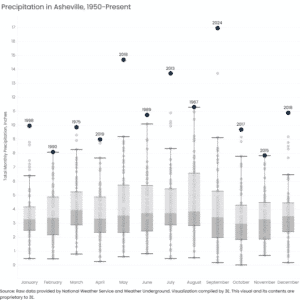
Knickerbocker explained that while some companies may have risk management systems in place, the most dangerous situations arise when businesses do not have a wide enough perception of what the risk could be. Hurricane Helene brought unprecedented rainfall to North Carolina, severely compromising infrastructure and closing nearly 400 roads across the state.
“A lot of businesses were just not prepared because they didn’t even see it,” he said in an exclusive interview with 3E. “Their severity was very high, and their perception of the risk was very low because they had just never seen it before.”
Knickerbocker said the most important lesson companies and safety professionals can learn from the fall hurricanes is that worst-case scenarios could happen to them.
“Anywhere you are, you need to look at the potential of what could get you,” he said. “When it comes to inclement weather, are you prepared to protect your people and then clean up the aftermath?”
Diversification of Resources Is Key
As climate change worsens, it becomes more and more likely that just one extreme weather event could knock out entire supply chains, facilities, and industrial processes. Knickerbocker said the best way to prepare is to
- Identify the heart of the business and the absolute necessary components to keep it afloat.
- Diversify resources to recover from catastrophic interruptions in an efficient way.
He said the first step companies should take is to ask themselves: What are the vital things that are uncompromisable in keeping the business viable?
“I would recommend that every business ask themselves [that question] and put armor on their core of what they need [in order] to continue doing business and protect their people,” he said.
While armoring does in part mean physically protecting vital infrastructure with the proper reinforcement and preparation ahead of weather events, he said it also includes diversifying resources in product, skill, and geography.
“Similar to the old adage, you don’t put all your eggs in one basket or all your investments in one stock, the same thing is [true] with business,” he said.
Having resources, including employees, in multiple geographic locations is essential to a company's survival in the event of extreme weather severely compromising one location. He said this has multiple benefits: Not only does geographic diversity offer a business a path to safely continuing operations if one location is compromised, it also gives employees alternative work sites to continue their employment, either at a different work site or in assisting recovery of the location that was impacted.
Value in Relationships
Diversifying resources takes money that some businesses, especially smaller ones, might have. But Knickerbocker said one of the most important things for companies to do is to build relationships with others in the industry to help when unexpected crises arise.
“After the incident happens that you haven’t prepared for or that you could not have possibly prepared for, you’re going to need more than just you to recover from it,” he said. “If you have good relationships with the people that can help you with those core things to get you back up and running, then you not only save your business, but you save and help everybody.”
Since extreme weather events tend to impact large geographic spaces, Knickerbocker recommends making connections with companies multiple state lines away and even abroad.
Diversified Resources and Relationships in Action: Baxter's Hurricane Recovery
Baxter’s largest manufacturing site is located in North Cove, N.C., about 50 miles west of Asheville. The site, which employs more than 2,500 people, was significantly impacted by the rain and storm surge from Hurricane Helene. The company said in a statement that it implemented its hurricane preparedness plan before the storm, which included evacuating employees and moving products to higher ground. However, Helene triggered unprecedented rainfall, causing a levee breach which led to water permeating the site, as well as damaging the bridges used to access the site.
After the storm, Baxter established an employee support center to provide employees with basic supplies such as food and water, as well as internet access, credit union services, and portable generators. The site's 2,500 employees have returned to work to aid in recovery efforts on the site, joined by 1,000 contractors who are engaged in site cleanup.
“Our local colleagues are simultaneously continuing to navigate the storm's devastating personal impact, including significant property damage; injury and loss of life across the broader community; and disruption of essential services,” a 17 October 2024 update said.
Despite significant production and transportation disruptions, the company was able to transport more than 450 truckloads of undamaged products off site to customers just weeks after the incident.
“The pace of recovery at Baxter's North Cove facility has been very encouraging,” said Jose E. Almeida, CEO of Baxter, in the 17 October update. “Our local team has been tenacious in the face of daunting challenges, as we have advanced from site flooding and inaccessibility to deep cleaning and preparing equipment for restart - all in less than three weeks.”
As of the company's most recent update on 14 November 2024, the company said it has been able to increase its manufacturing capacities and expects to reach 100% allocation of its IV manufacturing line, which accounts for 25% of the site's total production, by the end of 2025.
The update also said the company has activated nine plants across its global network to help increase available inventory, highlighting Knickerbocker's point of having a geographically diverse range of manufacturing locations to maintain a steady supply when disruptions occur.
In Baxter's case, the diversity of the company's resources helped not only keep the company in business and provide essential services during an extreme business disruption, but also provided the means to take care of employees during a devastating time for the community at large.
“Expect More Inclement Weather”
Ultimately, extreme weather is not going to get better; it will continue to get worse. In the end, companies can reasonably expect that at some point natural disasters will likely impact their business. In anticipation of that scenario, companies need to take measures not only to fortify and protect their resources, but work on diversifying in product, geography, and skill to stay competitive when weather causes disruptions.
“We should expect more inclement weather,” Knickerbocker said. “If we want to continue doing business and protecting our people, then we need to allocate the resources or build the relationships with those that have the resources to help our business continue.”
——–
Editor's Note: 3E is expanding news coverage to provide customers with insights into topics that enable a safer, more sustainable world by protecting people, safeguarding products, and helping businesses grow. Deep Dive articles, produced by reporters, feature interviews with subject matter experts and influencers as well as exclusive analysis provided by 3E researchers and consultants.


Insights straight to your inbox
Sign Up NowReporter
Sheridan Wood
Sheridan Wood is 3E's Industry Reporter. She has reported on local, state, and national news for public radio stations KACU, The Texas Standard, and National Public Radio. She has won regional and national reporting awards from the Society of Professional Journalists.

Related Resources
News
EU Omnibus Packages Part 5: Omnibus V – Simplifying EU Defense Regulation
News
EU Omnibus Packages Part 4: Omnibus IV — Product Regulation, Simplification, and Compliance
News
Athletes Disqualified at 2026 Winter Olympics Over PFAS
News
EU Omnibus Packages Part 3: Simplifying EU Agricultural Regulation