Related

EU Omnibus Packages Part 5: Omnibus V – Simplifying EU Defense Regulation

EU Omnibus Packages Part 4: Omnibus IV — Product Regulation, Simplification, and Compliance

Athletes Disqualified at 2026 Winter Olympics Over PFAS

EU Omnibus Packages Part 3: Simplifying EU Agricultural Regulation
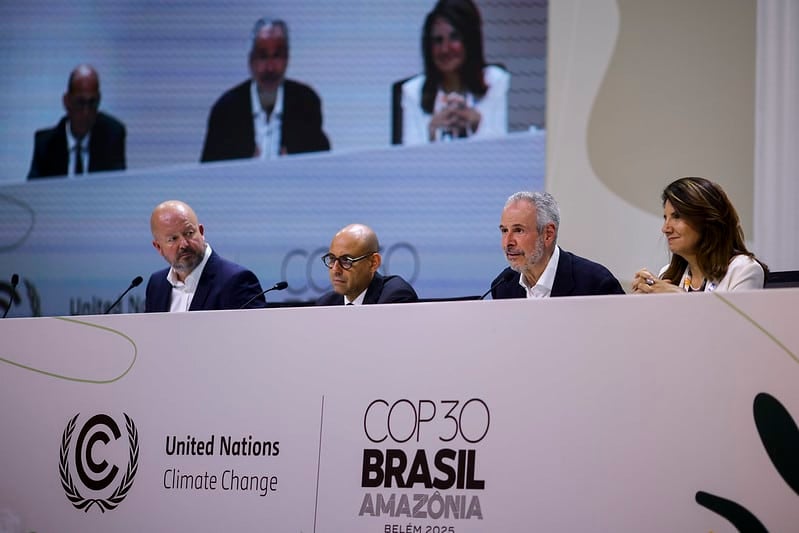
Thousands of delegates from around the world have descended on Belém, Brazil, at the gateway to the Amazon rainforest, for the COP30 (Conference of the Parties) under the United Nations Framework Convention on Climate Change (UNFCCC). However, even with the impact of climate change increasingly evident in weather events such as droughts, storms, and wildfires in many countries, the geopolitical arena has never been so polarized regarding support for protecting the environment.
From November 10–21, 2025, delegates will review 30 key objectives across six key themes:
- Transitioning energy, industry, and transport, including increasing the energy efficiency of renewables and ensuring universal access to energy.
- Stewarding forests, oceans, and biodiversity, including topics on deforestation and ocean conservation.
- Transforming agriculture and food ecosystems, including topics on land restoration and sustainable food systems.
- Building resilience for cities, infrastructure, and water, including topics on governance and resilient construction.
- Fostering human and social development, including topics on resilient health systems and eradicating hunger.
- Unleashing enablers and accelerators on financing, technology, and capacity building, including topics on climate investment and climate-integrated public procurement.
Delegates will also discuss the Tropical Forest Forever Facility (TFFF), which will provide funds to countries to help them protect their tropical forests. Host country Brazil hopes to secure $125 billion in funding to create a permanent fund that repays investors and provides consistent dividends to qualifying countries supporting rainforest preservation programs. The fund has so far received $5.5 billion in pledges.
Falling Short of Ambitions
COP30 takes place at a bleak time for the fight against climate change. The Paris Agreement was created in 2015 with the goal of limiting global warming to 1.5°C above pre-industrial levels to avoid cataclysmic impacts on global climate systems. Now, however, it seems unlikely that goal will be reached. Summers in recent years have been among the hottest ever recorded, and the world is experiencing increasingly strong and frequent storms, floods, wildfires, and droughts - all exacerbated by a planet warmed by the production and consumption of fossil fuels.
Scientists are increasingly concerned about tipping points, where changes to global climate systems become self-perpetuating and potentially irreversible. The rapid melting of the polar ice caps represents potentially catastrophic tipping points that could have severe impacts on the entire globe.
“Climate change is not a threat of the future,” said Brazilian President Luiz Inácio Lula da Silva at the opening ceremony. “It is already a tragedy of the present time.”
Good Intentions Aren't Free: Costs of Sustainability
Talk, as the saying goes, is cheap, but action is going to get very expensive. According to the UN, putting voluntary pledges into action will require at least $1.3 trillion annually in climate investments by 2035. The “Baku-to-Belém Roadmap Report for $1.3 Trillion” provides the framework for COP30 discussions and outlines five fronts for global action:
- Replenishing: grants, concessional finance, and low-cost capital
- Rebalancing: fiscal space and debt sustainability
- Rechanneling: transformative private finance and affordable cost of capital
- Revamping: capacity and coordination for scaled climate portfolios
- Reshaping: systems and structures for equitable capital flows
Delegates will also review the nationally determined contributions (NDCs) from each country. NDCs were instituted under the Paris Agreement and encourage each country to submit plans for reducing carbon emissions and mitigate the impacts of climate change. Countries are expected to submit NDCs every five years and were requested to do so this year by the end of September in anticipation of COP30. However, by the deadline, only 64 of the 196 countries under the Paris Agreement had done so, suggesting that many are focusing more on domestic geopolitical and economic challenges than on the ongoing climate crisis.
At a press conference, COP30 President André Corrêa do Lago emphasized that both public money and private investment will be necessary to meet such ambitious funding targets. He noted that there is a significant opportunity to find a better balance of funding from private and public sources, since multilateral banks raise only $0.60 in private capital for each dollar they lend from their own funds.
“We have to have more public money, naturally,” said Corrêa. “But we also have to raise much more private money, and that's why we are very happy to have the private sector very engaged at this COP, because these numbers have to increase with trust and the conviction that these projects and programs really mean business for the private sector.”
Corrêa also said that such funding needs to be an integrated effort from public and private sources, and that governments should not look to the private sector to relieve them of their financial responsibilities toward climate investments.
“The progress that we make in private resources cannot be understood as a substitution for public money and cannot be interpreted that if we get more private, we don't need public,” said Corrêa. “I think there are very different circumstances depending on the country.”
Shrinking Support and Empty Seats at COP30
Despite the ambitious rhetoric, it would be hard to deny that the fight against climate change is losing some key players. Neither President Donald Trump from the U.S. nor President Xi Jinping of China will be in attendance, despite those two countries being the two largest carbon emitters in the world.
President Trump, in particular, has attacked sustainability as a “green scam” while rolling back environmental protections and pursuing an aggressive fossil-fuel agenda. Likewise, the EU is revising its environmental ambitions as part of its proposed Omnibus package, and even Canada is set to cut some of its environmental programs under Prime Minister Mark Carney.
Despite such high-profile absences, countries like the U.S. will have a presence at COP30, with more than 100 state and local officials in attendance, including California Governor Gavin Newsom, who has assured delegates that California and other states are still prioritizing the sustainability agenda.
At the opening ceremony, UNFCCC Executive Secretary Simon Stiell used the Amazon ecosystem to demonstrate the spirit of cooperation that will be necessary to create a sustainable future in line with the principles under discussion at COP30.
“The Amazon isn't a single entity, rather a vast river system supported and powered by over one thousand tributaries,” said Stiell. “To accelerate implementation, the COP process must be supported in the same way, powered by the many streams of international cooperation, because individual national commitments alone are not cutting emissions fast enough.”


Insights straight to your inbox
Sign Up NowReporter
Graham Freeman
Graham Freeman is based in Toronto, where he covers ESG and sustainability news. Graham has been a content and technical writer in the technology industry for more than a decade. He has also worked as a professor and lecturer at Queen’s University, the University of Toronto, and George Brown College.
Related Resources
News
EU Omnibus Packages Part 5: Omnibus V – Simplifying EU Defense Regulation
News
EU Omnibus Packages Part 4: Omnibus IV — Product Regulation, Simplification, and Compliance
News
Athletes Disqualified at 2026 Winter Olympics Over PFAS
News
EU Omnibus Packages Part 3: Simplifying EU Agricultural Regulation