Related

EU Omnibus Packages Part 5: Omnibus V – Simplifying EU Defense Regulation
EU Omnibus Packages Part 4: Omnibus IV — Product Regulation, Simplification, and Compliance

Athletes Disqualified at 2026 Winter Olympics Over PFAS

EU Omnibus Packages Part 3: Simplifying EU Agricultural Regulation
The first annual Canadian Arctic Survey from L'Observatoire de la politique et la sécurité de l'Arctique (OPSA) (Arctic Policy and Security Observatory) and the Centre for International Policy Studies in Canada gives a voice to northern residents who frequently don't get a place in discussions about their future. Authors Mathieu Landriault from the OPSA and Mirva Salminen from the Arctic University of Norway polled 609 Canadian residents 18 and older in the Northwest Territories, the Yukon, and Nunavut to get their perspectives on the environment, resource management, and the role of the Arctic in a dynamic geopolitical world.
Northerners See Climate Change Up Close
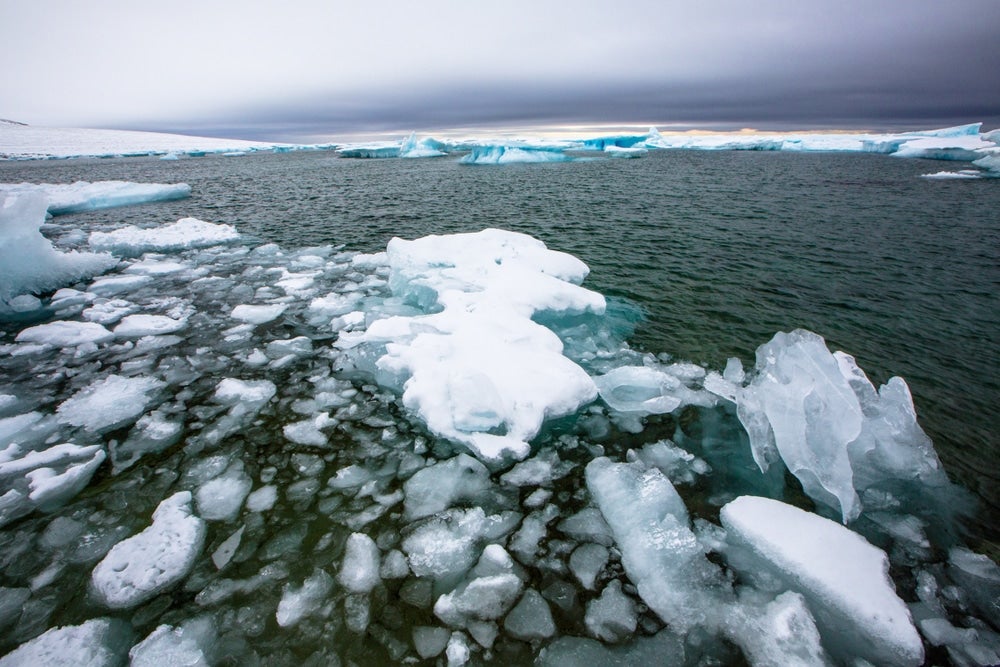
The impacts of anthropogenic climate change are being felt acutely in the Arctic regions. Scientists say Arctic temperatures are rising at a rate three times the global average, resulting in the destruction of fragile ecosystems, rising sea levels, and the end of traditional ways of life among Indigenous peoples.
The survey showed that northerners have a complicated relationship with the impacts of climate change as they balance prioritizing environmental protection with the need to spur regional economic development. Only 60% of respondents agreed with the statement that climate change is anthropogenic, which is a lower number than one might expect from a region experiencing those changes on such a large scale.
This attitude persisted in relation to the process for government contracts, with 49% of respondents saying contracts should prioritize companies based in the north instead of those in southern regions of Canada, and only 39% saying the government should choose the most environmentally friendly company.
“It kind of makes sense from just an economic perspective to reward companies in the north,” said Landriault in a webinar showcasing the survey results. “And it maybe points to a north-south divide of prioritizing northern companies and local companies before companies based hundreds of kilometers away.”
Overall, said Landriault, a pro-north approach seemed to dominate among Arctic residents, with environmental matters coming in as a lower priority.
Resource Management Flips Environmental Script
Arctic residents were more supportive of environmental considerations when it came to natural resource management. Canada has had a moratorium on oil and gas development in the Arctic since 2016. Despite 65% of southern Canadians expressing support for the ban in 2016, northern leaders have frequently criticized the federal government for a lack of consultation before imposing it.
However, with the return of U.S. President Donald Trump in January 2025, the Canadian government has prioritized streamlining regulatory approval for major projects, particularly those involving natural resources, to help Canada move away from its economic reliance on the U.S. As a result, it has shelved a number of environmental initiatives, including a national carbon tax and an electric vehicle mandate.
“We wanted to test when in this moment of talking about national projects - and when we talk about national projects, we talk a lot about oil and gas development - would people think that the moratorium should be lifted,” said Landriault.
Despite the economic benefits of allowing fossil fuel development in the Arctic, support for the moratorium remains strong in the north, with 64% of respondents supporting it.
“We saw support across territories,” said Landriault. “A majority of respondents in the Yukon and Nunavut are at about the same level, with support eroding a bit in the Northwest Territories, but a strong majority of respondents backed this idea.”
Landriault noted that the data show interesting variables related to gender, with more female respondents backing the moratorium than male. He also noted that support for the moratorium extended across the lines of political ideology, with a majority of conservative voters supporting the moratorium.
In relation to mining, respondents were more evenly split. Forty-seven percent of respondents said the negative impacts of mining on Indigenous ways of life and the environment outweigh the potential economic benefits, while only 37% said the government should prioritize economic benefits.
Northerners Sour on U.S.
With President Trump having made annexation threats to both Greenland and Canada, it should come as no surprise that perceptions of the U.S. have changed in the north. When asked which country represents the most significant threat to the Arctic region, 37% said it is the U.S., with Russia in second place at 35%. For comparison, a similar poll conducted in southern Canada in the summer of 2024 found that most respondents (59%) chose Russia, with only 14% choosing the U.S.
“To see that number now in the north is a huge shift of looking at the U.S. as a threat to Canada,” said Landriault. “Northerners are definitely sharing that perception.”
Sixty-two percent of respondents also said that Canada should take a firm stance on defending its Arctic territories, a significant increase from a previous 2015 poll that found support at 38%. Interestingly, 7% of respondents said that national disputes are unnecessary because the Arctic should be an international territory, similar to Antarctica.
“It was mostly people under the age of 35 that considered this last option,” said Salminen. “Support for this claim was 10% higher than in other age groups.”


Insights straight to your inbox
Sign Up NowReporter
Graham Freeman
Graham Freeman is based in Toronto, where he covers ESG and sustainability news. Graham has been a content and technical writer in the technology industry for more than a decade. He has also worked as a professor and lecturer at Queen’s University, the University of Toronto, and George Brown College.

Related Resources
News
EU Omnibus Packages Part 5: Omnibus V – Simplifying EU Defense Regulation
News
EU Omnibus Packages Part 4: Omnibus IV — Product Regulation, Simplification, and Compliance
News
Athletes Disqualified at 2026 Winter Olympics Over PFAS
News
EU Omnibus Packages Part 3: Simplifying EU Agricultural Regulation