Related

EU Omnibus Packages Part 5: Omnibus V – Simplifying EU Defense Regulation
EU Omnibus Packages Part 4: Omnibus IV — Product Regulation, Simplification, and Compliance

Athletes Disqualified at 2026 Winter Olympics Over PFAS

EU Omnibus Packages Part 3: Simplifying EU Agricultural Regulation
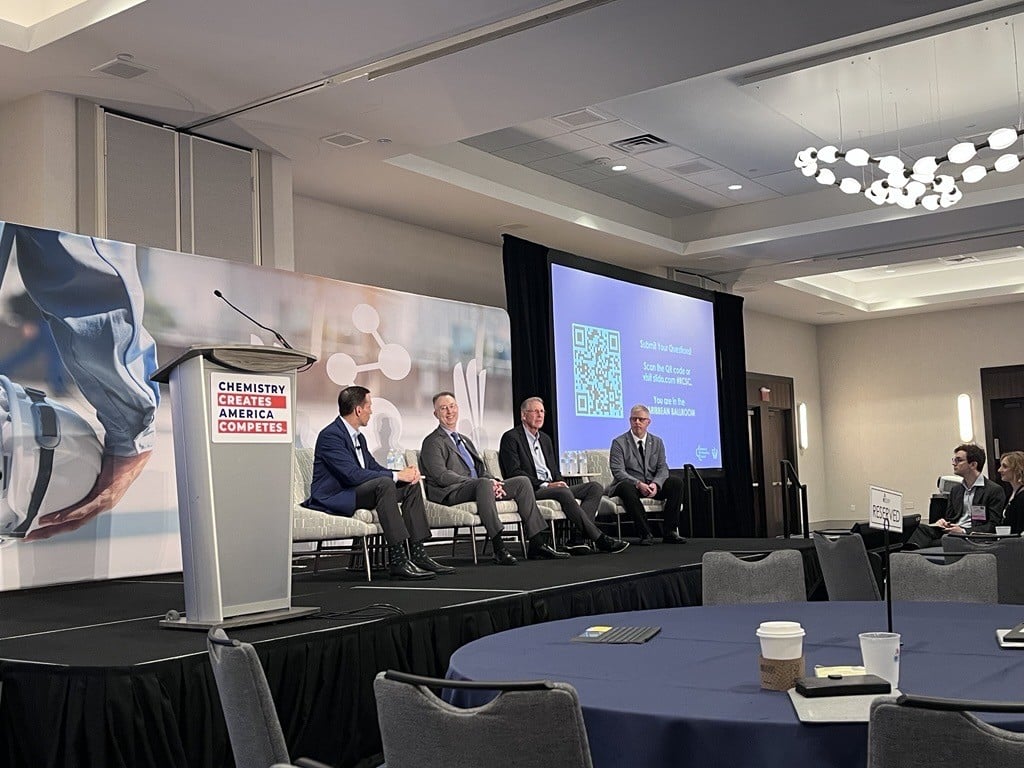
The American Chemistry Council's (ACC) annual Responsible Care and Sustainability Conference, held May 4–7, 2025, in Fort Lauderdale, Florida, opened with a wide-ranging CEO panel discussing topics ranging from the value of the Responsible Care program to regulatory and geopolitical challenges.
The May 5 panel, moderated by ACC CEO Chris Jahn, featured Greg Moffatt, CEO of the Chemistry Industry Association of Canada (CIAC); John Paro, CEO of Hallstar; and Steve Prusak, CEO of Chevron Phillips Chemical Company. The three shared their insights with an audience of chemical industry sustainability experts.
Here are some key takeaways.
Prioritizing Safety and Sustainability
Responsible Care is a safety and sustainability initiative that all ACC members are required to be a part of. The initiative requires public safety and sustainability reporting and third-party audits, leading to more accountability and improved safety measures. Moffatt, whose CIAC launched the program in 1985, said the initiative isn't about reputation - it's about doing the right thing.
“We don’t do Responsible Care because of social license. We do Responsible Care because the health of our employees, the health and safety of our communities, and minimizing the impact on the environment are the right things to do,” Moffatt said. “And if we do those things, then a byproduct of that is social license.”
Although the ACC has many large companies as members, 60% of membership consists of smaller chemical companies. Paro of Hallstar said although participating in Responsible Care is expensive, especially for smaller companies, it is an investment that saves money in the end.
“The reality of compliance long term, relative to doing the right thing with the Responsible Care instruction, is [it is] just so much easier and so much more efficient,” Paro said.
2023 was a successful year for the Responsible Care program, with zero fatalities for contractors or employees. Jahn of the ACC said preliminary data for 2024 also shows continued safety and sustainability gains.
Pushing for TSCA Reform, Combating the Rise of Anti-Science
For the U.S. chemical industry, the Environmental Protection Agency's (EPA) Toxic Substances Control Act (TSCA) is a reoccurring topic of concern, and reform is something the ACC is avidly advocating for. Jahn said the EPA review process is meant to get done in six months or less, but the average takes more than a year, and some members even have applications pending for more than five years.
“That’s ridiculous,” Jahn said. “That hurts innovation, that hurts manufacturing in the United States.”
Paro said the law is holding industry back, despite being designed to modernize regulations. He described “two ironies” of using TSCA as opposed to Europe's Regulation on the Registration, Evaluation, Authorization, and Restriction of Chemicals (REACH) system. Irony No. 1, he said, is that TSCA is a better system than REACH, but it does not work as well due to slow approval times.
“It's actually easier for us to perform in the EU environment than it is in the U.S.,” Paro said. “It's not a better law, it's just being implemented in a way that we're not correctly implementing [TSCA] in the U.S.”
Irony No. 2, he said, was that in the move toward more sustainability, many new substances that are safer and more sustainable are stuck in the EPA's TSCA review, meaning it takes longer to integrate alternatives into supply chains.
In conjunction with a slow-moving TSCA review process, the industry is also facing a rise in anti-science movements, specifically related to the health industry. Prusak of Chevron Phillips Chemical said that the misunderstanding or misuse of science risks bad policy, and Prusak and Jahn agree that the best thing industry can do is be involved in the narratives that shape the industry's reputation.
“It's important that we engage,” Prusak said. “One of the worst things we could possibly do is to be disengaged and let others narrate the story for us.”
“I know it's a hassle for a lot of you in the audience to collect all those performance metrics and get those to us,” Jahn chimed in. “But I'll just tell you as somebody who's on Capitol Hill almost every day in DC, it carries a lot of weight, it carries a lot of credibility, and it gives us the ability to tell your story.”
Trade and Changing Governments: Geopolitical Challenges Facing Industry
The panel also discussed topics regarding the uncertainty and shifting geopolitical landscape, including trade between Canada and the United States amid a trade war and Canada's newly elected prime minister, Mark Carney.
ACC CEO Jahn and CIAC CEO Moffatt said their two associations were working together to address the challenges of U.S. President Donald Trump's tariffs on Canada and support their members through the trade turbulence.
“From an ACC perspective, we should address unfair trade practices [that are] absolutely happening. It absolutely needs to be addressed,” Jahn said. “At the same time … we don't want to be collateral damage in a trade war.”
Moffatt said that chemistry and plastics trade in North America is highly integrated, amounting to $150 billion in trade for Canada.
“It's very easy and natural for Canada to trade with the U.S.,” he said. “It's like [needing] some sugar. Is it easier to go to the store or go to my neighbor? It's always going to be easier to go to the neighbor.”
Moffatt said he understands the “why” for the efforts in reshoring U.S. production - that it was a focus of President Trump's first term and should not be a surprise to anyone on the international stage that it is a priority in his second term. He said the “how” is the part that is confusing, and that the “big damage is the uncertainty.” He said U.S. trade policies also influenced his country's recent election.
“It is super unfortunate because there's so many other issues that are taking place in Canada that require some strong, sober perspectives on how Canadians want their government to adjudicate issues that are pressing in the economy,” Moffatt said. “That didn't happen because it was just all about how we were going to interact with President Trump.”
Still, he said Carney's leadership could bring more pragmatism and a renewed focus on competitiveness.


Insights straight to your inbox
Sign Up NowReporter
Sheridan Wood
Sheridan Wood is 3E's Industry Reporter. She has reported on local, state, and national news for public radio stations KACU, The Texas Standard, and National Public Radio. She has won regional and national reporting awards from the Society of Professional Journalists.

Related Resources
News
EU Omnibus Packages Part 5: Omnibus V – Simplifying EU Defense Regulation
News
EU Omnibus Packages Part 4: Omnibus IV — Product Regulation, Simplification, and Compliance
News
Athletes Disqualified at 2026 Winter Olympics Over PFAS
News
EU Omnibus Packages Part 3: Simplifying EU Agricultural Regulation