Related

EU Omnibus Packages Part 5: Omnibus V – Simplifying EU Defense Regulation
EU Omnibus Packages Part 4: Omnibus IV — Product Regulation, Simplification, and Compliance

Athletes Disqualified at 2026 Winter Olympics Over PFAS

EU Omnibus Packages Part 3: Simplifying EU Agricultural Regulation
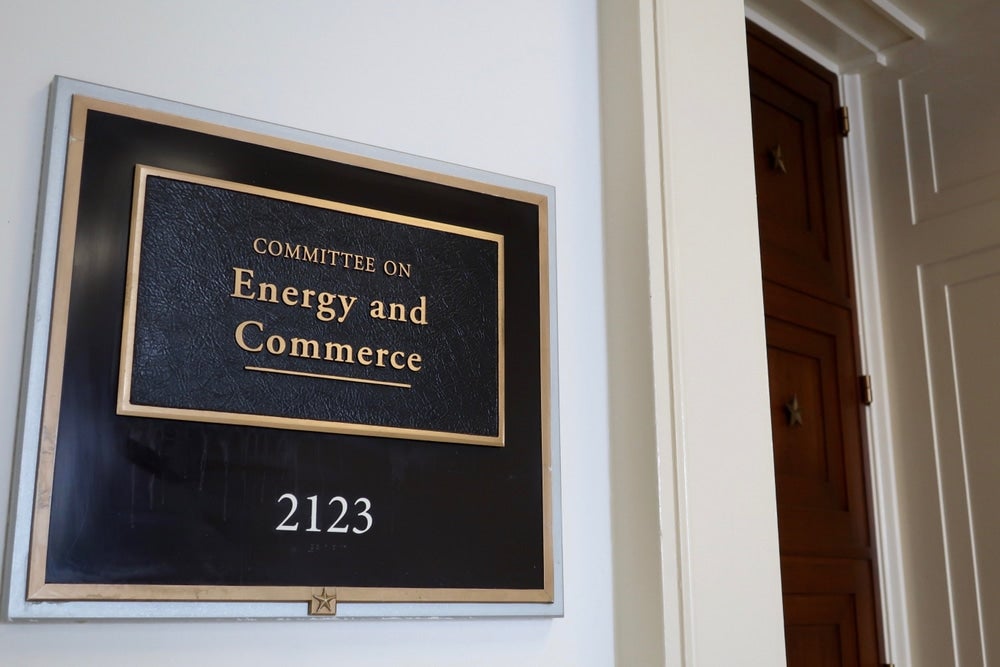
The chairman of the Environment Subcommittee of Congress' Energy and Commerce Committee wasted no time laying out the stakes at a September 16, 2025, hearing titled, “From Gridlock to Growth: Permitting Reform Under the Clean Air Act.”
“If we want to remain globally competitive, we need meaningful permitting reform,” said Rep. Gary Palmer (R-Ala.) to kick off the subcommittee hearing. “This cannot happen without modernizing the Clean Air Act.”
The hearing reignited a long-standing discussion over how to balance industrial growth with public health protections. It also highlighted a divide in how lawmakers, regulators, and stakeholders view the future of Clean Air Act permitting. While Republicans and industry leaders described the proposed reforms as vital to boosting economic growth, energy reliability, national security, and technological innovation, critics warned that weaker oversight could undo decades of progress on clean air and public health.
New Source Review at Issue
At the center of the debate was the Clean Air Act's pre-construction air permits program (called New Source Review (NSR)), a regulatory process that requires industrial facilities to obtain approval before constructing or modifying operations that could increase emissions. These permits are designed to make sure that new emissions do not worsen local air quality or break federal health standards, especially in overburdened communities already impacted by pollution. For decades, this permitting program has been a key tool for supporting the broader goal of the Clean Air Act: safeguarding public health and the environment.
Lawmakers reviewed five Republican-sponsored proposals aimed at streamlining that process. These included efforts to overhaul the New Source Review Improvement Act, ease permitting for national security-related projects, and limit how certain air quality data (such as pollution from wildfires or extreme weather) is used in permitting decisions.
Industry Testifies to Delays, Missed Opportunities
Ashley Kunz, senior director of Environmental Health and Safety at Micron Technology, testified that permitting delays are slowing down what she called a historic resurgence in U.S. manufacturing. She highlighted Micron's planned $150 billion investment in domestic semiconductor manufacturing and $50 billion in R&D (research and development) investments that she said could support up to 90,000 jobs.
“Not getting this right affects not only Micron's investments, but America’s broader efforts to restore semiconductor leadership,” Kunz said. “If permitting stalls key projects, the U.S. would fall behind, undermining economic competitiveness.”
Kunz also expressed support for the Environmental Protection Agency's (EPA) PM2.5 Air Quality Standards but noted that uncontrollable factors like wildfire smoke are impacting compliance. PM2.5 refers to fine particulate matter 2.5 microns or smaller that can penetrate deep into the lungs and are linked to serious health issues. The EPA recently tightened the annual PM2.5 standard from 12 to 9 micrograms per cubic meter to better protect public health, specifically for vulnerable populations.
Mark Gebbia, vice president, Environmental, Regulatory, and Permitting, at Williams Companies, said outdated EPA rules are now delaying permits for modern, cleaner energy projects like gas-fired and behind-the-meter natural gas generation.
“There are approximately 175 data centers planned or under construction within 50 miles of our transmission pipeline footprint … However, several legacy EPA air permitting regulations originally designed for coal-fired plants owned by electric utility companies are creating delays and costs that do not align with the nature and needs of these cleaner, modern facilities,” Gebbia said.
Danny Seiden, president and CEO of the Arizona Chamber of Commerce and Industry, argued that Arizona is proof environmental progress and economic growth can coexist. He noted that since 1990, Arizona's Gross Domestic Product (GDP) has increased by more than 550%, while emissions have fallen by 70%.
“Despite this progress and continued rigorous efforts to reduce emissions, Arizona continues to face ozone challenges driven by factors outside of our control,” Seiden explained. “In fact, approximately more than 80% of our ozone comes from other states, from Mexico, from Asia, and natural events like wildfires.”
He added that despite having little control over these sources, Arizona businesses are still penalized under federal air standards.
“This is not just a regulatory burden. It is an economic and strategic threat that could result in projects vital to national security being delayed or stopped. If companies can't build here, they'll build somewhere else, likely in countries with weaker standards, and that's a 'lose-lose' scenario,” he testified.
Environmental Organization Warns of Rollbacks
Keri Powell, senior attorney for the Southern Environmental Law Center, strongly pushed back on the proposed reforms, defending the Clean Air Act's permitting process as vital to public health.
“The Clean Air Act, at its core, is a public health law,” Powell said. “Its standards are designed to protect health with an 'adequate margin of safety' … it reflects Congress's clear intent: to protect even the most vulnerable children, the elderly, and those with pre-existing illnesses.” Citing EPA data, she said the act had helped prevent 230,000 premature deaths annually by 2020. She also stated that the act's benefits exceed its costs by a factor of more than 30 to 1. She emphasized that the permitting process is central to those protections.
“Strong, clean air protections are implemented through permits,” she said. “Rather than weakening this essential tool for protecting air quality, Congress should be providing more support to state and local agencies.”
Powell criticized the New Source Review Permitting Improvement Act, warning it would “essentially eliminate NSR for changes made to our nation's largest industrial sources,” allowing facilities to increase emissions without modernizing pollution controls or undergoing public review.
State Officials Voice Mixed Reactions
Ali Mirzakhalili, Oregon's air quality administrator, warned that several of the proposed reforms, including changes to the NSR program, could reduce transparency and weaken state oversight. He argued that the added complexity would not improve the efficiency of state permitting programs.
“The proposed changes are concerning in several ways … Many facilities are not equipped with continuous emission monitoring and assessing accurate emissions on an hourly basis,” he said, adding that the NSR Permitting Improvement Act, as written, would likely exempt all existing facility changes from review, potentially leading to considerable air quality degradation and public health impact.
In his testimony, Mirzakhalili criticized two proposed bills aimed at reforming the Clean Air Act. He expressed concern over the FIRE Act (also known as the Fire Improvement and Reforming Exceptional Events Act), which seeks to limit how emissions from wildfires, prescribed burns, and other “exceptional events” can be used to determine if an area is meeting a National Ambient Air Quality Standard (NAAQS). He warned that this could allow agencies to exclude pollution data collected on hot, stagnant, or dry days (which are conditions often linked to poor air quality) from being used in regulatory decisions.
Mirzakhalili also raised concerns about the FENCES Act (known as the Foreign Emissions and Nonattainment Clarification for Economic Stability Act), which intends to exclude foreign emissions from being used to determine if an area is meeting a NAAQS. This, he explained, would make it difficult to issue permits in nonattainment areas, even for facilities that use the best available pollution controls, because a significant portion of an area's pollution burden would be effectively ignored.
In contrast, Clint Woods, commissioner of the Indiana Department of Environmental Management (IDEM), voiced strong support for the reforms and cited Indiana as a national example of efficient permitting and environmental progress. He emphasized that his state handles nearly all of its Clean Air Act responsibilities.
“100% of key air permits in the state, and over 99% of Clean Air Act compliance and enforcement activities, are conducted by IDEM versus U.S. EPA, and IDEM succeeds in that permitting,” he said, highlighting that Indiana's fast-track permitting system beat state-permitted deadlines by roughly 50%.
Woods also emphasized the importance of modernizing federal rules and empowering states.
“State-led implementation of the Clean Air Act has served our country incredibly well. And one of the greatest stories seldom told is a monumental improvement in ambient air quality and emissions, progress that outpaces the rest of the world,” Woods said.


Insights straight to your inbox
Sign Up NowReporter
Cameron Goodnight
Cameron Goodnight is a Federal Regulatory Reporter for 3E based in the Washington, D.C. area. He covers the latest developments and updates in environmental, health, and safety (EHS) that impact the U.S. national level.

Related Resources
News
EU Omnibus Packages Part 5: Omnibus V – Simplifying EU Defense Regulation
News
EU Omnibus Packages Part 4: Omnibus IV — Product Regulation, Simplification, and Compliance
News
Athletes Disqualified at 2026 Winter Olympics Over PFAS
News
EU Omnibus Packages Part 3: Simplifying EU Agricultural Regulation