Related

EU Omnibus Packages Part 5: Omnibus V – Simplifying EU Defense Regulation
EU Omnibus Packages Part 4: Omnibus IV — Product Regulation, Simplification, and Compliance

Athletes Disqualified at 2026 Winter Olympics Over PFAS

EU Omnibus Packages Part 3: Simplifying EU Agricultural Regulation
On June 12, 2025, U.S. President Donald Trump signed three congressional resolutions repealing waivers from the U.S. Environmental Protection Agency (EPA), effectively ending California's electric vehicle sales mandates and diesel engine rules. These actions fulfill the president's election promise and inauguration day pledge to end California's 2035 mandate.
The mandate, known as the Advanced Clean Cars II (ACC II) program, would have tightened restrictions on cars that emit greenhouse gases and are sold in the state, with the goal of making all new passenger cars, trucks, and SUVs sold in California zero emission vehicles after 2035. Since the passage of the programs, 12 states and the District of Columbia have adopted the Advanced Clean Cars II regulations, meaning nearly 30% of all cars sold in the United States would have been covered by these rules. The other two resolutions repealed EPA approval of a mandate for heavy duty trucks that the state agreed to repeal last month and an EPA waiver for California's low-nitrogen oxide truck emissions rule.
The approvals for these programs came from the EPA under the Biden administration, which followed reports from the Government Accountability Office and the Senate Parliamentarian that stated it was unlikely the House or Senate could vote to overturn the waivers. This proved untrue, a fact celebrated by the president in a press conference directly before the signing of the bill.
“We officially rescue the auto industry by ending the California electric vehicle mandate once and for all,” said Trump.
The Road to Repeal
The waivers faced challenges from the start. After the introduction of ACC II, several states and energy industry representatives sued the EPA. Their suits were rejected by the D.C. Circuit Court, prompting various groups of plaintiffs to ask the U.S. Supreme Court to weigh in on the matter. The U.S. Supreme Court rejected the lawsuit led by the states, but agreed to hear the case of the energy groups. It remains to be seen what will happen with this case after the repeal of the mandate.
The waivers also faced challenges in the U.S. House of Representatives and the U.S. Senate. The House voted on April 30, 2025, to rescind the EPA's approval of California's zero-emission truck mandate and the EPA waiver for the state's Heavy-Duty Low-NOx Omnibus regulation, and voted on May 1, 2025, to block the ACC II rule. House Republicans argued the rules will increase vehicle costs and strain supply chains by forcing an accelerated shift to electric trucks. The U.S. Senate followed suit, voting in favor of three separate resolutions revoking the waivers on May 22, 2025, sending the decision to the president.
Critics of the decision by the House and Senate contend that using the Congressional Review Act (CRA) to pass these resolutions goes against decades of precedent and rulings from the GAO and Senate Parliamentarian saying that the waivers are not subject to the CRA.
“Republicans took the 'nuclear option,' undermining longstanding Senate procedures that could be applied to legislation far beyond the CRA and giving agencies significantly more control over the Senate floor,” said U.S. Senator Alex Padilla of California, ranking member of the Senate Committee on Rules and Administration.
Supporters of the decision, however, argue that these repeals were necessary. Senator Elissa Slotkin, the only Democrat in the Senate to vote in favor of repealing the waivers, argued that the mandates were too strict and would hurt American businesses.
“Today, I voted to prevent California and the states that follow its' standard from effectively banning gas-powered cars by 2035. Michigan is the auto capital of the world, and as Michigan's U.S. Senator, I have a special responsibility to stand up for the more than one million Michiganders whose livelihoods depend on the U.S. auto industry,” said Senator Slotkin.
Impacts on Chemical Industry
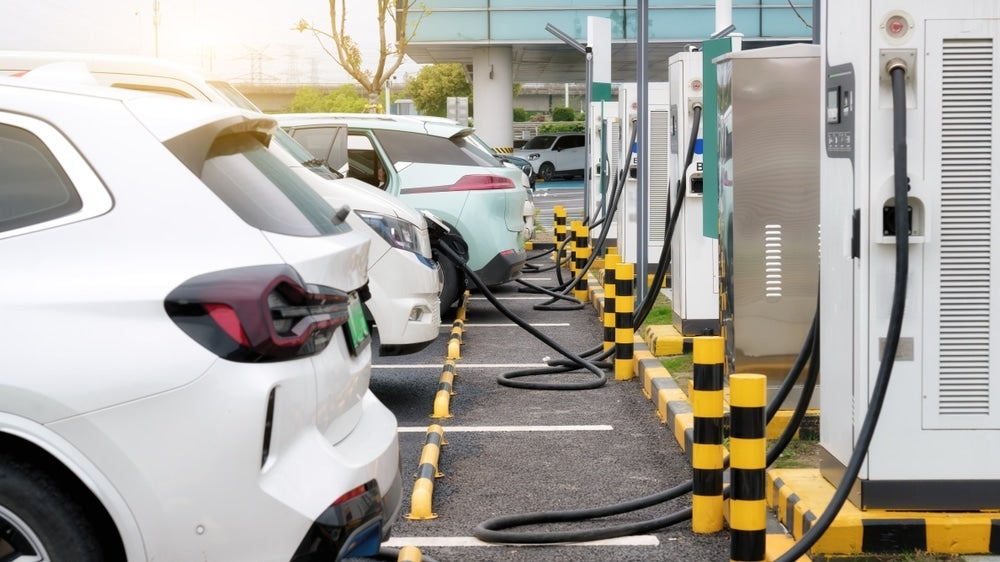
The decision to roll back these waivers may not only slow the adoption of electric vehicles (EV) but also ripple through the chemical industry. California's regulations have historically served as a catalyst for broader EV adoption across the country, and their weakening could reduce momentum in the EV market. A slowdown in EV sales may diminish demand for a wide range of advanced materials and chemistries that are integral to these vehicles, from plastics and carbon fiber composites to lithium-based battery components and semiconductor materials.
According to research from the American Chemistry Council, electric vehicles are heavily reliant on advanced chemistry. Compared to internal combustion engine (ICE) vehicles, EVs require more plastics, synthetic rubber, adhesives, and sealants, totaling as much as $6,000 in chemical content per mid-size EV, or about 85% more than in a similar-sized ICE vehicle. Semiconductors, vital for battery management and energy optimization, can contain up to $1,000 in chemical value, more than twice what is used in ICE vehicles.
In addition to the volume of chemical inputs, EVs utilize a broader spectrum of materials than ICE vehicles. These include specialty plastics for battery casings and thermal insulation, copper for wiring and motors, and exotic metals like lithium, cobalt, and manganese used in battery cathodes. These materials are central to the chemical industry's growing stake in the automotive sector and often have minimal use in traditional ICE vehicles.
Therefore, if EV demand falters because of weakened or repealed mandates like those in California, the economic impact could be substantial for chemical manufacturers. In 2023, the chemistry content of the North American automotive market totaled nearly $70 billion, with EVs representing the most promising growth area. For the chemical industry, the Trump-era policy shift could mean a slower trajectory toward one of its most lucrative and innovation-driven markets.
What Happens Next
The consequences of these resolutions will reach far beyond California. In the case of ACC II, 12 states and the District of Columbia have adopted the same emissions standards. This is allowed through section 177 of the Clean Air Act, tying their regulations to the status of California's waivers. Now that they are repealed, those 12 states and D.C. will lose the regulations as well. In a conversation with Trip Pollard from the Southern Environmental Law Center earlier this year, 3E received a clear roadmap for what will happen next.
“I would expect there to be litigation over whether Congress exceeded the boundaries of the CRA by invalidating or attempting to invalidate a waiver, and the question for the courts would again be if a waiver is a rule. While the courts decide on that issue, the status of the waiver would be up to the courts. They could grant an injunction while the case is pending, which would allow the waiver - and therefore the ACC II standards - to remain in effect until they ruled, but if they do not grant an injunction, the waiver would effectively be suspended until a decision is made,” Pollard told 3E.
This prediction has turned out to be correct. After the Senate vote, California Governor Gavin Newsom announced that the state would file a lawsuit following the vote.
“This Senate vote is illegal. Republicans went around their own parliamentarian to defy decades of precedent. We won't stand by as Trump Republicans make America smoggy again - undoing work that goes back to the days of Richard Nixon and Ronald Reagan - all while ceding our economic future to China. We're going to fight this unconstitutional attack on California in court,” said Governor Newsom.
California will also likely explore other approaches to regulate emissions, including state Executive Orders and Indirect Source Reviews. California state legislators have also proposed legislation that would mandate the California Air Resources Board to regulate indirect sources of emissions, giving the state greater control over environmental mandates.
As California and its allies prepare for court challenges and explore alternative policy tools, the outcome will help determine whether the United States continues down the path toward electrified transportation or takes a detour with lasting consequences for the chemical industry, climate policy, industry investment, and public health.


Insights straight to your inbox
Sign Up NowReporter
Christopher Bornmann
Christopher Bornmann is the State Regulatory and Legal Action Reporter for 3E based in Washington, D.C. He covers the latest legal developments and updates in environmental, health, and safety (EHS) that impact the U.S. at the state level. He has experience working for the U.S. House of Representatives and national advocacy groups.

Related Resources
News
EU Omnibus Packages Part 5: Omnibus V – Simplifying EU Defense Regulation
News
EU Omnibus Packages Part 4: Omnibus IV — Product Regulation, Simplification, and Compliance
News
Athletes Disqualified at 2026 Winter Olympics Over PFAS
News
EU Omnibus Packages Part 3: Simplifying EU Agricultural Regulation