Related

EU Omnibus Packages Part 5: Omnibus V – Simplifying EU Defense Regulation

EU Omnibus Packages Part 4: Omnibus IV — Product Regulation, Simplification, and Compliance

Athletes Disqualified at 2026 Winter Olympics Over PFAS

EU Omnibus Packages Part 3: Simplifying EU Agricultural Regulation
The UK government released its climate plan on October 29, 2025. It aims to provide the foundation for a green economy that benefits UK families and businesses while protecting the environment for future generations.
The Carbon Budget and Growth Delivery Plan supports the Climate Change Act 2008 by promoting clean energy investment and economic growth in the UK.
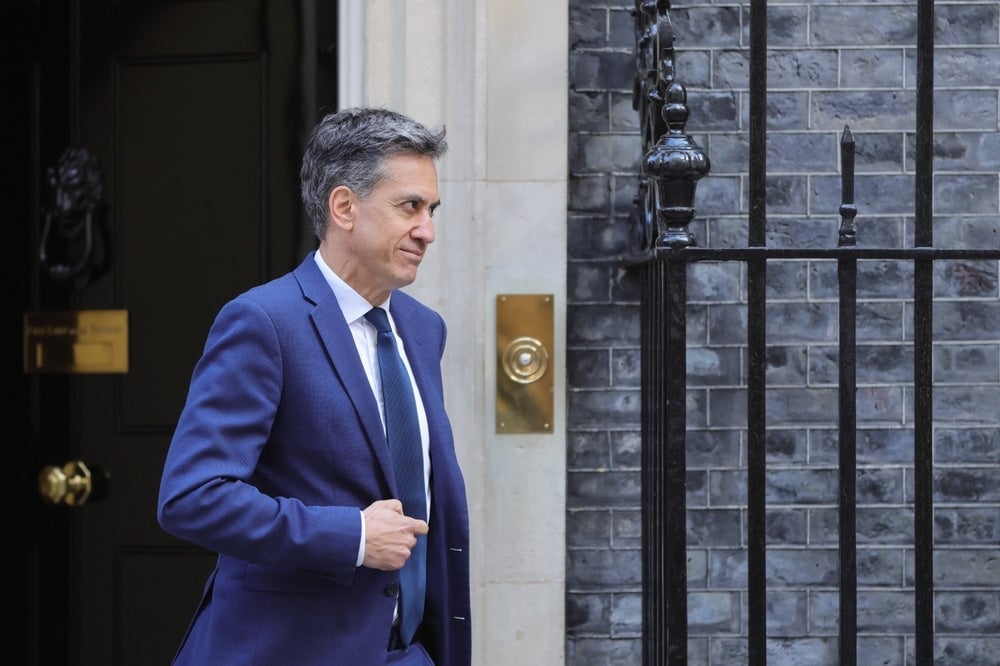
Secretary of State Ed Miliband said in a press release that clean energy is about delivering better lives for everyone in the UK through climate action and the environmental benefits of clean energy.
“It would be negligent to leave our children and grandchildren to face energy insecurity and climate breakdown,” said Miliband. “By providing clarity and certainty on how Britain will seize these opportunities, this plan will help unlock the investment we need in clean energy, jobs, and growth at home. And it will strengthen our position as a climate leader so we can push others internationally to take the action needed to avoid disaster.”
Four Areas of Focus
The plan outlines four primary areas of focus.
First, energy security and lower bills. The UK is particularly vulnerable to the volatility of global energy markets, and the plan makes repeated references to the impact of the Russian invasion of Ukraine on international energy prices. The government outlines its approach to addressing this crisis by embracing nuclear energy, investing in more wind and solar energy sources, incentivizing private investment and competition to roll out new clean energy facilities, and expanding a rebate to families to help mitigate the costs of their home energy bills.
Second, good jobs and economic growth. The government sees clean energy as the most significant catalyst for highly skilled, well-paid jobs, estimating an increase in such jobs from approximately 440,000 today to more than 800,000 by 2030. As part of its recent Clean Energy Jobs Plan, the government intends to build a clean energy workforce by supporting veterans and North Sea workers in their transition to clean energy jobs. It also plans to catalyze private investment in clean energy, reduce electricity costs for energy-intensive firms, and enhance domestic energy supply chains.
Third, improving quality of life. Home upgrades and the electrification of transport and heating will help consumers lower energy bills and improve urban air quality. The government's Warm Home Plan will provide investment to upgrade 5 million homes to lower bills and address fuel poverty. There will also be public money for electric vehicle (EV) incentives and an expanded EV charging network.
Finally, protecting our natural world. Protecting the environment means protecting the resources on which the economy and the modern way of life depend. The government will invest in agricultural programs for nature recovery, such as tree planting and peatland restoration, and overhaul waste management and recycling programs to reduce pollution and generate thousands of new jobs in support of a circular economy.
CEO of the Confederation of British Industry Rain Newton-Smith said in a press release that the clean energy transition is essential for investment, innovation, and tackling climate change.
“This transition is not only essential for tackling climate change - it's a strategic economic opportunity,” said Newton-Smith. “Businesses remain committed because they understand this transition is the backbone of a competitive, resilient economy in an uncertain world. The science hasn't changed but the risks of inaction have. Now is the moment to turn that ambition into tangible benefits for every household and business - from lower energy bills and cleaner air to the creation of high-quality jobs.”
Will This Be Enough?
UK energy and cost-of-living crises are acute for Prime Minister Keir Starmer, whose approval rating was recently polled at just 22%.
According to Professor of Economic Policy at the University of Oxford Dieter Helm, the UK has the most expensive electricity in the developed world. On a September podcast with Bloomberg UK a month before the release of the climate plan, Helm said that the UK government has created a complex crisis in which it has committed to rigorous net-zero targets by 2030 while facing growing energy requirements, importing energy in a volatile market, and relying on renewable energy generation without the necessary infrastructure and technology to support it.
“I have no idea whether he [Miliband] believes deeply that all of this is achievable, and we can get to net zero by 2030 and it's all going to be cheaper,” said Helm. “However, it is true that he persuaded a great deal of the public that this was the case, and he persuaded a great number of people that this was a growth strategy.”
According to Helm, the government's narrative on the economic benefits of sustainable energy has not only hidden the true cost of its climate ambitions, it has created unrealistic expectations about whether a fast and efficient transition to clean energy is even possible in the UK.
“What better to tell people it's a win-win-win? You're going to get clean energy, it's going to cause economic growth, and it's all going to be cheaper,” said Helm. “Until you really get going, you're not being found out, but now he is being found out, now the government is being found out. Now we have the highest industrial electricity prices and nearly the same for domestic use in the developed world, and we are hemorrhaging industry.”
Recent research shows that the price of industrial electricity in the UK is 63% higher than in France and 27% higher than in Germany, the impact of which has been a rapid deindustrialization of the UK economy that includes the nationalization of British Steel.
Helm believes that while the government is focusing on lowering energy bills for consumers, the real focus should be on distributing the high costs of energy across industry.
“We should charge a price to industry that enables it to compete in markets,” said Helm. “And that means separating out who pays the marginal costs of generating power … and the reality is we should switch quite a lot of those costs from large industry to [consumers], and politically, that is extremely difficult.”
With its focus on consumer electricity and clean energy, the climate plan would not, at first glance, appear to address the concerns of Helm and other industry experts who believe that the UK's electricity prices are a self-inflicted wound resulting from an overcommitment to achieving the transition to clean energy by 2030.
“When you impose an arbitrary, short-term political target on an energy system, you're bound to create higher costs, and you're bound to create yourself lots of problems,” said Helm.
With the current Labour government facing low approval ratings, it remains to be seen if the current climate plan is sufficient to provide relief. The opposition Conservative Party has vowed to repeal the Clean Energy Act and replace it with a policy for cheap energy, and the ascendant Reform Party has said it will eliminate subsidies for renewables if it should form the next government, which, according to recent polling, is a very real possibility.


Insights straight to your inbox
Sign Up NowReporter
Graham Freeman
Graham Freeman is based in Toronto, where he covers ESG and sustainability news. Graham has been a content and technical writer in the technology industry for more than a decade. He has also worked as a professor and lecturer at Queen’s University, the University of Toronto, and George Brown College.

Related Resources
News
EU Omnibus Packages Part 5: Omnibus V – Simplifying EU Defense Regulation
News
EU Omnibus Packages Part 4: Omnibus IV — Product Regulation, Simplification, and Compliance
News
Athletes Disqualified at 2026 Winter Olympics Over PFAS
News
EU Omnibus Packages Part 3: Simplifying EU Agricultural Regulation