Related

EU Omnibus Packages Part 5: Omnibus V – Simplifying EU Defense Regulation
EU Omnibus Packages Part 4: Omnibus IV — Product Regulation, Simplification, and Compliance

Athletes Disqualified at 2026 Winter Olympics Over PFAS

EU Omnibus Packages Part 3: Simplifying EU Agricultural Regulation
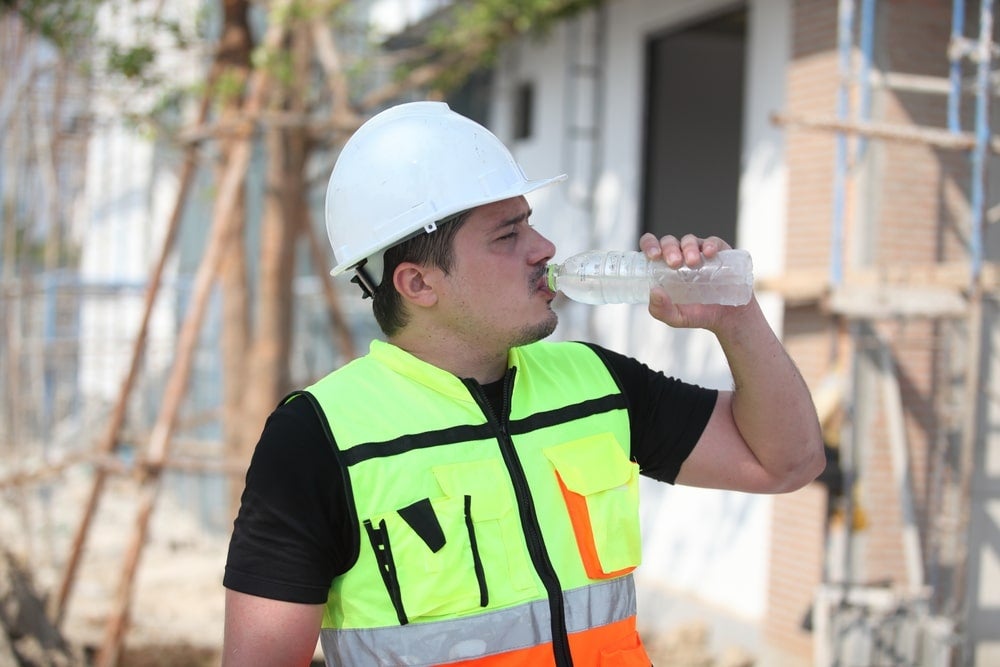
We knew it would be a hot topic, but the comment period for the new U.S. Occupational Safety and Health Administration (OSHA) standard, Heat Injury and Illness Prevention in Outdoor and Indoor Work Settings, has only been open since 30 August 2024 and it already has logged 1,589 comments as of noon EST on 6 September 2024.
The proposed rulemaking, which was published in July 2024, would apply to all employers conducting outdoor and indoor work in all general industry, construction, maritime, and agriculture sectors where OSHA has jurisdiction, with some exceptions. OSHA is requesting comments on all aspects of the proposed rule. Agencies like OSHA review all submissions and may choose to redact or withhold certain submissions or portions thereof. Submitted comments may not be available to be read until the agency has approved them. So far, 22 comments have been posted publicly. Stakeholders have until 31 December 2024 to submit their comments and relevant documentation to OSHA.
A few things are clear from the comments we reviewed:
- Commenters generally acknowledge exposure to excessive heat can have tragic results and support some type of regulation or voluntary guidance around heat exposure.
- Heat exposure impacts workers in a variety of industries, ranging from agriculture and construction to restaurants/food service and trucking.
Commenters feel it is nearly impossible to control temperatures or exposure to heat in some workplaces.
- One size does not fit all when it comes to controlling and managing heat exposure.
- A number of commenters have concerns about the circumstances that trigger parts of the standard.
What's in the Standard?
As stated in the executive summary, the proposed rule is a programmatic standard that requires employers to create a heat injury and illness prevention plan (HIIPP) to evaluate and control heat hazards in their workplace. The rule establishes requirements for identifying heat hazards, implementing engineering and work practice control measures at or above two heat trigger levels (i.e., an initial heat trigger, which is 80 degrees Fahrenheit, and a high heat trigger, which is 90 degrees Fahrenheit), developing and implementing HIIPP/emergency response plan, providing training to employees and supervisors, and retaining records.
OSHA states that the proposed rule would apply to all employers conducting outdoor and indoor work in all general industry, construction, maritime, and agriculture sectors, but there are some exceptions listed in Section VII.A., Paragraph (a) Scope and Application, and Paragraph (a)(2) describes the exemptions for the proposed standard based on work activities.
Employers would be responsible for determining which work activities are covered by the standard. Although an employer may have some work activities exempt from the proposed standard, other activities at a job site may be covered. Paragraph (a)(2)(i) excludes work activities for which there is no reasonable expectation of exposure at or above the initial heat trigger of 80 degrees Fahrenheit. For example, operating a seasonal business outdoors (such as a Christmas tree farm) during winter months, when temperatures are lower than the initial heat trigger, could trigger an exemption.
Paragraph (a)(2)(ii) would exclude short duration employee exposures at or above the initial heat trigger of 15 minutes or less in any 60-minute period. This exemption recognizes that while typical work activities may take place below the initial heat trigger, employees may experience short exposures to heat at various times during their shift. For example, an employer who is otherwise exempt from the standard but has employees who occasionally walk to collect mail outside in temperatures at or above the initial heat trigger for 15 minutes or less in any 60-minute period, would still be exempt.
Several commenters specifically mentioned truck drivers and their exposure to heat during the course of their work, something which OSHA addresses when discussing exemptions. Even though a truck driver might be in an air-conditioned vehicle for most of his or her shift, employers must ensure employees are not exposed to temperatures at or above the initial heat trigger for more than 15 minutes in any 60-minute period.
For example, if an employee drives an air-conditioned vehicle but repeatedly exits the vehicle to deliver product in temperatures at or above the initial heat trigger, that activity would only be exempt from the standard if cumulative exposure in any 60-minute period at or above the initial heat trigger is for 15 minutes or less. If delivery tasks, such as unloading product from the vehicle and moving product to its destination, occur at or above the initial heat trigger for more than 15 minutes in any 60-minute period, these work activities would be covered by the standard.
Easier said than done, acknowledged one commenter, who voiced concerns that complying with the proposed standard as written could create new safety hazards for employees. “We are a trucking firm that sends drivers to multiple states per day. While these drivers have trucks with A/C, they are required to secure/unsecure their flatbed loads at their pick-up and delivery locations. This process is done outdoors, at jobsites that have conditions out of our control.” (Comments included in this article might have been edited for length or clarity.)
The commenter said the process of loading and unloading generally takes an hour, and while the driver theoretically could get back in the truck, that practice would not be practical at a site where a crane is waiting to unload. “It’s not safe for the driver to be in the truck or to have [others] waiting for the load to be unsecured from the trailer” while a crane is in operation nearby.
The commenter also noted it's difficult to determine “the workplace” for a truck driver: Is it the home terminal where the driver spends a few minutes getting into the truck, the shipping location where the load is picked up and secured, or the final jobsite destination where the load is removed from the trailer?
The company does offer training about heat safety, provides water for its drivers to take with them, and has air-conditioned trucks, so they are doing their best to protect employees from experiencing heat-related health effects, according to the commenter. “The trucking industry should be exempt from this rule because it would be nearly impossible to follow or monitor [employees], due to them constantly moving in/out of varying weather patterns,” wrote the commenter, who pointed to a real-world example that had occurred on the morning the company's comments were submitted.
One of their trucks started in an area with a 74-degree heat index but its delivery location had an 84-degree heat index, and that is where the driver would be out of the vehicle as his trailer was being unloaded. “While all of these proposed rules are good in theory, you need to realize this cannot be a one-size-fits-all type of ruling,” wrote the commenter. “There are many variations among industries and also within the same industry.”
Relative to that, one commenter raised the issue of delivery drivers in trucks without air conditioning operating in areas prone to high temperatures, circumstances that are likely to trigger OSHA's wrath if the driver is spending more than 15 minutes at a time in the heat. “Companies are not compliant with making sure the AC is working in their trucks, and they expect their drivers to be on the road, not parked under a tree,” she wrote. “The rules need to address this problem.”
OSHA said it recognizes that organizations affected by heat hazards vary significantly in size and workplace activities. Accordingly, many of the provisions of the proposed standard provide flexibility for affected employers to choose the control measures most suited to their workplace. The flexible nature of the proposed rule may be particularly beneficial to small organizations with limited resources.
Other commentors raised some additional concerns, including:
- “It is unreasonable to require the HIPP to list specific work activities per site. With multiple sites at one time, not possible. General working conditions to list is reasonable.”
- “There should be a higher emphasis on risk factors such as certain medical conditions, excessive caffeine, and medications. I take blood pressure medication known as diuretics, which can strip water from the human body. I worked as an EMT in a steel mill.”
- “To mandate these commonsense ideas as rules appears to be somewhat heavy-handed. Industries that produce/manufacture goods in much of the country have been working through these situations for many years. People have been acclimating to warmer weather for hundreds of years. If the situation does not work for them, they find another job that is more conducive to their specific needs.”
- “The proposed high heat trigger starting at a heat index of 90 is unsustainable for companies that do not have air-conditioned facilities. We care about our employees and their health. We don’t want employees to be injured or to have to miss time from the job due to injuries or illnesses, so we do most of the things listed in the proposed rule. Recommendations are great but when they move to regulations it becomes more cumbersome and costly for companies.”
Killer Heat and Getting Hotter
Heat is the leading cause of weather-related deaths in the United States, killing approximately 1,220 people in the United States every year. In 2022, the last year for which statistics are available, 43 work-related deaths in the United States were attributed to excessive workplace heat. More than two-thirds of all Americans were under heat alerts in 2023. Heat events are becoming more frequent and intense, according to the Centers for Disease Control and Prevention (CDC), which means that more and more workers are at risk of heat illness and injury.
While heat hazards impact workers in many industries, workers of color have a higher likelihood of working in jobs with hazardous heat exposure, such as those in construction and agriculture. OSHA announced it is prioritizing programmed inspections in agricultural industries that employ temporary, nonimmigrant H-2A workers for seasonal labor. According to OSHA, these workers face unique vulnerabilities, including potential language barriers, less control over their living and working conditions, and possible lack of acclimatization, and are at high risk of hazardous heat exposure.
About one-third of the commenters voiced unequivocal support for a heat regulation, observing “it was about time” and saying they were hopeful that workers “sweating it out” in U.S. workplaces would get some protection from heat-related illness with a national standard. One anonymous commenter called on employers to “start doing the right thing. They are responsible for their operational environment and must provide a duty of care for their employees at all times, period.”
“Every worker should come home safe and healthy at the end of the day, which is why the Biden-Harris administration is taking this significant step to protect workers from the dangers posed by extreme heat,” said Acting Secretary of Labor Julie Su. “…(W)e are committed to ensuring that those doing difficult work in some of our economy's most critical sectors are valued and kept safe in the workplace.”
Enforcement and accountability were mentioned in comments from John “Scotty” MacNeill, national safety director, the Utility Workers Union of America. Saying the union “fully endorses OSHA's proposed rule on heat illness prevention,” he added that the union urges OSHA “to ensure robust enforcement of the proposed rule. Employers who fail to protect their workers from heat-related hazards should be held accountable. The rule must include clear consequences for non-compliance, and OSHA should be equipped with the resources necessary to conduct inspections and enforce the standards effectively.”
Until a final heat illness prevention standard is in place, the agency continues to conduct heat-related inspections under its National Emphasis Program – Outdoor and Indoor Heat-Related Hazards, launched in 2022. The program targets workplaces with the highest exposures to heat-related hazards proactively to prevent workers from suffering injury, illness, or death. Since the launch of the program, OSHA has conducted more than 5,000 federal heat-related inspections.
“It is paramount that we have rules and regulations to help our construction workers – who are often neglected when it comes to their comfort and well-being – as they are the infrastructure of our country,” said a commenter representing a nearly 100-year-old construction company. “I am pleased to see that finally we are implementing a rule that will help them with the wide temperature extremes we are facing keeping safety and OSHA in the forefront of everything we do.”
A safety administrator and workers' compensation coordinator for a construction company in Florida similarly expressed support for the proposed regulation: “I cannot stress enough how vital the proposed rule is, now cannot express enough how important it is for this proposal to see success. Heat safety, especially with evidential proof of rising temperatures, is a critical necessity that can no longer be overlooked or delayed any longer.”
Noting the lack of support on a state level in Florida, the commenter added it is up to the federal level “to step in and pass regulations that will protect the people that we depend on for many goods and services. By foregoing these regulations, we are neglecting these hard-working people. It is hot in Florida. It is humid in Florida. The heat index has risen over 100 degrees Fahrenheit every day for most of summer. Please pass these regulations!”
——–
Editor's Note: 3E is expanding news coverage to provide customers with insights into topics that enable a safer, more sustainable world by protecting people, safeguarding products, and helping businesses grow. Deep Dive articles, produced by reporters, feature interviews with subject matter experts and influencers as well as exclusive analysis provided by 3E researchers and consultants.


Insights straight to your inbox
Sign Up NowIndustry Editor
Sandy Smith
Sandy Smith is an award-winning newspaper reporter and business-to-business journalist who has spent 20+ years researching and writing about EHS, regulatory compliance, and risk management and networking with EHS professionals. She is passionate about helping to build and maintain safe workplaces and promote workplace cultures that support EHS, and has been interviewed about workplace safety and risk management by The Wall Street Journal, CNN, and USA Today.

Related Resources
News
EU Omnibus Packages Part 5: Omnibus V – Simplifying EU Defense Regulation
News
EU Omnibus Packages Part 4: Omnibus IV — Product Regulation, Simplification, and Compliance
News
Athletes Disqualified at 2026 Winter Olympics Over PFAS
News
EU Omnibus Packages Part 3: Simplifying EU Agricultural Regulation