Related

EU Omnibus Packages Part 5: Omnibus V – Simplifying EU Defense Regulation
EU Omnibus Packages Part 4: Omnibus IV — Product Regulation, Simplification, and Compliance

Athletes Disqualified at 2026 Winter Olympics Over PFAS

EU Omnibus Packages Part 3: Simplifying EU Agricultural Regulation
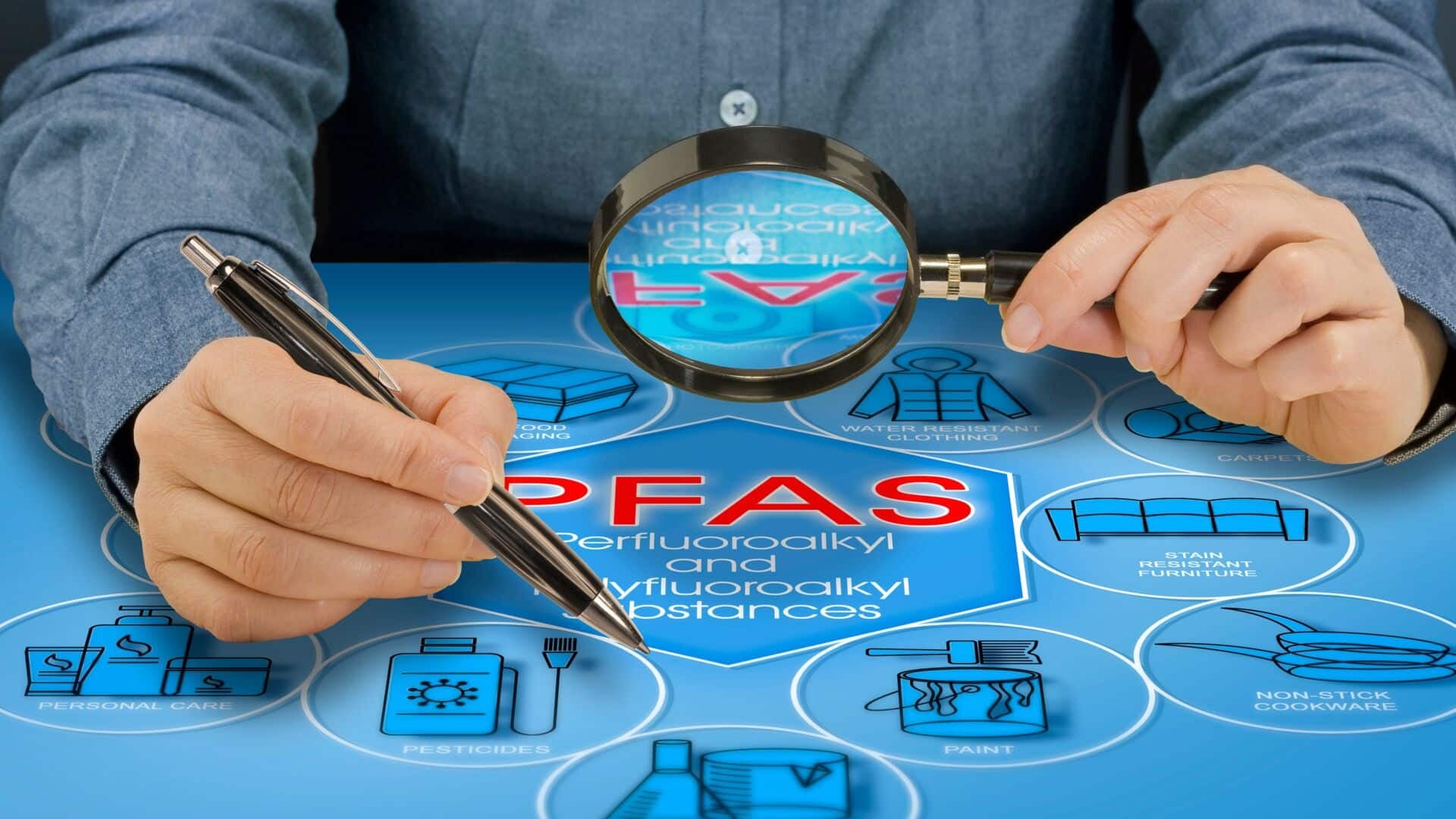
Despite their use in the manufacturing of consumer products for more than 70 years, contamination found in drinking water resulting from the use and disposal of per- and polyfluoroalkyl chemicals (PFAS) has only recently become the focus of environmental and regulatory agencies. As the effects of PFAS become better understood, state governments are taking significant actions to regulate or ban them in consumer manufacturing. That includes calling on the federal government to make substantial changes to how it regulates the chemicals, not only in water, but in the air as well.
Last month, environmental regulatory agencies in North Carolina, New Mexico, and New Jersey filed a joint petition calling on the U.S. Environmental Protection Agency (EPA) to expand its regulatory framework to include PFAS in air emissions. The petition calls for the addition of four PFAS–perfluorooctanoic acid (PFOA), perfluorooctane sulfonic acid (PFOS), perfluorononanoic acid (PFNA), and HFPO dimer acid (HFPO-DA or GenX)–to be added to the Clean Air Act list of hazardous air pollutants (HAPs).
While the EPA has taken steps to address PFAS contamination in drinking water, including new water limits and funding allocations for testing and remediation, no federal regulations currently exist to control PFAS air pollution. The EPA's PFAS Strategic Roadmap does include a goal to address PFAS emissions under the Office of Air and Radiation, including an evaluation of listing compounds as HAPs. However, as of publication, the roadmap's goal only goes as far as doing research to “inform potential regulatory and non-regulatory mitigation options” when it comes to air contamination by PFAS.
State-Level PFAS Regulations Expand
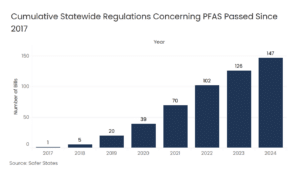
While the federal government continues to evaluate its approach to PFAS regulation, several U.S. states are taking their own action. In June 2024, 3E published a state-by-state analysis of PFAS regulations. Since then, state legislatures have introduced or passed additional bills aimed at restricting or banning the use of PFAS in products and reducing their environmental impact, according to data from Safer States, a national alliance of environmental health organizations and coalitions.
While many of the proposed regulations seem to overlap from state to state, key terms are defined differently by different pieces of legislation. The text of each bill has been linked to the analysis to help further clarify the language used.
State-by-State PFAS Regulation Update
Connecticut
Connecticut's S.B.292, signed into law 5 June 2024 by Governor Ned Lamont, prohibits the sale or distribution of products containing intentionally added PFAS, including apparel, carpets, cookware, cosmetics, dental floss, children's products, and textile furnishings, and requires manufacturers to submit information on PFAS-containing products to the state to ensure compliance.
The first stage of this bill will require the named products to be labeled as containing PFAS in two waves: 1 January 2026 for outdoor gear and 1 July 2026 for the rest. The full prohibition of these products’ manufacture will go into effect 1 January 2028.
Maryland
Maryland's H.B.1147 prohibits the installation or sale of playground surfacing materials that contain lead or PFAS chemicals that were previously intentionally added, and prohibits any county, municipality, or unit of local government from adopting any rule or regulation less stringent than the act. This law focuses on reducing exposure to both lead and PFAS, addressing concerns related to children’s products and building materials. The ban goes into effect 1 October 2024.
Massachusetts
Massachusetts’ S.2902 requires the reduction of PFAS in firefighter personal protective equipment (PPE) starting 1 January 2025. The law fully prohibits PFAS-containing firefighting PPE by 1 January 2027, as part of the state's broader PFAS reduction initiatives.
New Hampshire
In New Hampshire, Governor Chris Sununu signed HB 1352, which mandates the disclosure of PFAS in firefighting PPE. The state encourages the prioritization of PFAS-free equipment purchases and will prohibit the provision of equipment containing intentionally added PFAS starting 1 January 2025.
New Jersey
In New Jersey, A.4125 prohibits the sale, manufacture, distribution, and use of firefighting foam that contains intentionally added PFAS. The bill also requires the state's Department of Environmental Protection (NJDEP) to establish a collection and disposal program for the foam. The ban will go into effect on 8 January 2026.
Rhode Island
Rhode Island has updated its Toxic Packaging Act with H.B.7619, delaying the ban on PFAS in food packaging until 1 January 2025, and in processing agents to 1 July 2027. This extends the ban originally meant to be in place by 31 July 2024. However, that ban has been expanded to include PVC and polystyrene in packaging.
The Rhode Island General Assembly also passed S.B.2152, the Consumer PFAS Ban Act of 2024, which prohibits the manufacture or sale of products containing intentionally added PFAS, including artificial turf, cookware, cosmetics, fabric treatments, juvenile products, and menstrual products. The ban will go into effect on 1 January 2027.
Vermont
Vermont's S.25 prohibits the manufacture, sale, and distribution of cosmetic and menstrual products that contain PFAS. The law also bans textiles containing PFAS and prohibits the installation of new athletic turf fields with PFAS, adding to the state's stringent PFAS regulations. The bill has multiple effective dates with the first already in effect as of 1 July 2024 and the ban on most of the products taking place 1 January 2026.
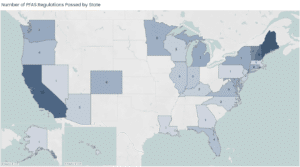
Source: Safer States
The Future of PFAS Regulations
The growing push for PFAS regulation highlights a critical shift in how states and federal agencies address environmental and public health risks. As states like North Carolina, New Mexico, and New Jersey push the EPA to expand PFAS regulations, the potential for comprehensive national PFAS standards becomes more likely. However, the regulatory landscape remains complex, with varying state laws and definitions of PFAS making compliance efforts for manufacturers more difficult.
——–
Editor's Note: 3E is expanding news coverage to provide customers with insights into topics that enable a safer, more sustainable world by protecting people, safeguarding products, and helping businesses grow.


Insights straight to your inbox
Sign Up NowReporter
Christopher Bornmann
Christopher Bornmann is the State Regulatory and Legal Action Reporter for 3E based in Washington, D.C. He covers the latest legal developments and updates in environmental, health, and safety (EHS) that impact the U.S. at the state level. He has experience working for the U.S. House of Representatives and national advocacy groups.

Related Resources
News
EU Omnibus Packages Part 5: Omnibus V – Simplifying EU Defense Regulation
News
EU Omnibus Packages Part 4: Omnibus IV — Product Regulation, Simplification, and Compliance
News
Athletes Disqualified at 2026 Winter Olympics Over PFAS
News
EU Omnibus Packages Part 3: Simplifying EU Agricultural Regulation