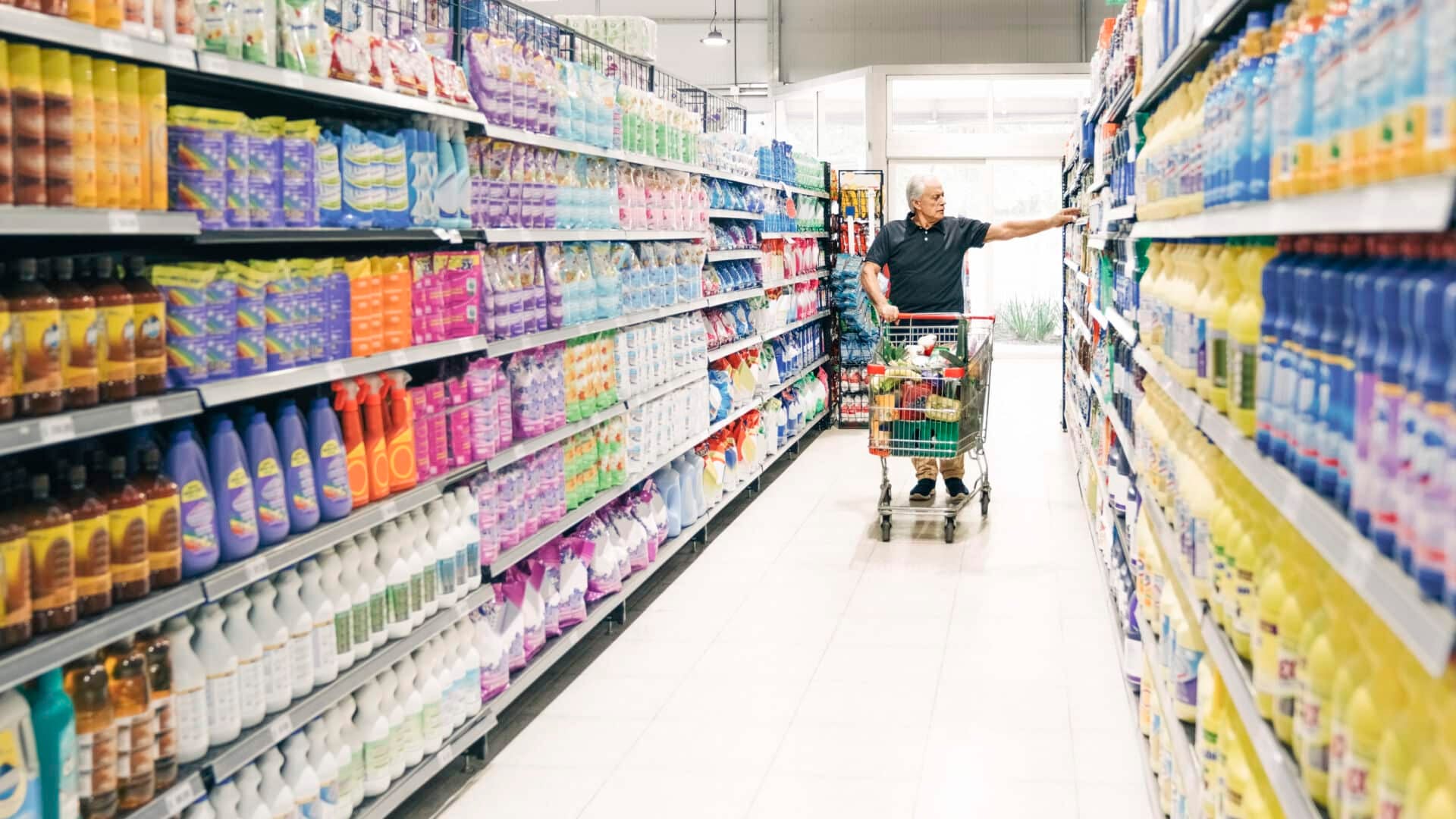
For the final post of our transparency series, we delve into how and why the building products and cleaning products industries embrace transparency reporting for their products. Please refer to Part 1 and Part 2 of this blog series for more information on transparency.
In this post we explore the history and motivations behind transparency reporting and show how these industries have found success. Transparency reporting occurs when manufacturers disclose what is in their products, including chemical identities, down to very specific detail. Manufacturers who do transparency reporting benefit from fewer customer requests, increased customer confidence, reduced regulatory risk and, in most cases, safer products. Our previous blog posts [link again] go into detail on the drivers and value of transparency and the supplier data that drives it – usually called Full Material Disclosure (FMD). This article will explain how transparency reporting is applied in two very different industries and how it has provided the foundation for other industries to follow.
THE HCPA DICTIONARY: IMPLEMENTING TRANSPARENT REPORTING THROUGH STANDARDIZATION
Early on, standardization of nomenclature was recognized as an important element of voluntary ingredient disclosure. To help in this effort, the Household & Commercial Products Association (HCPA), or the Consumer Specialty Products Association as it was known at the time, developed the Consumer Product Ingredients Dictionary using the INCI Dictionary, which was designed for the cosmetics industry.
Although modeled after the cosmetics industry nomenclature, the HCPA Dictionary is tailored to the cleaning products industry to ensure that consumers and workers can make informed choices about the products they use.
The dictionary uses a standardized nomenclature system for each ingredient. This nomenclature considers the function, chemical class, current product uses, material sourcing, and many other meaningful criteria to assist formulators and suppliers in disclosing ingredients on product labels and online. The dictionary is an evolving tool and includes additional technical and regulatory information, such as regulatory lists, to aid companies with their disclosure efforts.
With this standardized system in place, manufacturers and suppliers have developed internal data systems to gather, store, and disclose ingredient information while seamlessly communicating up and down the supply chain with retailers, the public, and even third-party certification organizations, such as the Environmental Protection Agency's Safer Choice program. Because the dictionary originated to support past voluntary ingredient disclosure efforts, companies already using it are well-positioned to handle the new and emerging mandatory regulatory requirements related to ingredient disclosure.
EXAMPLE 1: CLEANING PRODUCTS TRANSPARENCY
Ingredient transparency has been required for cleaning products since California's Cleaning Product Right to Know Act was signed into law in 2017. California was the first state to require the disclosure of ingredients for cleaning products, becoming the de facto national standard for the disclosure of ingredients for a wide range of consumer products.
HCPA was the only industry trade association at the table during the negotiations for the California law. The dictionary they created served as a much-needed resource to support the transparency efforts of affected companies. Since then, transparency has become increasingly important in this industry because it is an essential means for companies to support their own corporate sustainability efforts, as well as the needs of retailers and consumers. Since 2017, the industry has learned quite a few lessons about transparency reporting. Because brands often have multiple product lines in many markets, prioritizing transparency among all product lines can help avoid discord. In addition, transparency reporting can positively impact consumer choices, driving them toward products that use safer materials and ingredients.
EXAMPLE 2: BUILDING PRODUCTS TRANSPARENCY
Two standardized transparency reporting methods stand out in the building products industry: Health Product Declarations (HPDs) and Declare labels. These reports provide customers with insight into manufacturers' rigorous assessment of chemical content. Moreover, they contribute to manufacturers' goals of achieving credits within building standards like Well, LEED, and the Living Building Challenge.
To create these reports, manufacturers collaborate with suppliers to obtain ingredient lists or start the process of FMD. While suppliers might be hesitant to participate in FMD initially, clear communication helps to encourage a collaborative process. Manufacturers have learned to explain the purpose of their transparency reporting and include internal purchasing stakeholders to build confidence in the process.
Transparency reports help companies ensure that their products are free from harmful chemicals and allow potential substitutes to be identified:
For example, a leather manufacturer discovered a risky chemical listed on the Living Building Challenge Red List through transparency reporting. By collaborating with their supplier, they successfully substituted this chemistry with a clay-based alternative, leading to process improvements. This substitution benefitted both the manufacturer and the supplier who saved money with the process improvement.
TWO TYPES OF TRANSPARENCY REPORTS
There are two types of transparency reports, and they have different disclosure requirements. For Declare labels, 99 percent of data must be disclosed to receive “Red List Free” or “Red List Approved” status. HPDs, on the other hand, allow user-defined disclosure levels, but reports with additional information can earn more points within certifications and gain wider acceptance from customers. HPDs also prompt manufacturers to inquire about residual and impurity information during outreach to suppliers. This helps companies collect detailed data and understand potential hazardous chemicals in supply chains.
Declare labels: Declare Labels originated shortly after HPDs, after the International Living Future Institute (ILFI) found significant traction in reducing harmful chemicals in building products using the Red List. The Red List is a collaboration between ILFI, Habitable (formally Healthy Building Network), and the Pharos Project. New chemicals are continuously added to the list as research and information become available. Declare labels serve to verify what is in the product and any related claims about the chemical content and safety. It also allows for exemptions to be displayed (made public) when a Red List chemical is used due to the fact no chemical substitutions are currently available in the marketplace.
HPDs: The concept for the HPD Open Standard emerged in November 2010 when The Materials Research Collaborative, led by Habitable and BuildingGreen, explored creating an industry standard for builders. The HPD initiative responded to the need for transparency regarding the health impacts of building materials and it empowered stakeholders to prioritize health and transparency throughout the design and construction processes. Over a decade later, the use of HPDs is the industry-wide standard that many companies use to understand the chemical content in their products.
TRANSPARENCY FOR OTHER INDUSTRIES
As you can see, both types of transparency reporting tools have specific requirements to ensure that manufacturers know what they must disclose to the public and remain compliant with chemical regulations.
As I'm sure you can guess, transparency reporting is not limited to the cleaning and building industries. As companies embrace transparency (and mandatory requirements become the norm in multiple industries due to regulatory requirements such as Digital Product Passports), industry best practices will change. While ingredient data collection and chemical substitution are not always straightforward and require effort from manufacturers, the rewards are significant.
———
About the Authors:
As Senior Solutions Engineer at 3E, Evelyn Ritter applies technology to simplify the complex world of product compliance, supplier outreach, and sustainability for manufacturers and customers. Prior to 3E, she worked in product stewardship for the furniture manufacturer Herman Miller, as well as helping commercialize a screening technique for PFAS chemicals. Evelyn holds a B.S. in Engineering from Hope College in Michigan.
Rob Campbell is a Senior Chemical Business Advisor. Prior to joining 3E he spent over 40 years helping global companies manage their product stewardship and EHS programs. Rob now works with 3E to help prospective and current customers find better ways to identify and address their own stewardship, sustainability, and compliance obligations. Rob holds a BS in Occupational Safety and Health from Indiana University of PA and a MS in Industrial Hygiene from the University of Pittsburgh.
3E thanks Dr. Steve Bennett, the Executive Vice President of Scientific & Regulatory Affairs at the Household & Commercial Products Association (HCPA) for contributing his industry's perspective. Steve Bennett is the Executive Vice President of Scientific & Regulatory Affairs at the Household & Commercial Products Association. In this role, he is responsible for developing science policies and positions and supporting regulatory activities that impact HCPA's seven Product Divisions (aerosols, air care, antimicrobial, cleaning, floor care, industrial and automotive, and pest management). Steve holds a Ph.D. in Inorganic Chemistry from the University of Delaware and a Bachelor of Science in Chemistry from Lock Haven University in Pennsylvania.
HCPA is the premier trade association representing companies that manufacture and sell $180 billion annually of trusted and familiar products, including disinfectants that kill germs in homes, hospitals and restaurants; air fresheners, room deodorizers, and candles that eliminate odors; pest management products for pets, home, lawn, and garden; cleaning products and polishes for use throughout the home and institutions; products used to protect and improve the performance and appearance of automobiles; aerosol products; and a host of other products consumers and workers use every day to create cleaner and healthier environments.


Insights straight to your inbox
Sign Up NowRelated Resources

News
EU Omnibus Packages Part 5: Omnibus V – Simplifying EU Defense Regulation
News
EU Omnibus Packages Part 4: Omnibus IV — Product Regulation, Simplification, and Compliance

News
Athletes Disqualified at 2026 Winter Olympics Over PFAS

News
EU Omnibus Packages Part 3: Simplifying EU Agricultural Regulation