Related

EU Omnibus Packages Part 5: Omnibus V – Simplifying EU Defense Regulation
EU Omnibus Packages Part 4: Omnibus IV — Product Regulation, Simplification, and Compliance

Athletes Disqualified at 2026 Winter Olympics Over PFAS

EU Omnibus Packages Part 3: Simplifying EU Agricultural Regulation
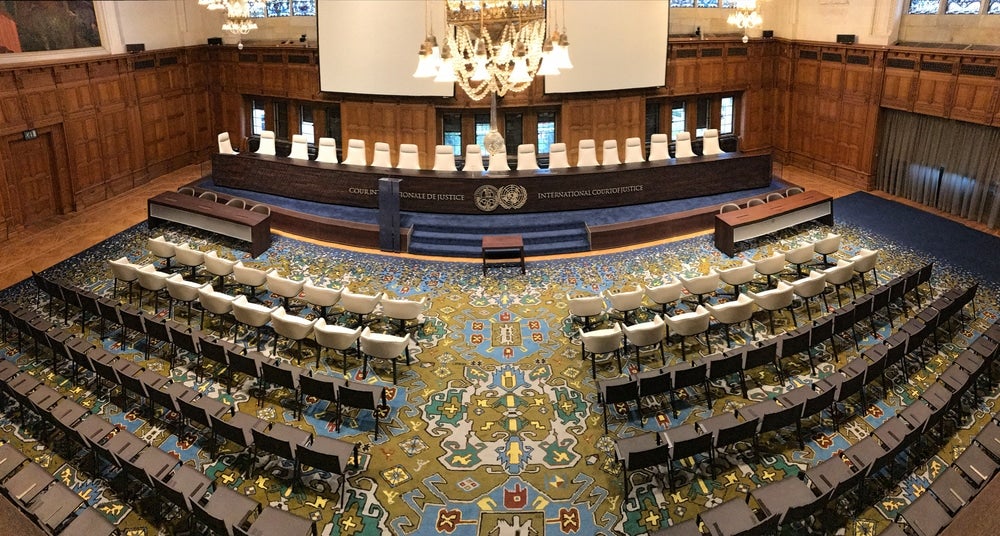
The International Court of Justice found on July 23, 2025, that existing climate change treaties and international law provide binding obligations for states to protect the climate system and the environment from the impact of anthropogenic greenhouse gas (GHG) emissions. This includes the obligation to limit, reduce, and mitigate GHGs and support adaptation to climate change, enhance greenhouse gas sinks and reservoirs, and cooperate with other states to reduce GHG emissions.
The court also determined that states have an obligation under international human rights law to protect the climate system and other parts of the environment.
Further, the court said that breaches of these obligations constitute an internationally wrongful act, with legal consequences including cessation of the breach, assurances of non-repetition of the breach, and reparations to injured states.
In a press release, Greenpeace Legal Counsel Danilo Garrido said, “This is the start of a new era of climate accountability at a global level. The ICJ advisory opinion marks a turning point for climate justice, as it has clarified, once and for all, the international climate obligations of States, and most importantly, the consequences for breaches of these obligations.”
The opinion of the court is non-binding, which means it cannot impose damages or penalties. However, its opinion will carry considerable weight as countries look to other legal mechanisms to seek compensation and to force larger countries to address their emissions.
“This will open the door for new cases, and hopefully bring justice to those, who despite having contributed the least to climate change, are already suffering its most severe consequences,” said Garrido. “The message of the court is clear: the production, consumption and granting of licenses and subsidies for fossil fuels could be breaches of international law. Polluters must stop emitting and must pay for the harms they have caused.”
The opinion of the world's highest court could also have significant implications for attempts by legislators around the world to undermine climate regulations, including the European Union.
“What the ICJ is saying is simple - climate protection is not optional: it's a legal duty,” said Cassidy Spencer, regulatory research analyst with 3E. “If the EU weakens its environmental safeguards through the Omnibus, it risks not only undermining its Green Deal ambitions but also breaching its international obligations. Legal consistency and climate credibility are now inseparable.”
The Culmination of a Long Process
On March 29, 2023, the United Nations General Assembly requested an advisory opinion from the ICJ on the following two questions:
- What are the obligations of States under international law to ensure the protection of the climate system and other parts of the environment from anthropogenic emissions of GHGs for states and for future generations?
- What are the legal consequences under these obligations for States where they, by their acts and omissions, have caused significant harm to the climate system and other parts of the environment, with respect to: i) States, including, in particular, small island developing States, which due to their geographical circumstances and level of development, are injured or specifically affected by or are particularly vulnerable to the adverse effects of climate change? ii) Peoples and individuals of the present and future generations affected by the adverse effects of climate change?
Between December 2 and December 13, 2024, more than 100 countries provided oral statements to the court, while 91 member states and international organizations provided 91 written statements.
The opening statement by the island nation of Vanuatu on December 2 outlined the primary legal arguments for the opinion. Vanuatu argued that small island nations are victims of the actions of large polluting countries and that they are entitled to compensation for the harm caused by those emissions.
Vanuatu asserted that protection from climate change is a human right, and that polluting countries are therefore violating human rights and international law by failing to compensate smaller nations for the damage caused and for failing to curb the behavior that will lead to further emissions. Vanuatu also stated that countries have an obligation to perform due diligence on acts that will adversely impact other countries through climate change and that climate change interferes with the right to self-determination.
Vanuatu and other developing countries argue that while the United Nations Convention on Climate Change (UNCCC) and the Paris Agreement are important starting points, their combination of obligations and aspirational goals do not adequately address the impact of climate change on human rights. In contrast, the United States argued that while climate change does indeed represent an existential threat to the survival of small nations like Vanuatu, there is no obligation under international human rights law to reduce GHG emissions or provide a healthy environment.
“Under international law, states have obligations: obligations to act with due diligence; to prevent significant harm to the environment; to reduce their emissions and provide support to countries like mine; to protect the human rights of present and future generations; to protect and preserve the marine environment; and to respect the fundamental rights of my people to self-determination in our own land,” said Arnold Loughman, Vanuatu attorney general. “The failure by a small number of large-emitting states to fulfill these obligations constitutes an internationally wrongful act, triggering legal consequences under the international law of state responsibility”
Another Milestone for Climate Change in Courts
This opinion is the latest in a growing body of legal opinions on the rights of individuals and countries in the face of overwhelming climate impacts. On July 3, 2025, the Inter-American Court of Human Rights (IACtHR) affirmed that human rights protections under the American Convention on Human Rights include the right to a healthy climate and the obligations of member states in the Organization of American States (OAS) to protect vulnerable groups from climate-related harms.
Another decision on May 21, 2024, by the International Tribunal for the Law of the Sea (ITLOS) found that complying with the Paris Agreement is not an adequate approach to compliance with the United Nations Convention on the Law of the Sea (UNCLOS), and that GHG emissions constitute marine pollution.
In contrast, on July 15, 2025, the Federal Court of Australia found that the Australian government was not negligent in failing to protect residents of the Torres Strait Islands from the impacts of climate change on their environment, and that such matters of government policy are not the subject of common law duties of care.
The Climate Change Litigation Databases at Columbia Law School tracks hundreds of climate-change cases in both the U.S. and internationally in relation to principles such as human rights, environmental crime, just transition, and many others. The outcomes of these cases will provide legal guidance for other countries as they continue to use the courts to assert their human rights and attempt to force large emitters to take action on climate change.
Editor's note: 3E is expanding news coverage to provide customers with insights into topics that enable a safer, more sustainable world by protecting people, safeguarding products, and helping businesses grow. Breaking News articles keep you up-to-date with news as it's happening.


Insights straight to your inbox
Sign Up NowReporter
Graham Freeman
Graham Freeman is based in Toronto, where he covers ESG and sustainability news. Graham has been a content and technical writer in the technology industry for more than a decade. He has also worked as a professor and lecturer at Queen’s University, the University of Toronto, and George Brown College.

Related Resources
News
EU Omnibus Packages Part 5: Omnibus V – Simplifying EU Defense Regulation
News
EU Omnibus Packages Part 4: Omnibus IV — Product Regulation, Simplification, and Compliance
News
Athletes Disqualified at 2026 Winter Olympics Over PFAS
News
EU Omnibus Packages Part 3: Simplifying EU Agricultural Regulation