
EU Sustainability Compliance: How 3E Digital Product Passports Future-Proof Your Business
The European Union’s regulatory landscape is transforming at unprecedented speed, and companies worldwide are scrambling to keep pace. With new sustainability mandates emerging regularly and fluctuating based on industry and regulatory feedback, organizations face a critical question:
How can they navigate complex compliance requirements while positioning themselves for long-term success?
The answer lies in understanding the interconnected nature of EU sustainability regulations and leveraging Digital Product Passports (DPPs) as a strategic compliance tool. These digital innovations aren’t just another regulatory checkbox-they’re becoming the cornerstone of supply chain transparency and circular economy initiatives globally.
The EU’s Regulatory Web: Understanding the Big Picture
The EU Green Deal has unleashed a cascade of sustainability regulations that fundamentally reshape how businesses operate. Each regulation serves a specific purpose, yet they’re intricately connected through shared data requirements and compliance objectives.
EU Taxonomy Regulation: The Foundation of Green Finance
The EU Taxonomy acts as a classification system defining which economic activities qualify as environmentally sustainable. This isn’t just about environmental reporting-it directly impacts access to green financing and investment opportunities.
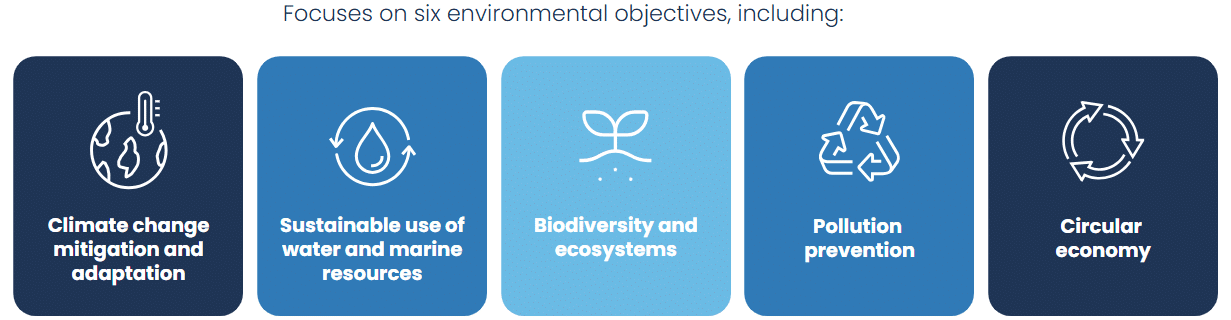
To qualify under the taxonomy, business activities must substantially contribute to one or more of six environmental objectives:
- Climate change mitigation
- Climate change adaptation
- Sustainable use of water resources
- Transition to a circular economy
- Pollution prevention and control
- Protection of biodiversity and ecosystems
The taxonomy’s technical screening criteria establish clear thresholds for sustainability claims. Companies must demonstrate compliance through detailed data on energy intensity, recycled content usage, and hazardous substance management-information that Digital Product Passports can provide seamlessly.
Corporate Sustainability Reporting Directive (CSRD): Transparency at Scale
CSRD requires large companies to report sustainability data using European Sustainability Reporting Standards (ESRS). The directive applies in waves, with the most significant companies already reporting and smaller entities joining progressively through 2028.
The reporting requirements under CSRD align directly with EU Taxonomy objectives. Companies must disclose climate data (ESRS E1), pollution information (ESRS E2), and resource use metrics (ESRS E5)-all of which intersect with DPP data collection requirements.
Corporate Sustainability Due Diligence Directive (CS3D): Supply Chain Accountability
CSDDD pushes companies beyond reporting into active risk management. Organizations must identify, prevent, and mitigate human rights and environmental risks throughout their entire supply chain.
This regulation demands granular supply chain visibility-exactly what DPPs are designed to provide. Companies need real-time access to supplier information, material origins, and environmental impact data to meet CS3D obligations effectively.
Digital Product Passports: Your Compliance Swiss Army Knife
Think of a Digital Product Passport as your product’s travel document. Just as your personal passport collects stamps from every country you visit, a DPP gathers data from every stage of your product’s journey through the supply chain.
What Makes DPPs Revolutionary
DPPs aren’t static labels-they’re dynamic, living data systems that evolve with your product throughout its entire lifecycle. This digital infrastructure enables unprecedented transparency for manufacturers, recyclers, and consumers while supporting multiple regulatory frameworks simultaneously.
Under the Ecodesign for Sustainable Products Regulation (ESPR), EU DPPs must contain specific information categories:
- Substance Transparency: Complete disclosure of substances of very high concern (SVHCs), their locations within products, and concentration ranges. This aligns with REACH Article 33 requirements and supports safe and sustainable by design principles.
- Performance Metrics: Technical data covering repairability, durability, and energy efficiency. These metrics vary by product category and support right-to-repair policies across the EU.
- Circular Economy Data: Information enabling effective end-of-life treatment, including disassembly instructions, recyclability indicators, and material recovery guidance, supporting the path to circularity.
- Sustainability Impact: Eco-labels, certifications, and sustainability ratings that support informed decision-making by consumers and procurement officers.
The ESPR Working Plan: Your Implementation Roadmap
The European Commission’s ESPR working plan prioritizes 11 product groups for initial implementation:
- Iron and steel products
- Aluminum products
- Textiles and footwear
- Furniture
- Tires
- Detergents
- Paints and lubricants
- Energy-related products (existing categories)
- ICT hardware
- Chemicals
- Construction products
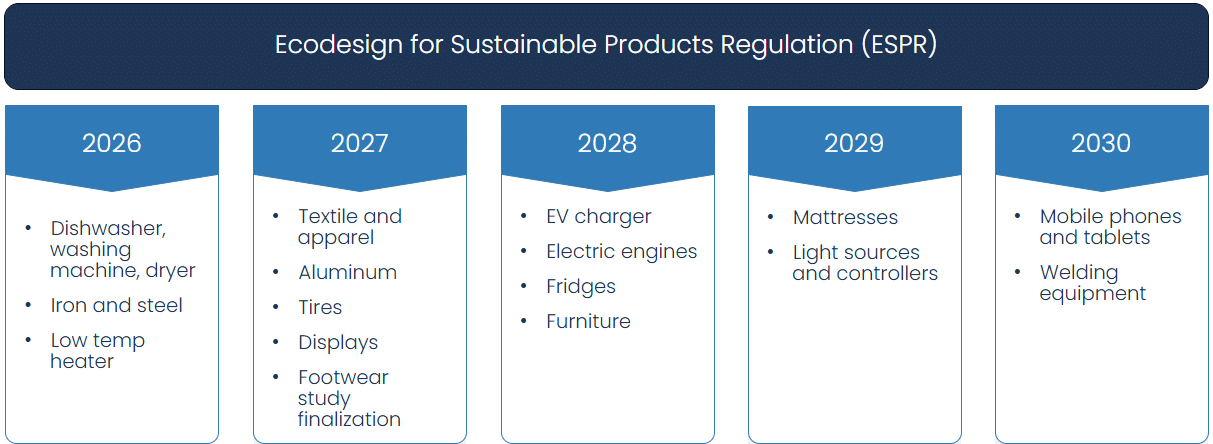
Each product category will receive specific DPP requirements through delegated acts, but the core data categories remain consistent across sectors.
Four Pillars of DPP Readiness
Successfully implementing DPPs requires strategic preparation across multiple dimensions. Companies that start building capabilities now will have significant advantages when product-specific requirements become mandatory.
1. Build Your Data Foundation
Start by auditing your existing product and supplier data. Most companies aren’t starting from zero-they’re starting from fragmentation. Common challenges include:
- Incomplete supplier information, especially for smaller upstream partners
- Siloed records across different departments and systems
- Inconsistent terminology and data formats
- Limited visibility into regulated substances
Focus on identifying material composition data, recyclability information, and substance of concern documentation. These form the backbone of any DPP system.
2. Strengthen Data Quality Standards
Raw data collection isn’t enough-you need validated, consistent information that stands up to regulatory scrutiny. This means:
- Implementing standardized data collection processes
- Validating supplier responses against regulatory frameworks
- Establishing clear terminology and measurement standards
- Creating audit trails for data verification
Companies with robust data governance systems can respond quickly to regulatory requests and maintain stakeholder trust throughout the supply chain.
3. Engage Your Supply Chain Strategically
DPPs require coordinated data sharing across your entire supplier network. This isn’t just a technical challenge-it’s a relationship management opportunity.
Develop standardized supplier surveys that capture DPP-relevant information while minimizing burden on partners. Consider implementing supplier portals that streamline data collection and update processes.
Remember, your suppliers are likely facing similar regulatory pressures. Position supply chain data collection as a mutual benefit rather than an additional requirement.
4. Design for Future Interoperability
Today’s DPP preparation must account for tomorrow’s technical requirements. While specific interoperability standards are still evolving, certain principles remain constant:
- Use open, standardized data formats where possible
- Implement robust access controls and versioning systems
- Design for data portability and system integration
- Plan for regular updates and maintenance
Companies that build flexible, scalable DPP infrastructures will adapt more easily as regulatory requirements mature.
Real-World Implementation: Learning from Pioneers
The VinylPlus® Digital Passport Programme pilot project, conducted by Rinna Ltd, Bullion International Group, and CION in partnership with 3E, offers valuable insights into practical DPP implementation.
Key Findings
- Physical Carriers Matter: There’s no single correct identifier for connecting physical products to digital records. QR codes work well for some applications, but watermarks, RFID tags, and printed labels may be more appropriate depending on product durability and lifecycle requirements.
- Long-term Accessibility: Products with extended service lives need DPP systems that remain accessible for decades. This requires careful consideration of data hosting, format migration, and system maintenance.
- Cross-functional Coordination: Successful DPP implementation requires collaboration between compliance, sustainability, IT, and supply chain teams. Siloed approaches inevitably create gaps and inefficiencies.
The Competitive Advantage of Early Action
While DPP requirements may seem daunting, early adopters are discovering significant competitive advantages:
- Supply Chain Optimization: The supply chain data collection process reveals inefficiencies and risks that companies can address proactively.
- Customer Trust: Transparent sustainability data builds brand credibility and supports premium positioning.
- Regulatory Agility: Companies with robust DPP systems can respond quickly to new requirements without scrambling for basic information.
- Financial Access: Strong sustainability data supports access to green financing and meets increasingly stringent investor requirements.
Your Next Steps: From Preparation to Implementation
The EU’s sustainability regulatory framework is moving toward interconnected, data-driven compliance requirements. Digital Product Passports represent the convergence point where supply chain transparency, environmental reporting, and circular economy initiatives meet.
Companies that view DPPs as isolated compliance requirements miss the larger opportunity. Those that recognize DPPs as strategic infrastructure for sustainable business operations will thrive in Europe’s evolving regulatory environment.
Start by assessing your current data capabilities and identifying gaps. Focus on building supplier relationships and data governance systems that can scale with regulatory requirements. Most importantly, begin now-the companies that delay DPP preparation will find themselves at a significant disadvantage as implementation deadlines approach.
The future of EU sustainability compliance isn’t about managing isolated regulations-it’s about building integrated systems that support transparency, accountability, and continuous improvement throughout your value chain. Digital Product Passports are your gateway to that future.
Ready to transform regulatory compliance from burden to competitive advantage?
Explore how 3E Digital Product Passport solutions can future-proof your sustainability strategy and streamline your path to compliance success.
Book a consultation today to connect with an expert on how 3E DPPs can help streamline data sharing throughout your supply chain.


Insights straight to your inbox
Sign Up NowRelated Resources

News
EU Omnibus Packages Part 5: Omnibus V – Simplifying EU Defense Regulation

News
EU Omnibus Packages Part 4: Omnibus IV — Product Regulation, Simplification, and Compliance

News
Athletes Disqualified at 2026 Winter Olympics Over PFAS

News
EU Omnibus Packages Part 3: Simplifying EU Agricultural Regulation